Wizard of Oz Museum · Museum History · Story 6
What began as curiosity about L. Frank Baum's books gradually became a fascination with early editions, rare printings, and the publishing history of the Land of Oz.
I did not begin my journey into Oz book collecting with a museum in mind. At first, I simply wanted to learn more about the American books behind the Emerald City story I remembered from my childhood in the Soviet Union.
After rediscovering Oz through my children, I became interested in L. Frank Baum's original stories. But as I explored the books, I began noticing something that changed the direction of my interest: the books themselves had histories just as fascinating as the adventures printed inside them.
Discovering That Oz Books Have Their Own History
Baum's The Wonderful Wizard of Oz was first published in 1900. It became the beginning of a series that would continue through many titles, publishers, and generations of readers.
For someone approaching Oz as a reader, the story is usually the main attraction. For a collector, however, another set of questions begins to emerge.
When was this particular copy printed? Who published it? Does it contain the same illustrations as an earlier edition? Has the binding changed? Is it complete and in its original form?
Those questions opened an entirely new world for me.
From Reading Books to Examining Books
I began paying attention to details that I might once have overlooked. The title page, copyright page, publisher's imprint, binding, illustrations, and advertisements could all offer clues about a book's publication history.
I also learned that a familiar title could exist in many different versions. Two copies might contain essentially the same story while having very different histories as collectible objects.
I was no longer interested only in what the Oz books said. I wanted to understand the history of the books themselves.
Why Early Oz Editions Fascinated Me
Early editions offer a tangible connection to the period when a story first reached readers. The illustrations, printing techniques, and book designs reflect the choices made by publishers and artists at the time.
For Baum's Oz books, those visual and physical details are especially interesting. The books were created as illustrated works, and their appearance contributed to the experience of reading them.
Studying those details helped me appreciate the books not simply as containers for stories, but as pieces of publishing history.
Learning the Difference Between Old and Rare
One of the first lessons in collecting is that an old book is not automatically a rare book. Age is only one factor.
A book's scarcity, printing, condition, completeness, and demand among collectors can all influence its significance and value.
A later printing in excellent condition may be desirable for one reason, while an earlier printing with documented bibliographic importance may attract collectors for another.
Understanding those distinctions takes research and patience. It also makes collecting much more rewarding.
Building Knowledge Before Building a Collection
As my interest deepened, I realized that collecting Oz books required more than finding attractive copies for sale.
I needed to understand how editions were identified, which physical details mattered, and how to evaluate descriptions of books offered by sellers.
That process eventually led me further into rare-book research and the specialized world of Oz bibliography.
Over time, my collection and knowledge grew together. What began as a personal interest became an important part of the foundation for the Wizard of Oz Museum.
How Collecting Became Part of the Museum's Story
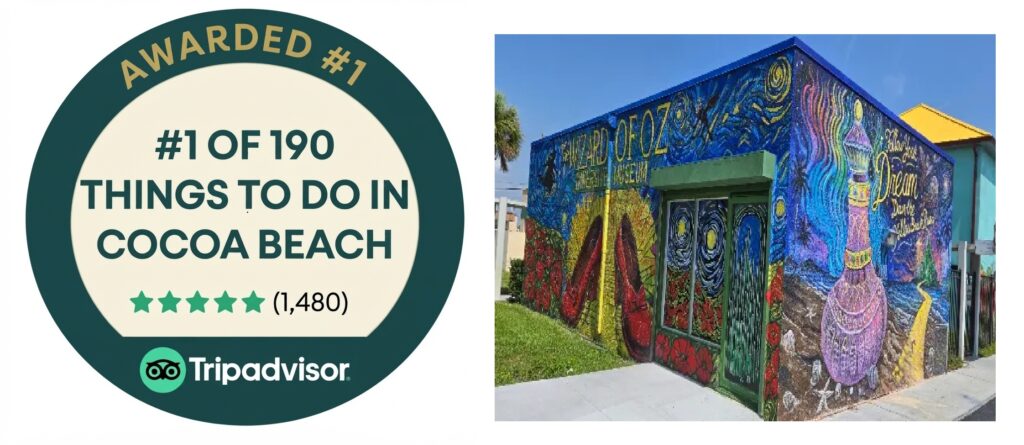
The Wizard of Oz Museum in Cocoa Beach, Florida, brings together Oz books, collectibles, movie memorabilia, and immersive experiences.
Behind the collection is a history of curiosity, research, and the desire to preserve objects connected to a story that has inspired readers for generations.
My first steps into Oz book collecting were not about owning the most expensive books. They were about discovering how much history could be found inside—and around—a familiar story.
Discover Rare Oz Books in Person
Explore Oz publishing history, rare books, and historical memorabilia at the Wizard of Oz Museum in Cocoa Beach, Florida.
Explore the Museum