Wizard of Oz Museum · Museum History · Chapter 3 · Story 13
A collection can begin almost anywhere. A public museum needs a place of its own. Finding that place was an important step in turning our Oz museum idea into reality.
When Palina encouraged me to consider opening a museum, we were moving beyond the world of private collecting. I had spent years learning about Oz books, researching editions, and developing an appreciation for the history behind them. But sharing that history with visitors required something a private collection did not: a physical home for the museum.
The idea of a museum was exciting because it offered the possibility of introducing other people to a world that had become important to me. At the same time, the idea raised practical questions about location, displays, visitor access, and the experience we hoped to create.
Our museum would eventually find its original home in Cape Canaveral, Florida, on the Space Coast.
Why Location Matters for a Museum
The location of a museum influences much more than its street address. It affects how visitors discover the attraction, how easily they can reach it, and how the museum fits into the surrounding community.
A private collector can study books at home without considering public access. A museum must welcome people who may be visiting the area for the first time.
Families need a destination they can include in their plans. Tourists may be looking for an interesting indoor attraction. Local residents may want something educational to share with guests.
Thinking about the museum as a visitor destination meant considering these different needs.
The Space Coast Connection
Florida's Space Coast is known for its beaches, space exploration history, and attractions connected to the nearby Kennedy Space Center.
Cape Canaveral is part of this distinctive region, welcoming residents and visitors with many different interests.
The Wizard of Oz Museum would introduce another kind of experience: a place devoted to the literary and cultural history of a story loved across generations.
Oz might seem very different from rockets and beaches, but that difference was part of what made the museum an interesting addition to the area.
A museum needs more than a collection worth seeing. It needs a place where people can discover why that collection matters.
Thinking Beyond the Bookshelves
My interest in Oz began with books, but a museum could not simply reproduce a collector's bookshelves.
Visitors would need context for the objects they saw. A rare edition might be meaningful to someone familiar with Oz bibliography, but a newcomer might first notice the cover illustration or the age of the book.
The museum needed to connect those observations with the larger story of Oz.
Exhibits could help explain how L. Frank Baum's books introduced the Land of Oz, how different artists illustrated its characters, and how later adaptations brought the story to new audiences.
Finding a physical home made it possible to think about how these stories could be presented together.
Making Room for Different Visitors
Not everyone who visits an Oz museum arrives with the same background.
Some visitors are lifelong fans of the 1939 film. Others remember reading Baum's books as children. Some may be discovering the characters for the first time.
A museum environment needs to offer something understandable and engaging to each of these groups.
Historical information can provide depth, while visual displays help bring the objects and their stories to life.
A suitable museum space must support that balance between learning and enjoyment.
The Challenge of Displaying Rare Books
Older books require special consideration when they are placed on public display.
Light exposure can affect paper and illustrations. Excess moisture can damage bindings. Frequent handling can weaken fragile pages and covers.
These concerns are familiar to collectors, but they become especially important in a museum setting.
A display must allow visitors to appreciate an object without unnecessarily exposing it to damage.
The goal is to make history accessible while respecting the responsibility to preserve it.
From a Private Interest to a Public Destination
For years, collecting Oz books had been a personal pursuit. I could spend time comparing editions, researching publishers, and following questions wherever they led.
Creating a museum introduced a different kind of responsibility.
Instead of thinking only about what interested me, I needed to think about what visitors would understand, enjoy, and remember.
That change in perspective was one of the most important parts of the journey from collector to museum founder.
Cape Canaveral Becomes the Museum's First Home
The museum idea eventually became a reality in Cape Canaveral, Florida.
Establishing a public museum marked a major change from the days when my Oz books were simply part of a private collection.
The collection now had a new purpose: helping visitors discover the history of Oz through books, memorabilia, and experiences.
Cape Canaveral became an important part of the museum's early history, representing the transition from an idea to a place people could visit.
A Beginning, Not the End of the Journey
Finding a home for the museum did not mean that every challenge had been solved.
A museum continues to develop through its exhibits, visitor experiences, research, and the lessons learned from welcoming the public.
The original Cape Canaveral location was one stage in that development.
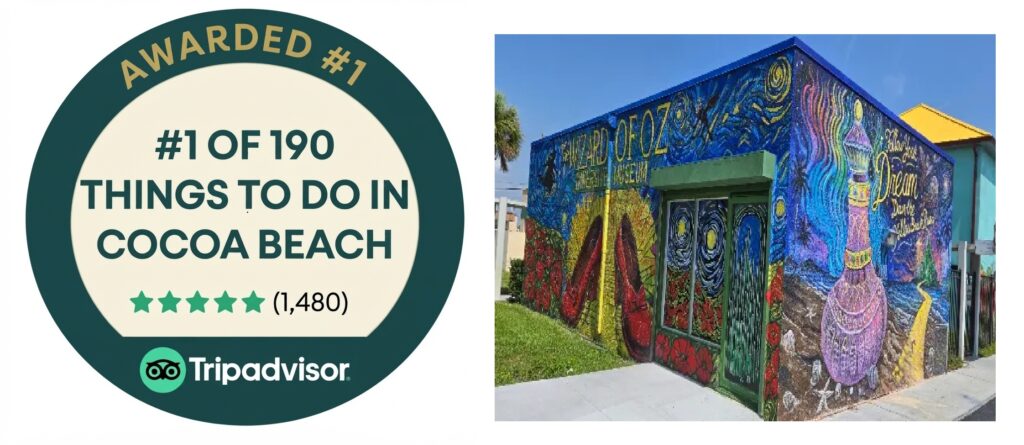
The Wizard of Oz Museum would later continue its story in Cocoa Beach, Florida, carrying forward the mission of sharing Oz history with new audiences.
Looking back, finding the museum's first home was more than a practical step. It was a sign that the dream Palina had encouraged was becoming real.
Visit the Wizard of Oz Museum Today
Discover Oz literature, rare collectibles, movie memorabilia, and immersive experiences at the Wizard of Oz Museum in Cocoa Beach, Florida.
Explore the Museum