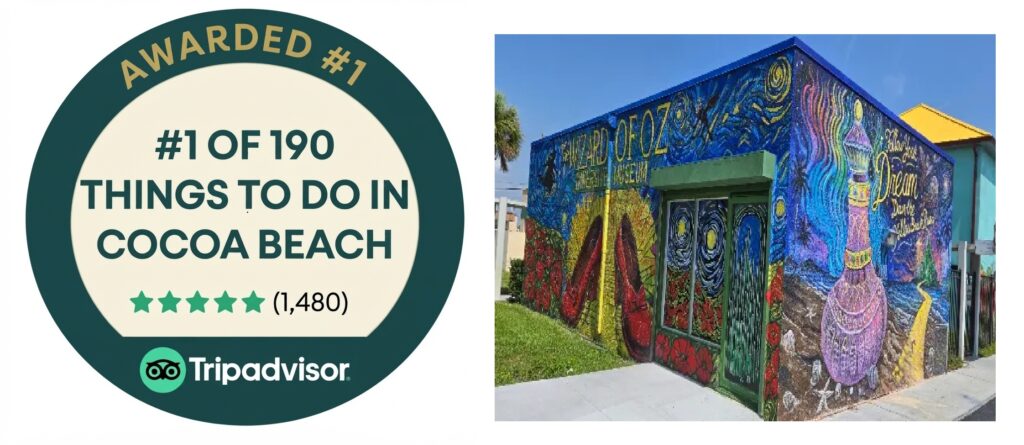
Wizard of Oz Museum · Museum History · Chapter 4 · Story 17
I knew how to study an Oz book as a collector. Learning to see the museum through a visitor's eyes was a different kind of education.
When the Wizard of Oz Museum opened in Cape Canaveral, I brought years of collecting experience to the project. I understood why early Oz editions mattered, how to recognize differences between printings, and why a book's condition could be important. What I was still learning was how to translate that knowledge into an experience for people who had never collected a rare book.
Welcoming the public changed the questions I needed to ask. Instead of concentrating only on what made an object historically significant, I had to consider what would make that significance clear to someone seeing it for the first time.
That change in perspective became an important part of my development as a museum founder.
Collectors and Visitors See Different Things
A rare-book collector might look at an Oz volume and immediately notice the publisher's imprint, the binding, or a small printing variation. Those details can help identify a particular edition and explain its place in publishing history.
A visitor unfamiliar with book collecting may notice something entirely different: the age of the book, the beauty of its illustrations, or a character remembered from childhood.
The challenge is not to convince every visitor to become a collector. It is to build a connection between the visitor's natural curiosity and the historical importance of the object.
A colorful illustration can introduce an artist. An unusual cover can lead to a discussion of different editions. A familiar character can open the door to the history of the original books.
The Importance of a Familiar Starting Point
Many people know Oz through the 1939 MGM film starring Judy Garland. They recognize Dorothy, the Scarecrow, the Tin Man, and the Cowardly Lion, even if they have never read L. Frank Baum's original novel.
That familiarity is valuable. It provides a starting point for learning something new.
The museum can connect those familiar images with The Wonderful Wizard of Oz, published in 1900, and with the larger series of Oz books that followed.
Rather than treating the movie and books as competing versions of Oz, I see them as different parts of a remarkable cultural history.
The film introduces many visitors to the characters. The books reveal how much more there is to discover.
Why Clear Explanations Matter
Collectors sometimes use terminology that is second nature to them but unfamiliar to everyone else. Terms such as first edition, later printing, binding variant, and dust jacket can be important when discussing rare books.
But an exhibit should not require a visitor to understand those terms before enjoying it.
A useful explanation begins with the larger question: why does this object matter?
Once that question has been answered, details about editions and printing history become more meaningful. Visitors can understand not only what they are looking at, but why collectors and historians consider it worth preserving.
I began to think less about how much information an exhibit could contain and more about what a visitor could take away from it.
Remembering My Own First Encounter With Oz
My childhood experience gave me a useful reminder about the importance of introductions.
Growing up in the Soviet Union, I first heard the Oz story through Alexander Volkov's The Wizard of the Emerald City. I did not understand its relationship to Baum's American book. In fact, I initially believed the story was Russian.
My understanding changed only much later, after I rediscovered Oz in the United States with my children.
That experience reminds me that people can love a story without knowing its full history.
A museum should welcome that love rather than assume that visitors already know every important fact. Curiosity is a better starting point than expertise.
Making Room for Different Generations
Oz has remained popular across generations because people encounter it in different ways. Some remember the film from childhood. Others know the books. Younger visitors may recognize the characters through more recent adaptations.
A museum devoted to Oz needs to recognize those different experiences.
Historical books offer depth for readers and collectors. Illustrations provide a visual connection for visitors of many ages. Movie memorabilia links the literary tradition to familiar popular culture.
Bringing these elements together makes it possible for families to explore Oz from more than one perspective.
The goal is not for every person to notice the same object. It is for each person to find a reason to become interested in the story behind it.
Thinking About the Entire Visit
A collector may be satisfied spending a long time studying one book. Museum visitors usually experience a collection as a sequence of displays, explanations, and impressions.
That means the organization of an exhibit matters. Visitors benefit when they can understand where a story begins, how it develops, and why it remains relevant.
The literary origins of Oz, its illustrators, the continuing book series, and the film's cultural influence are all connected subjects.
Presenting those connections helps transform individual objects into a coherent museum experience.
I came to appreciate that the museum's success as an educational attraction depended on more than the rarity of its collection.
Preservation Is Part of the Visitor Experience
Another responsibility of a museum is protecting the historical materials that make its exhibits possible.
Older books can be damaged by excessive light, moisture, and frequent handling. Their paper, illustrations, and original bindings may be especially vulnerable.
Visitors may naturally want to examine a beautiful book closely, but preservation requires careful boundaries.
Good displays make the significance of an object visible while reducing unnecessary risks to it.
That balance between access and preservation is part of what distinguishes a public museum from a private collection.
Learning to Share the Story, Not Just the Objects
When I began collecting Oz books, much of the enjoyment came from discovery. I wanted to understand what made one edition different from another and how those differences fit into Oz history.
The museum gave that research a broader purpose.
A rare book could now help explain the beginnings of an enduring literary world. An illustration could introduce a talented artist. A piece of memorabilia could connect a visitor's movie memories with the history of the original story.
Those connections were more important than simply demonstrating that an object was rare.
The lesson was to make knowledge accessible without losing the historical detail that made the collection worth studying.
A Different Way to Measure Progress
Collectors often think about progress in terms of objects acquired, editions identified, or gaps filled in a collection.
A museum requires another way of thinking about progress. Its value also lies in what people can learn and experience.
A display becomes meaningful when someone understands something they did not know before.
An exhibit serves its purpose when it encourages curiosity about literature, illustration, history, or the creative imagination behind Oz.
This broader perspective helped me think about the museum not as the endpoint of my collecting journey, but as the beginning of a new one.
Carrying Those Lessons Forward
The Wizard of Oz Museum's early days in Cape Canaveral were the beginning of its public history.
As the museum continued developing, its mission remained connected to the idea Palina had encouraged: sharing the collection and its stories with others.
The museum would later continue its journey in Cocoa Beach, Florida, but the importance of understanding visitors remained central.
I had started as someone who wanted to learn everything I could about Oz books.
Becoming a museum founder meant learning how to help other people begin that discovery for themselves.
Discover the Wizard of Oz Museum Today
Explore rare Oz books, historical collectibles, movie memorabilia, and immersive experiences at the Wizard of Oz Museum in Cocoa Beach, Florida.
Explore the Museum