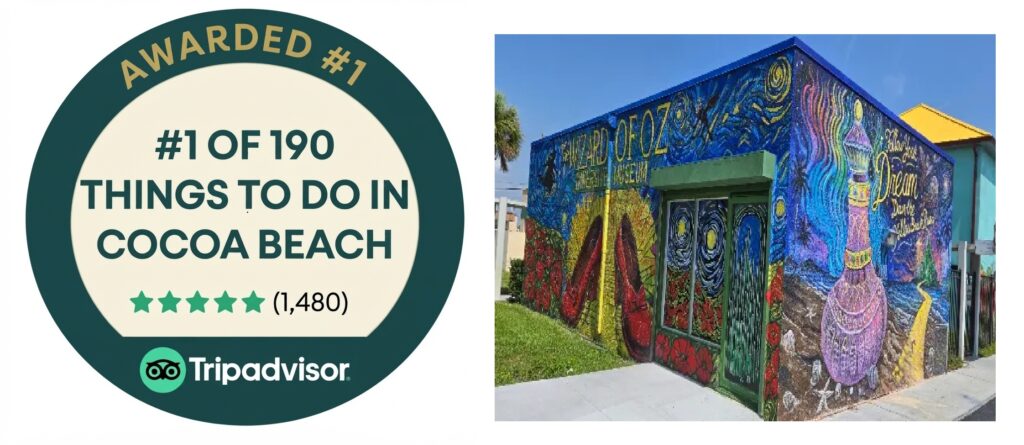
Wizard of Oz Museum · Museum History · Chapter 3 · Story 11
My growing collection of Oz books began as a personal interest. Then Palina saw something I had not fully imagined: the possibility of sharing that collection through a museum.
When I began collecting books connected to the Land of Oz, I was not planning to open a museum. My interest grew from childhood memories, curiosity about L. Frank Baum, and a desire to understand the history of the books. I enjoyed studying editions, comparing illustrations, and learning how the stories had reached readers over generations.
Collecting was a personal journey. Each book introduced another question about publishing history, and each discovery encouraged me to continue researching.
Eventually, however, the collection began to suggest a possibility beyond my own shelves. My wife, Palina, recognized that the books and their stories could interest other people, too.
A Collection Built Through Curiosity
My connection with Oz began long before I knew anything about collecting rare books.
As a child growing up in the Soviet Union, I heard the story of the Emerald City read aloud by my teacher. At the time, I believed the story was Russian.
Only later, after moving to the United States and rediscovering Oz through my children, did I learn about Baum's original American books.
That discovery changed my understanding of the story I remembered. It also introduced me to the fascinating history of Oz literature.
As I acquired books, I became interested in the differences among editions, publishers, bindings, and illustrations. What started as reading developed into serious research.
Why the Books Meant More Than Their Value
Rare books can have financial value, but that was only one part of what interested me.
An older Oz book is also a historical object. Its cover, paper, illustrations, and printing details reveal something about the time when it was produced.
Different editions show how publishers presented Oz to successive generations. They can also help explain why particular illustrations and characters became so familiar.
For me, collecting offered a way to preserve and study these connections.
I had been thinking about the books as a collection. Palina helped me see their potential as something to share.
Palina's Idea Changed the Direction
Sometimes a project changes because someone else sees possibilities that have become difficult for us to notice.
Palina saw my growing Oz book collection and encouraged the idea of creating a museum.
That suggestion was important because it introduced a different purpose for the collection. Instead of existing primarily for my own research and enjoyment, it could become the foundation of a public experience.
A museum could introduce visitors to Oz books they might never have encountered. It could explain the relationship between the original literary works and the popular film.
It could also show that the history of Oz is much broader than a single story or adaptation.
From Owning Books to Sharing Stories
The transition from collector to museum founder involves a change in perspective.
A collector often asks whether an object is authentic, rare, complete, or historically significant.
A museum must ask additional questions: What will visitors learn from this object? How can its history be explained clearly? Why should someone who has never collected an Oz book find it interesting?
Those questions encouraged a broader way of thinking about the collection.
A rare edition could become the starting point for a conversation about Baum, early American publishing, or the artists who illustrated the books.
The Museum Would Need to Reach Beyond Books
Although my collection began with Oz literature, the cultural history of the Land of Oz extends into theater, film, collectibles, and popular imagination.
Baum's books introduced the characters and setting that later generations would encounter in many different forms.
The 1939 film became especially influential, bringing Dorothy, the Scarecrow, the Tin Man, and the Cowardly Lion to audiences around the world.
A museum offered an opportunity to connect these different parts of Oz history. Visitors familiar with the movie could discover the earlier books, while readers could explore the broader legacy of the stories.
A Personal Passion Becomes a Public Responsibility
Creating a museum is very different from maintaining a private collection.
Books and memorabilia must be presented in ways that are understandable, engaging, and appropriate for public display.
Historical information needs careful research. Objects need protection. Exhibits must communicate their meaning to visitors with different ages and backgrounds.
These considerations gave the collection a new direction. The goal was no longer only to discover and preserve interesting Oz material. It was also to help other people understand why that material mattered.
The Beginning of a Larger Journey
Palina's suggestion did not erase the years I had spent collecting and researching. It gave those experiences a new purpose.
The books remained important, but the idea now extended beyond the collection itself.
The Wizard of Oz Museum would eventually bring together literary history, memorabilia, and immersive experiences for visitors.
Looking back, I see the museum idea as a turning point between two parts of my life with Oz: first discovering and collecting its history, and then working to share that history with the public.
What began as a childhood memory had become a collection. Thanks in part to Palina's encouragement, that collection began to become something much larger.
Visit the Museum That Grew from an Idea
Explore Oz literature, historical collectibles, movie memorabilia, and immersive experiences at the Wizard of Oz Museum in Cocoa Beach, Florida.
Explore the Museum