Wizard of Oz Museum · Museum History · Chapter 8 · Story 37
Why I Believe the Wizard of Oz Museum Should Inspire Every Generation
One of the most remarkable things about the Wizard of Oz is that the same story can mean something different to people of different ages. A child may be fascinated by Dorothy's adventure, the unusual characters, and the idea of a magical land. A parent may remember watching the movie or reading the story years earlier. A grandparent may carry memories of Oz that reach back across much of a lifetime. Yet all three generations can recognize something familiar in the same imaginary world.
As I developed the Wizard of Oz Museum, I began thinking about how this connection between generations could become part of the museum experience. I did not want the museum to appeal only to dedicated collectors or people who already knew the history of L. Frank Baum's books. I wanted it to offer something meaningful to visitors whose relationships with Oz began in very different ways.
My own experience helped me understand why that mattered. Oz entered my life through one literary tradition, returned through my children after I moved to the United States, and eventually became the foundation of a collection and museum. The story accompanied different stages of my life, and each stage changed the way I understood it.
How Oz Connected Different Stages of My Own Life
Growing up in the Soviet Union, I knew Alexander Volkov's The Wizard of the Emerald City. That was my introduction to a world of extraordinary adventures and memorable characters.
At the time, I did not imagine that this childhood experience would eventually lead me to research American editions of L. Frank Baum's Oz books. My interest was simply part of the pleasure of discovering an imaginative story.
Years later, after moving to the United States, I encountered Oz again through my children. This rediscovery introduced me more deeply to Baum's original work and the larger literary history surrounding it.
What had once been a childhood memory became an opportunity to learn. I began exploring the books, the illustrations, the publishing history, and the differences between versions of the story.
That experience taught me that the meaning of a familiar story can change as we grow older. A book that once offered adventure can later become a source of curiosity about art, history, and culture.
Why Children and Adults Notice Different Things
When children encounter Oz, they may be drawn immediately to its characters and imaginative settings. The idea of a road leading toward an extraordinary city is easy to understand as an adventure.
Adults may respond to different aspects of the same story. They may think about friendship, courage, home, or the memories they associate with reading or watching Oz when they were younger.
These differences are part of what makes Oz suitable for a museum experience that welcomes families.
I believe a historical object can be introduced in more than one way. An early illustrated book might attract a child's attention because of its pictures. A parent may become interested in when the book was published. A collector may notice details of its binding or printing.
All of these reactions can become starting points for learning. The challenge is to make the history approachable without losing the depth that makes the object significant.
The Role of Shared Family Memories
Stories often become part of family life. People remember where they first encountered a character, who introduced them to a book, or which version of a story they watched together.
The Wizard of Oz has remained familiar across generations partly because families continue to share it.
I find this especially meaningful because my own renewed interest in Oz developed through my children. Their connection to the story encouraged me to return to a subject that had been part of my childhood in a different form.
When I think about the museum, I see an opportunity for families to explore that connection together.
A parent who knows the film may discover something unfamiliar in the original books. A child who enjoys the immersive experience may become curious about the characters' literary origins. A grandparent may recognize a story that has accompanied the family for decades.
Those different experiences can lead to conversations that continue beyond the visit.
Why the Original Books Matter to Younger Generations
Many younger visitors know Oz through images, adaptations, or references in popular culture. They may not realize that The Wonderful Wizard of Oz was first published in 1900.
That simple historical fact can open the door to a much larger subject.
Baum's original story appeared before the famous 1939 film. Its first illustrations were created by W. W. Denslow, whose interpretation of Dorothy and her companions differed from the images that later became familiar through Hollywood.
Baum continued writing about Oz, and the series expanded into a world containing many more characters and adventures. John R. Neill became the principal illustrator beginning with The Marvelous Land of Oz in 1904.
When young visitors discover these details, they can begin to understand that stories have histories. The characters they recognize did not appear in their most familiar form all at once.
For me, that is one of the educational opportunities offered by the museum's rare-book collection.
How Illustrations Help Bridge Generations
Illustrations can communicate across differences in age and reading experience. A person does not need specialized knowledge of bibliography to appreciate an imaginative drawing.
The early Oz illustrations are especially interesting because they show how artists interpreted Baum's world before later adaptations became dominant in popular culture.
W. W. Denslow's work helped establish the visual identity of the first book. John R. Neill later contributed to the appearance of the expanding Oz series.
I believe comparing these early images with familiar modern interpretations can encourage visitors to think about how artistic styles change.
A child may notice that a character looks different. An adult may become curious about why the difference exists. Together, they can discover something about the relationship between literature and visual art.
That shared discovery is one reason I value the original illustrated books as part of a museum intended for more than one generation.
Why Nostalgia Is Only the Beginning
Nostalgia can be a powerful reason to visit a museum devoted to Oz. Familiar characters and images may remind people of childhood, family traditions, or favorite films.
I respect those memories because they are part of the cultural history of the story.
But I also believe nostalgia can become a starting point for new knowledge.
Someone who arrives because they remember the film may discover Baum's books. Someone who remembers reading a later edition may become interested in the original illustrations. A visitor who recognizes a familiar character may learn that the character appeared in different forms over time.
The museum can honor familiar memories while encouraging visitors to look beyond them.
That combination is important to me. I do not want visitors to feel that their personal connection to Oz is less valuable because it began with an adaptation rather than an early book.
Instead, I hope that connection leads them to explore the larger history.
Creating Opportunities for Different Kinds of Curiosity
Not every visitor learns in the same way. Some enjoy reading detailed historical information. Others respond more strongly to visual displays or immersive experiences.
At the Wizard of Oz Museum, the historical collection and digital presentations provide different ways to approach imagination and art.
The rare books offer evidence of how Oz developed through literature and illustration. Historical memorabilia help connect the story with its broader cultural influence. Immersive experiences provide a different kind of visual encounter.
I believe these elements can complement one another because they invite different questions.
Someone may become interested in the books after enjoying an immersive presentation. Another visitor may come primarily for the historical collection and find the digital experience an unexpected addition.
The goal is not to require everyone to follow the same path. It is to provide opportunities for discovery.
What I Hope Parents and Grandparents Share
When families visit a museum, they bring more than their individual interests. They bring memories and experiences that can be shared.
A grandparent may remember watching Oz long ago. A parent may know the characters through childhood television or books. A child may be encountering the story for the first time.
I think there is something valuable in allowing those perspectives to meet.
The original books can help families see that Oz has existed across many generations. They can also show that the familiar story has changed through different illustrations, editions, and adaptations.
Rather than presenting one generation's experience as the correct one, I hope the museum encourages people to appreciate the connections among them.
For me, the most meaningful educational experiences are often those that inspire people to continue talking and learning together.
Why I Want the Museum to Welcome First-Time Visitors
Some people arrive at the Wizard of Oz Museum knowing very little about Baum's books. They may recognize Dorothy and Toto but have never read the original novel.
I do not see that as a disadvantage. A first encounter can be the beginning of a lasting interest.
When I first knew the Emerald City through Volkov's story, I did not understand the full history of Baum's original work. My knowledge developed much later.
That experience reminds me that curiosity does not require expertise.
I want the museum to be approachable to people who simply want an enjoyable experience, while also offering historical information for those who become interested in learning more.
Someone should be able to leave with a better understanding of Oz even if they arrived knowing only a few familiar characters.
The Importance of Preserving Stories for the Future
When I collect and study early Oz books, I am looking at objects that have already survived through several generations.
Their continued existence allows readers today to examine the way Baum's stories were first presented. We can study the illustrations, the publishing details, and the physical design of books that appeared long before our own time.
That historical connection depends on preservation.
Future generations will need access to reliable information and surviving objects if they are to understand the literary origins of Oz. Digital reproductions can help expand access, but the original books remain important evidence.
I believe museums have a role in protecting that evidence while helping new audiences understand its significance.
The responsibility is not simply to preserve books for people who already appreciate them. It is also to make their history understandable to people who have not yet discovered why they matter.
How the Museum's Journey Reflects This Goal
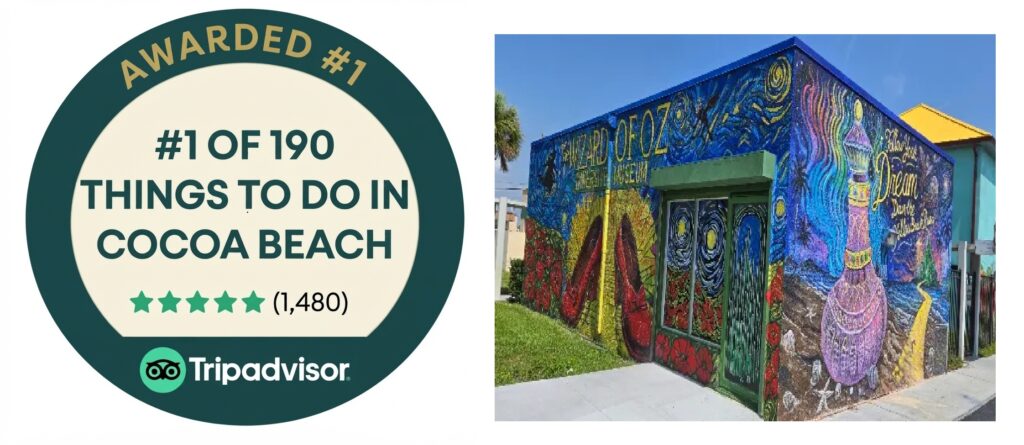
The Wizard of Oz Museum began in Cape Canaveral and relocated to Cocoa Beach in 2026.
Throughout that development, my interest in sharing Oz history has remained connected to the original collection.
When my wife, Palina, suggested creating the museum, she helped turn a personal collecting interest into an opportunity for public engagement.
Today, I think about the museum as a place where different generations can encounter both familiar entertainment and less familiar history.
The rare books represent the literary foundations of Oz. The memorabilia reflect its continuing cultural influence. The immersive experiences offer another way to engage with imagination.
Together, these elements can help visitors approach the world of Oz from different perspectives.
What Inspiring a New Generation Means to Me
Inspiration is difficult to measure. It does not always appear as an immediate decision to collect books or study literary history.
Sometimes it begins with a question. A child may wonder who created Oz. A teenager may become interested in the artwork. An adult may decide to read Baum's original novel after years of knowing only the film.
I believe these moments of curiosity are valuable even when they lead in unexpected directions.
My own journey with Oz was not a straight line. It began in childhood, returned through my family, and eventually developed into years of collecting and museum work.
That experience makes me appreciate how a story can remain meaningful while a person's interests change over time.
I hope the museum gives visitors opportunities to begin their own journeys of discovery.
Oz has connected generations of readers and viewers. My hope is that the museum helps each new generation discover something of its own.
Why the Museum's Future Depends on New Audiences
A museum devoted to literary history cannot depend only on people who already know and appreciate its subject.
To remain meaningful, it must introduce that history to new audiences. Children who visit today may become readers, artists, teachers, researchers, or collectors in the future.
I cannot predict which parts of the museum will be most important to them. Some may remember the immersive experience. Others may remember an old book, an illustration, or an unexpected historical fact.
What matters to me is that they have an opportunity to encounter the history of Oz and recognize that it extends beyond the version they may already know.
That is why I believe the museum should continue to connect enjoyment with education and familiar memories with new discoveries.
Looking Ahead in Chapter 8
Story 36 explored how I learned to think about presenting a private collection to the public. This story focuses on the people who may experience that collection across different generations.
The remaining stories in Chapter 8 will continue exploring the museum experience: how imagination supports learning, how historical objects and modern technology can work together, and why I believe the museum's educational purpose matters for the future.
For me, these subjects are connected by a simple idea. The Wizard of Oz Museum is not only about preserving what people remember. It is also about helping people discover something they have never encountered before.
That possibility gives the museum a purpose that extends beyond any single generation.
Share the Wonder of Oz Across Generations
Explore rare Wizard of Oz books, historical memorabilia, and immersive experiences at the Wizard of Oz Museum in Cocoa Beach, Florida. Discover a world of imagination and history that families can explore together.
Explore the Museum