Wizard of Oz Museum · Museum History · Chapter 9 · Story 41
Why I Believe the Future of the Wizard of Oz Museum Begins With Its History
Whenever I think about the future of the Wizard of Oz Museum, I find myself returning to the books that started my collecting journey. They are not the most technologically advanced part of the museum, and they do not depend on the newest forms of entertainment. Yet they remain central to everything I hope the museum will become. Their importance comes from the history they preserve: the original stories of L. Frank Baum, the illustrations that introduced Oz to early readers, and the physical evidence of a literary world that began more than a century ago.
It may seem unusual to begin a discussion about the future by looking toward the past. But I have learned that a museum cannot develop a meaningful direction without understanding what makes its collection worth preserving.
For me, the future of the Wizard of Oz Museum is not simply a question of adding new experiences. It is a question of how to keep the museum's historical foundation visible, relevant, and accessible as the interests of visitors and the technologies used to present information continue to change.
Why the Museum's Beginning Still Matters
My relationship with Oz began long before I imagined creating a museum.
Growing up in the Soviet Union, I encountered Alexander Volkov's The Wizard of the Emerald City. It introduced me to an imaginative world that remained part of my childhood memories.
Years later, after moving to the United States, I rediscovered Oz through my children. That experience led me toward L. Frank Baum's original books and eventually toward researching rare editions.
As my interest developed, I began studying the books not only as stories but also as historical objects. Their illustrations, bindings, publishing details, and physical characteristics became important to me.
When my wife, Palina, suggested creating a museum, the idea grew from that personal interest in preserving and understanding Oz history.
I believe remembering these beginnings helps me evaluate the museum's future. Whatever changes may come, the original purpose of studying and sharing Oz history should remain important.
The Difference Between Growing and Losing Direction
A museum can develop in many ways. It may reach new audiences, introduce different methods of presentation, or find new opportunities to explain its collection.
But development also creates choices.
Not every new idea necessarily strengthens a museum's educational purpose. An experience may be visually impressive without helping visitors understand the subject. An object may attract attention without contributing meaningful historical information.
I believe it is important to ask what a change would add to the visitor's understanding.
Would it help someone appreciate Baum's original stories? Would it explain the importance of an early illustration? Would it make historical material more accessible? Would it encourage further learning?
These questions do not provide automatic answers, but they offer a way to think about the museum's direction.
For me, growth should support the museum's identity rather than gradually replace it.
Why the Original Oz Books Provide a Foundation
The Wonderful Wizard of Oz was published in 1900, with illustrations by W. W. Denslow. It established the literary world that later became familiar through numerous adaptations.
Baum continued writing about Oz, and the series developed into a much larger fictional world. Beginning with The Marvelous Land of Oz in 1904, John R. Neill became the principal illustrator of the continuing books.
These publications are important because they document the development of Oz before many of the interpretations that modern audiences know best.
When I examine an early book, I see more than a familiar story. I see evidence of the choices made by its author, illustrator, publisher, and printers.
The physical book preserves information about how literature was produced and presented at a particular moment in history.
That is why I believe the original books should remain central to the museum's educational identity. They connect visitors to the beginnings of Oz in a way that later interpretations cannot fully replace.
What Rare-Book Collecting Taught Me About Responsibility
Collecting historical books involves more than finding interesting or valuable editions.
Over time, I learned to pay attention to printing differences, bindings, illustrations, condition, and provenance. I also learned that identifying a book accurately requires patience.
Two copies may appear similar but have important differences. A copyright date may not establish when a particular copy was printed. An old inscription may suggest part of a book's history without providing complete proof.
These details matter because historical claims should be supported by evidence.
As a museum founder, I see that responsibility extending beyond the collection itself.
When historical objects are presented to the public, visitors deserve accurate descriptions. They should be able to distinguish established facts from interpretations and unanswered questions.
I hope that commitment to careful research remains part of the museum's future.
Why Preservation Must Continue as the Museum Develops
Rare books are vulnerable to the passage of time.
Paper may become brittle, bindings may weaken, and illustrations may be affected by exposure to light or unsuitable environmental conditions.
Preserving these materials requires attention to storage, handling, and the physical condition of each object.
But I also believe preservation includes documentation.
Information about an edition, its printing history, and its distinguishing characteristics can be valuable to future researchers. If that knowledge is not recorded, part of the object's historical significance may become harder to understand.
For me, the long-term development of the museum should always take this responsibility into account.
A historical collection is not preserved merely because its objects remain in one place. It is preserved through continuing care, research, and the sharing of reliable information.
How the Museum Can Remain Relevant Without Changing Its Purpose
One challenge facing any museum is that visitors' interests and expectations can change.
People who grew up reading printed books may approach Oz differently from those who know the story primarily through films or digital media.
I do not believe a museum should ignore those differences.
At the same time, I do not think relevance requires abandoning historical subjects in favor of whatever happens to be new.
Instead, I believe a museum can help visitors connect their existing interests with unfamiliar information.
Someone who knows the 1939 film may discover the original 1900 book. Someone attracted by immersive imagery may become interested in the history of book illustration.
The museum's role is to create opportunities for these connections.
Its historical purpose can remain consistent even as the ways people encounter that history evolve.
What the Move to Cocoa Beach Represents
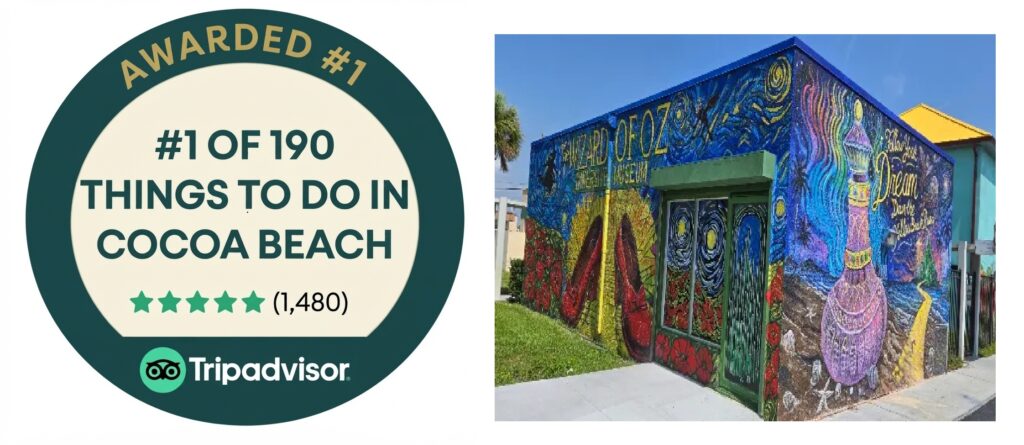
The Wizard of Oz Museum began in Cape Canaveral and relocated to Cocoa Beach in 2026.
For me, that development is part of the museum's continuing history.
A museum is not only a collection of objects. It is also an institution shaped by decisions about how those objects are presented and how the public can encounter them.
Changes in location can become moments to consider what a museum has learned and what it hopes to accomplish next.
As I think about the museum's development, I return to the same underlying purpose: sharing the history of Oz with visitors who may have very different levels of familiarity with the subject.
Whether someone is a dedicated collector or a first-time visitor, I hope the museum provides an opportunity to discover something meaningful.
Why I Believe Education Should Guide Future Decisions
Education can take many forms inside a museum.
Some visitors enjoy detailed historical explanations. Others learn through images, comparisons, or conversations about familiar characters.
A child may become curious about when Dorothy's story was first written. An adult may notice that the original illustrations differ from the film. A collector may want to understand the distinguishing characteristics of an early edition.
These interests are different, but they can all lead toward historical learning.
When I consider the museum's future, I believe educational value should remain an important measure of success.
The museum should make information understandable without oversimplifying it. It should encourage curiosity without presenting speculation as fact.
Above all, it should help visitors appreciate that Oz has a literary and artistic history extending far beyond the version they may already know.
How Modern Technology Fits Into That Vision
The Wizard of Oz Museum includes immersive digital experiences alongside rare books and historical memorabilia.
These experiences offer a different way to engage with imagination and visual subjects.
I believe technology can be useful when it creates opportunities for visitors to explore art, storytelling, or historical information.
But I also believe it is important to distinguish modern presentations from original historical objects.
A digital image of an early illustration may help people examine its details, but it is not the original printed page. A contemporary interpretation of Oz may be visually engaging, but it should not be confused with the imagery created by Denslow or Neill.
Recognizing these differences allows the museum to appreciate both the past and the present.
As technology changes, I hope it continues to support the museum's educational purpose rather than distract from the historical collection.
The Importance of Making History Accessible
Rare-book collecting can involve specialized terminology and research methods that are unfamiliar to many people.
When I began studying Oz books, I had to learn how to distinguish editions, printings, and other bibliographical details.
I do not expect every museum visitor to develop the same level of interest.
But I believe the underlying history can still be made accessible.
Visitors can learn that a familiar story began as a printed book in 1900. They can discover that the early illustrations looked different from later adaptations. They can understand why a surviving original edition is historically significant.
These discoveries do not require extensive prior knowledge.
My hope is that the museum continues to welcome curiosity at every level, from a first question to more detailed research.
Why I Think About the Museum as a Long-Term Project
When I began collecting Oz books, I did not know that the collection would eventually become part of a public museum.
My interest developed gradually. One discovery led to another, and my understanding of the subject deepened over time.
I now think about the museum in a similar way.
Its educational purpose is not something that can be completed with a single exhibit or presentation. Historical research continues, preservation needs remain, and new visitors bring new questions.
I believe a museum should be prepared to keep learning about its own collection.
That may involve revisiting earlier conclusions, improving documentation, or finding clearer ways to explain historical material.
For me, this willingness to continue learning is an important part of responsible museum development.
What I Hope Future Visitors Will Understand About Oz
I hope visitors who encounter the museum in the future will understand that Oz is more than a familiar group of characters.
It is a literary world with a documented history of authorship, illustration, publication, and adaptation.
Baum's original books helped establish a fictional world that continued to inspire readers and artists long after their first publication.
The surviving editions provide opportunities to examine that history directly.
I also hope visitors appreciate the importance of preserving children's literature.
Books written for young readers can have a lasting cultural influence. They can become part of family traditions, inspire new artistic interpretations, and remain meaningful across generations.
Oz is an example of how an imaginative story can become part of a much larger cultural history.
Why the Museum's Future Is Also About Trust
People who visit a museum often assume that the information presented has been carefully considered.
I believe that trust creates a responsibility.
Historical objects should be described accurately. Uncertain details should not be presented as established facts. Modern interpretations should be distinguished from original material.
These principles may seem less exciting than new technology or dramatic presentation, but they are essential to the museum's long-term credibility.
My experience with rare books has taught me that careful research can be just as rewarding as an unusual discovery.
Sometimes learning that a book is not the edition I initially expected leads to a better understanding of its actual history.
I hope the museum continues to value that kind of accuracy, even when the answer is less dramatic than the question.
What Building the Future Means to Me
When I use the phrase "building the future," I do not mean that I have a fixed plan for every change the museum will make.
I mean developing a clear sense of purpose that can guide future decisions.
For the Wizard of Oz Museum, I believe that purpose begins with preserving and sharing authentic Oz history.
It includes caring for rare books, explaining the original illustrations, introducing visitors to Baum's literary world, and encouraging new generations to become curious about the past.
It also means remaining open to thoughtful methods of presentation that can make historical subjects more accessible.
The museum's future should be shaped by both respect for its origins and a willingness to keep learning.
The future of a museum becomes more meaningful when every new step remains connected to the history it was created to preserve.
The First Lesson of Chapter 9
In Chapter 8, I explored how the Wizard of Oz Museum can share history with visitors through imagination, family connections, and modern experiences.
Chapter 9 begins by asking how that purpose can guide the museum's continuing development.
For me, the first lesson is that progress should not be measured only by what is new.
It should also be measured by how well the museum protects its historical foundation, communicates reliable information, and encourages visitors to understand the original world of Oz.
I believe the museum can continue developing while remaining faithful to the books and research that inspired its creation.
That is the future I want to work toward: a museum where new generations can discover Oz, and where the history behind that discovery remains carefully preserved.
Explore the History Behind the World of Oz
Discover rare Wizard of Oz books, historical memorabilia, and immersive experiences at the Wizard of Oz Museum in Cocoa Beach, Florida. Explore the original literary world of L. Frank Baum and the history that continues to inspire generations.
Explore the Museum