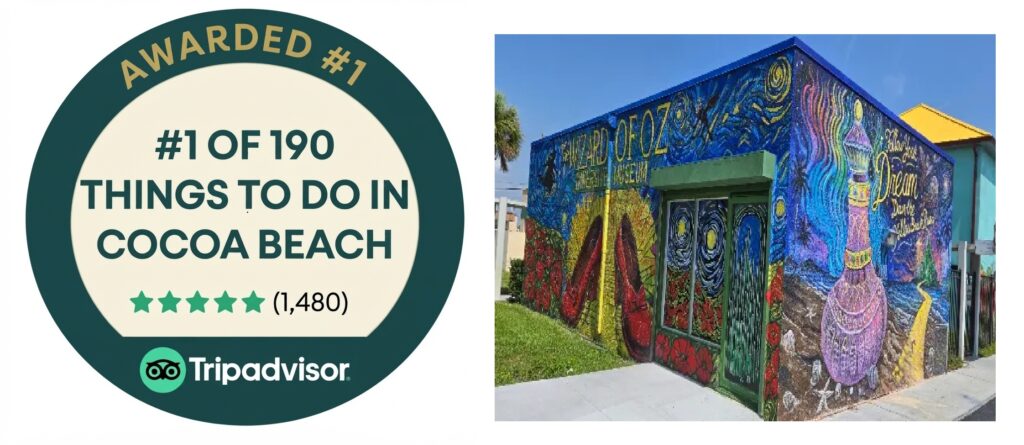
Wizard of Oz Museum · Museum History · Chapter 3 · Story 12
Turning a personal collection into a public museum required a new way of thinking—about historical objects, exhibits, visitors, and the experience we wanted to create.
When Palina suggested creating a museum from my growing collection of Oz books, the idea opened an entirely new chapter. Until then, my attention had been focused on collecting, identifying, and researching the books themselves. A museum would require something more: turning that knowledge into an experience other people could enjoy.
It was one thing to understand why an early Oz edition mattered to a collector. It was another to explain that importance to someone who had never studied rare books.
That difference became central to thinking about what the Wizard of Oz Museum could become.
From a Collection to a Visitor Experience
A private collection can be organized around the interests of its owner. A museum must be organized around the experience of its visitors.
Someone entering a Wizard of Oz museum might know every song from the 1939 film but have never heard of the original books. Another visitor might love L. Frank Baum's stories but know little about the movie memorabilia that followed.
Children might arrive looking for Dorothy and the Yellow Brick Road. Adults might be interested in nostalgia, literary history, or the making of a famous film.
The challenge was to think about how these different interests could connect within one museum.
Finding the Story Behind Each Object
Every collectible has a story, but that story is not always immediately visible.
A visitor looking at an old Oz book may notice its colorful cover or unusual illustrations. A collector might also recognize its publisher, edition, and printing details.
The museum needed to bridge those two ways of seeing.
Rather than presenting an object simply because it was old or rare, the goal was to explain what made it meaningful.
A book could illustrate the beginnings of Oz literature. An illustration could reveal how an artist imagined a familiar character. A piece of memorabilia could show how Oz became part of popular culture.
The challenge was no longer just collecting Oz history. It was finding ways to help visitors experience it.
Connecting the Books and the Movie
One of the most important considerations was the relationship between Baum's original literary world and the famous 1939 film.
For many people, the movie is their first introduction to Oz. Its characters, music, costumes, and memorable scenes have shaped how generations imagine the story.
But the history of Oz began with The Wonderful Wizard of Oz, published in 1900. Baum continued writing Oz stories, and other authors later expanded the series.
A museum could show visitors how the literary tradition and the movie were connected without treating them as the same thing.
That distinction mattered because it revealed a much larger history than many visitors might expect.
Thinking About the Physical Space
A museum also needs a practical environment for displaying objects.
Books are sensitive to light, moisture, handling, and temperature changes. Fragile paper and original bindings require care.
Exhibits need enough space for visitors to view them comfortably, and information must be presented clearly.
These are questions a collector may not need to consider when enjoying books privately, but they become important when sharing a collection with the public.
Planning a museum meant recognizing that preserving the objects and making them accessible were equally important responsibilities.
Making Oz Interesting for Different Generations
Oz has an unusual ability to connect people of different ages.
Some visitors remember watching the movie with their families. Others encounter the characters for the first time through books, films, or modern adaptations.
A museum could provide something for both groups: familiar memories alongside new discoveries.
Historical exhibits could introduce the origins of the stories, while more immersive experiences could make the world of Oz feel immediate and exciting.
This combination of education and entertainment would become an important part of the museum's identity.
Beyond the Bookshelves
My collection of Oz books had provided the original inspiration, but a museum could reach beyond rare-book collecting.
Oz has influenced illustration, theater, filmmaking, toys, collectibles, and popular entertainment.
Bringing these subjects together could help visitors appreciate how one literary world developed into a lasting cultural phenomenon.
The opportunity was not simply to display many objects. It was to create connections among them.
The Practical Side of a Museum Dream
Turning an idea into a public attraction involves more than selecting exhibits.
A museum needs a suitable location, an understandable visitor experience, clear information, appropriate displays, and ongoing attention to operations.
Decisions about space, accessibility, preservation, and the presentation of exhibits all influence what visitors will see.
These practical considerations were part of the larger challenge of moving from a personal passion to a public institution.
The idea was exciting, but it also required a commitment to thinking about the museum as something that would serve other people.
Fred and Palina's Shared Vision
My background in collecting and researching Oz books gave the museum a foundation in literary history.
Palina's encouragement helped turn that private interest toward a larger public purpose.
Together, those two perspectives made the museum idea possible: preserving the history of Oz while creating an experience visitors could enjoy.
The Wizard of Oz Museum would eventually become a place where rare books, historical memorabilia, and immersive experiences could be explored together.
From Planning to Possibility
Looking back, the transition from collecting to planning a museum was a significant change in how I thought about Oz.
I was still interested in editions, illustrations, and the publishing history of the books. But I was also thinking about the people who might one day encounter those objects.
What would they learn? What would surprise them? What would they remember after leaving?
Those questions helped define the purpose of the museum idea.
A private collection had become the starting point for something that could bring Oz history to a much wider audience.
Experience the Museum That Grew from a Collection
Discover rare Oz books, historical collectibles, movie memorabilia, and immersive experiences at the Wizard of Oz Museum in Cocoa Beach, Florida.
Explore the Museum