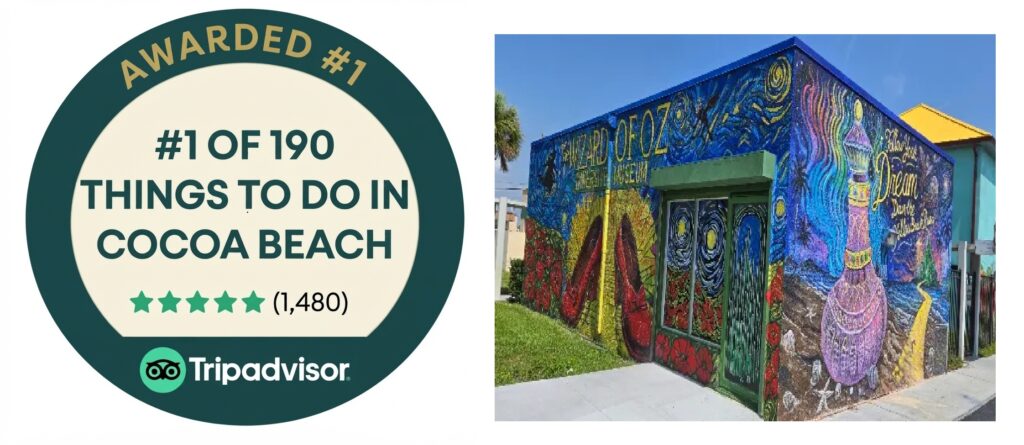
Wizard of Oz Museum · Museum History · Chapter 5 · Story 25
The museum began with my search for rare Oz books. Over time, I came to appreciate something beyond the collection itself: the possibility that a museum visit could inspire memories and curiosity that last long after visitors leave.
When I think about the Wizard of Oz Museum today, I often return to the beginning of my own journey. As a child growing up in the Soviet Union, I encountered Alexander Volkov's The Wizard of the Emerald City. At the time, I believed the story was Russian. I had no idea that it would eventually lead me toward American literary history, rare book collecting, and the creation of a museum.
That childhood encounter remained part of my memory for many years. When I rediscovered Oz through my children in the United States, my curiosity returned in a completely new way.
I began investigating L. Frank Baum's original books, learning about early editions, and eventually building a collection.
Looking back, I recognize how one memorable story can influence a person's interests long after the first encounter.
That idea has become important to the way I think about the museum experience.
Why Some Experiences Stay With Us
People visit museums for many different reasons.
Some are interested in history. Others enjoy art, literature, or unusual collections.
Families may be looking for an activity they can experience together.
Yet the most meaningful part of a museum visit is not always something a person expects in advance.
It may be discovering an unfamiliar fact, recognizing a childhood character, or seeing a historical object that changes how a familiar story is understood.
A memorable experience creates a connection between information and personal interest.
That connection can remain even after many of the individual details have been forgotten.
The Power of Familiar Characters
Oz has an advantage that many historical subjects do not.
Its characters are recognizable to people who may know very little about the original books.
Dorothy, the Scarecrow, the Tin Woodman, and the Cowardly Lion have become part of popular culture.
For some visitors, those characters bring back memories of reading a book during childhood.
For others, they recall watching the 1939 MGM film with family.
Younger visitors may be encountering the world of Oz for the first time.
The museum brings these different experiences together through historical exhibits and immersive presentation.
Familiarity can make visitors feel connected to the subject before they begin learning its history.
Discovering the History Behind the Memories
Many people associate Oz primarily with the famous movie.
But the history of Oz began much earlier.
L. Frank Baum published The Wonderful Wizard of Oz in 1900, with illustrations by W. W. Denslow.
The book introduced an imaginative world that expanded through additional stories.
John R. Neill later became closely associated with the series through his illustrations.
The early books reveal a much broader literary history than many visitors might expect.
Seeing rare editions and historical illustrations can change how someone thinks about a familiar story.
A movie memory may become the beginning of an interest in books, publishing, and illustration.
That is one of the most valuable kinds of discovery a museum can encourage.
How Immersive Experiences Add to the Memory
The Wizard of Oz Museum includes immersive experiences alongside its historical collection.
These experiences offer another way for visitors to connect with the imagination of Oz.
A rare book preserves the physical history of a story.
An immersive environment offers a visual interpretation of its imaginative world.
Each serves a different purpose.
Together, they can create a museum visit that combines historical understanding with visual engagement.
For visitors who are not already interested in rare books, an immersive experience may provide an inviting introduction.
The historical exhibits can then reveal the books and artistic traditions behind the familiar world.
Shared Experiences Become Family Stories
One of the most appealing qualities of Oz is its ability to connect different generations.
A grandparent may remember the film from decades earlier.
A parent may remember reading an Oz story or watching an adaptation.
A child may be discovering the characters for the first time.
When families explore the museum together, they have opportunities to share those connections.
They can compare what they remember, discover unfamiliar details, and discuss different interpretations of Oz.
The museum provides the setting for those conversations.
The memories created through shared discovery may become just as meaningful as the exhibits themselves.
A museum visit may last only a short time, but the curiosity it inspires can continue for years.
Why Curiosity Is More Important Than Memorizing Facts
I have spent many years researching Oz books and their history.
I know how much information can be found in the differences between editions, printings, and illustrations.
But I do not expect every visitor to leave the museum remembering those details.
What matters more is whether the experience inspires an interest in learning.
A visitor might become curious about Baum's original books.
Someone else might want to understand how the 1939 film differed from the literary version.
Another person may begin exploring the artwork of early Oz illustrators.
These are different paths, but each begins with curiosity.
A memorable museum experience can encourage visitors to continue their own discoveries afterward.
What Makes an Authentic Museum Experience
The historical collection remains central to the Wizard of Oz Museum.
Original books and memorabilia connect visitors to the people, publishers, artists, and audiences who helped shape Oz's history.
These objects have a kind of authenticity that modern reproductions cannot replace.
An early book is not simply an illustration of the past.
It is part of that past.
This is why preserving historical objects matters so much to me.
Immersive technology can complement that authenticity by helping visitors imagine the fictional world connected to the collection.
The strongest museum experience combines historical substance with an engaging presentation.
My Own Journey Shows How Long a Memory Can Last
I often think about how unexpectedly my interest in Oz developed.
My first encounter with the story happened in the Soviet Union.
At the time, I did not understand the connection between Volkov's adaptation and Baum's original American work.
That understanding came much later, when I rediscovered Oz through my children.
What followed was a growing interest in literary history and rare book collecting.
Eventually, I wrote about identifying rare Oz books and built a substantial collection.
Palina then suggested turning that collection into a museum.
The Wizard of Oz Museum first opened in Cape Canaveral, Florida, and later moved to Cocoa Beach in 2026.
None of this was something I could have predicted from my childhood introduction to Oz.
Yet that early memory became part of a much larger personal journey.
From Personal Memories to a Public Museum
When I collected rare books privately, I was preserving objects that mattered to me.
Establishing a museum created an opportunity to share their history with others.
That change also expanded my understanding of what the collection could accomplish.
A rare edition could become the starting point for someone else's interest in Oz.
An illustration could introduce a visitor to a version of a character they had never seen.
An immersive experience could encourage a family to explore the literary history behind a familiar story.
The museum made it possible for my private interest to become part of other people's experiences.
I consider that one of the most meaningful developments in the museum's history.
What I Hope Visitors Remember
I hope visitors remember that Oz began as an imaginative work of American literature.
I hope they discover that the world of Oz extends beyond the most familiar film.
I hope the original books and historical artwork encourage appreciation for the people who created and developed these stories.
I hope immersive experiences make the imaginary world engaging for visitors of different ages.
And I hope families leave with memories of something they enjoyed discovering together.
Not every visitor will remember the same thing.
That is part of what makes a museum experience personal.
The important thing is that visitors find a connection that means something to them.
The Meaning of the Museum Experience
The Wizard of Oz Museum began with a collection of rare books and memorabilia.
Its development into a public museum required thinking about more than preservation.
We also needed to consider how to share the stories and their history with people of different ages and interests.
Immersive experiences, historical exhibits, and opportunities for family discovery became important parts of that broader vision.
Each offers a different way to connect with the world of Oz.
For me, the lasting value of the museum lies in those connections.
A visit may begin with familiar characters or an interest in a famous movie.
It may lead to a new appreciation for books, illustration, and literary history.
And sometimes, a memorable experience may become the beginning of an interest that continues long after the visit.
My own life offers an example of how far such an interest can lead.
That is why I believe the memories created through a museum experience are an important part of its legacy.
Create Your Own Oz Memories
Discover rare Oz books, historical memorabilia, and immersive experiences at the Wizard of Oz Museum in Cocoa Beach, Florida.
Explore the Museum