Wizard of Oz Museum · Museum History · Chapter 10 · Story 50
Why I Believe the Wizard of Oz Museum's Story Is Far From Finished
When I think about the history of the Wizard of Oz Museum, I often return to a simple fact: none of this began with a plan to create a museum. It began with a childhood story, a memory that remained with me, and a curiosity that grew many years later. That curiosity led me toward L. Frank Baum's original Oz books, rare editions, historical illustrations, and eventually a collection that became the foundation of a public museum. Looking back, I can identify important milestones. But I do not see those milestones as the end of the journey. I see them as the beginning of responsibilities and possibilities that continue today.
This is the fiftieth story in my account of the museum's history.
Reaching that number gives me an opportunity to reflect on how far the journey has come.
But it also reminds me that the story of a museum is not complete simply because its founder has explained how it began.
A museum continues to develop through its collection, its research, its visitors, and the decisions made about its future.
That is why I believe the Wizard of Oz Museum's story is far from finished.
Looking Back at an Unexpected Beginning
My first connection to an Emerald City story came during my childhood in the Soviet Union.
I encountered Alexander Volkov's The Wizard of the Emerald City, a story that became part of my early experience with imaginative literature.
At the time, I did not understand the relationship between that book and Baum's American Oz stories.
I simply remembered the adventure.
Years later, after moving to the United States, I rediscovered the world of Oz through my children.
That rediscovery opened a subject I had never fully explored.
I began learning about Baum's original books, the larger series, and the artists who helped bring Oz to life.
What began as reading and curiosity gradually became collecting and research.
Why the Original Books Changed My Understanding of Oz
Before studying the original books, I knew Oz primarily through the stories and images that had become familiar to me.
Reading about the history of The Wonderful Wizard of Oz introduced me to an earlier world of publishing and illustration.
Baum's book appeared in 1900, with illustrations by W. W. Denslow.
The continuing series developed through additional adventures, with John R. Neill becoming its principal illustrator beginning in 1904.
I discovered that Oz was not simply one familiar adventure.
It was an extensive literary world with a history that could be studied through surviving books, illustrations, and publishing records.
That realization changed my interest from enjoying the stories to wanting to understand their historical origins.
How Collecting Became a Long-Term Commitment
When I began collecting rare Oz books, I was interested in finding historically significant editions.
But collecting gradually taught me that acquiring an object is only part of understanding it.
I needed to examine printing details, compare editions, and learn how bibliographic evidence could help identify a particular copy.
I also began to appreciate the importance of condition, provenance, and documentation.
A rare book may preserve information that is not immediately obvious.
Its physical features can provide evidence about its production, use, and later history.
I learned that responsible collecting requires patience and a willingness to reconsider earlier assumptions.
Those lessons remain relevant to the museum today.
The Idea That Changed Everything
My wife, Palina, suggested that the collection could become a museum.
Her suggestion helped me consider something I had not originally planned.
Until then, the collection was primarily connected to my personal interest in Oz history.
A museum could make that history accessible to a much wider audience.
It could introduce visitors to original editions and illustrations.
It could explain the historical context behind familiar characters.
It could encourage people to explore the books themselves.
The idea of a museum changed the purpose of the collection.
Preserving rare books remained important, but sharing their significance became equally meaningful.
From Cape Canaveral to Cocoa Beach
The Wizard of Oz Museum first opened in Cape Canaveral, Florida.
That was the stage when my collecting journey became a public institution.
I had to think about how visitors would understand the collection and how historical information could be presented clearly.
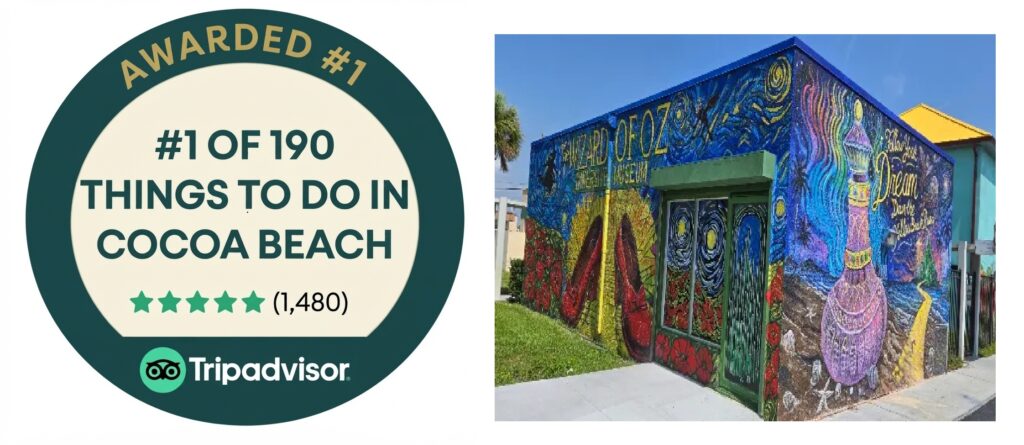
In 2026, the museum relocated to Cocoa Beach.
The move became another important part of the museum's own history.
It reminded me that the physical circumstances of an institution can change while its central purpose remains consistent.
For me, that purpose continues to be the preservation and interpretation of Oz history.
Why Fifty Stories Cannot Contain Everything
Writing about the museum's history has encouraged me to look at familiar experiences from different perspectives.
Some stories focus on my personal journey.
Others examine the original books, rare editions, illustrations, research, or the responsibilities of operating a museum.
Together, these subjects help explain how the institution developed.
But I do not believe any fixed number of stories can capture every meaningful detail.
There are always additional questions about the collection.
There are new ways to explain historical information.
There are aspects of the museum's development that may become more significant with time.
The first fifty stories document a journey.
They do not bring that journey to a final conclusion.
The Collection Still Has More to Teach Me
Even after years of studying Oz books, I do not consider my education complete.
Historical research often reveals how much remains to be understood.
An edition may raise a question about its printing.
An illustration may encourage comparison with another version.
A reference source may contain information that deserves closer examination.
Sometimes research confirms what I already believed.
Sometimes it suggests that an earlier conclusion needs to be reconsidered.
I have learned to appreciate both outcomes.
For me, the continuing possibility of discovery is one of the reasons rare-book collecting remains rewarding.
Why Historical Accuracy Must Remain Central
As the museum continues developing, I believe its historical foundation must remain clear.
The original books are not simply decorative objects.
They are evidence of how Oz was published, illustrated, and experienced by earlier readers.
The museum has a responsibility to explain that evidence accurately.
This means distinguishing documented information from speculation.
It means acknowledging uncertainty when the historical record does not support a definite answer.
It also means remaining willing to improve descriptions when better evidence becomes available.
I believe historical credibility is something a museum must continue earning through careful work.
Why Preserving Knowledge Matters Alongside Objects
A rare book can survive physically while important information about it becomes lost.
The history of a particular copy may depend on inscriptions, ownership records, or other surviving evidence.
Details about editions and printings may require careful comparison with reliable references.
I believe this information deserves preservation alongside the objects themselves.
Research notes, photographs, and documented observations can help future researchers understand the collection.
The museum's own history also deserves careful recording.
The experiences that led to its creation explain why the institution exists.
Preserving that knowledge is part of protecting the museum's identity.
What I Hope Visitors Continue to Discover
Not every visitor comes to the museum with an interest in rare books.
Some recognize Oz through the famous 1939 film.
Others are familiar with the original stories.
Children may be drawn to the characters and imagination.
Adults may be interested in the literary history or the original illustrations.
I believe these different starting points are valuable.
A museum should offer opportunities for visitors to move from something familiar toward something they did not know.
Someone who arrives interested in Dorothy's adventure may leave curious about Baum's books.
Someone who enjoys the artwork may want to learn more about Denslow or Neill.
For me, those possibilities are an important part of the museum's educational purpose.
The Role of Imagination in a Historical Museum
The Wizard of Oz Museum includes immersive digital experiences alongside rare books and historical memorabilia.
I see these as different ways of engaging with the subject.
The original publications provide direct evidence of Oz's literary history.
Modern immersive experiences can encourage visual engagement and imagination.
I believe the two approaches can complement one another when their different roles are clearly understood.
A digital presentation should not be confused with an original artifact.
But it may encourage visitors to explore the history that inspired their interest.
As the museum continues, I want its experiences to support curiosity without losing sight of historical authenticity.
Why the Museum Must Remain Open to Learning
One lesson I have learned from building the museum is that a founder should not assume every decision has already been made correctly.
Historical descriptions may benefit from clarification.
A presentation may become more effective when its educational purpose is clearer.
New research may improve the understanding of an object.
I believe a museum should remain willing to learn from these possibilities.
That does not mean changing its identity whenever a new idea appears.
It means improving the ways it fulfills its purpose.
For me, openness to learning is compatible with a strong commitment to preservation.
What I Have Learned About Legacy
When I think about the museum's legacy, I do not focus only on the size of the collection.
I think about whether the historical objects are preserved responsibly.
I think about whether the information associated with them remains reliable and accessible.
I think about whether visitors leave with a greater appreciation of Oz's literary and artistic history.
I also think about future generations who may study the collection or discover the original books for the first time.
I cannot predict exactly what the museum will become.
But I believe its lasting value will depend on the care it gives to history and the curiosity it encourages.
Why I Still Feel Like a Student of Oz History
Creating a museum has changed my responsibilities, but it has not eliminated the curiosity that led me toward collecting.
I still find it meaningful to study a book closely.
I still appreciate the original illustrations and the historical details that distinguish editions.
I still recognize that there are questions I have not answered.
In some ways, that is the most important connection between my earlier collecting journey and the museum today.
I do not see myself as someone who has reached the end of learning about Oz.
I see myself as someone whose curiosity has grown into a responsibility to preserve and share what can be learned.
What the First Fifty Stories Mean to Me
These fifty stories represent an attempt to explain the museum from the perspective of the person who created it.
They begin with the experiences that led me toward Oz.
They explore how collecting developed into historical research.
They describe why a private collection became a public museum.
They consider the responsibilities of preservation, education, and thoughtful development.
For me, their value is not simply that they record a sequence of events.
They also explain the ideas that shaped my decisions.
I hope they help visitors understand why the museum exists and why its historical mission matters.
The first fifty stories explain how the Wizard of Oz Museum came to be. The next part of its story will be written through the history we preserve, the knowledge we share, and the curiosity we continue to inspire.
Why the Story Is Far From Finished
I cannot know every development that lies ahead for the Wizard of Oz Museum.
There may be additional historical questions to explore.
There may be opportunities to improve how visitors understand the collection.
The museum will continue to have responsibilities related to preservation, research, and public education.
What matters most to me is that these responsibilities remain connected to the original purpose of the museum.
I began collecting because I wanted to understand the history of Oz.
I helped create the museum because that history deserved to be shared.
I hope its future continues to reflect those two motivations.
The journey began with a childhood story.
It developed through rediscovery, collecting, research, and the creation of a public museum.
And it continues today through every opportunity to preserve a piece of Oz history and help someone understand why it matters.
That is why, even after fifty stories, I believe the Wizard of Oz Museum's story is far from finished.
Be Part of the Continuing Story
Visit the Wizard of Oz Museum in Cocoa Beach, Florida, to explore rare Oz books, historical memorabilia, and immersive digital experiences. Discover the original literary and artistic history of Oz and the collection that inspired the museum's creation.
Explore the Wizard of Oz Museum