Wizard of Oz Museum · Museum History · Story 28
Many people know the Wizard of Oz through the famous 1939 film. My own journey led me to discover the original books, their illustrators, and the remarkable literary history behind the characters. Sharing that discovery has become one of the museum's most important purposes.
When I began collecting rare Wizard of Oz books, I was fascinated by how much history existed beyond the familiar movie. What began as a personal interest eventually became the foundation of the Wizard of Oz Museum.
My first encounter with Oz happened during childhood in the Soviet Union. I read Alexander Volkov's The Wizard of the Emerald City without realizing its connection to an American story.
Many years later, after rediscovering Oz through my children in the United States, I became curious about L. Frank Baum's original books.
That curiosity led me toward rare editions, historical illustrations, and the publishing history of Oz.
Today, I want visitors to experience some of that same sense of discovery.
The Story Began Long Before the Movie
For many people, the Wizard of Oz means the 1939 MGM film starring Judy Garland.
The movie introduced Dorothy and her companions to generations of viewers.
But L. Frank Baum published The Wonderful Wizard of Oz in 1900, almost four decades before the film.
W. W. Denslow illustrated that first book, creating images that helped readers imagine Baum's extraordinary world.
The original story contains details and imaginative ideas that differ from later adaptations.
Discovering those differences can change the way a familiar story is understood.
Oz Became an Entire Literary World
Baum's first book was not the end of the story.
He continued writing adventures set in Oz, introducing new characters, places, and ideas.
John R. Neill began illustrating the series with The Marvelous Land of Oz in 1904.
His artwork became closely associated with the continuing literary world of Oz.
When visitors discover the original books, they can see that Oz developed through many stories rather than one film.
That larger history is one of the reasons I became so interested in collecting.
Why Rare Editions Matter
Collecting rare books taught me that a book is more than the words printed on its pages.
Different editions can reveal changes in bindings, illustrations, advertisements, and publishing details.
These differences help collectors understand when and how books were produced.
They also reveal the decisions made by publishers, artists, and printers.
An early edition is a historical object connected directly to the period in which it appeared.
That connection cannot be fully replaced by a modern reproduction.
Preserving these books allows future visitors to encounter evidence of Oz's original publishing history.
The Illustrators Who Shaped Oz
Illustration is essential to the history of Oz.
Denslow's artwork helped establish the appearance of Baum's first book.
Neill later developed a different visual style that became familiar to readers of the continuing series.
These illustrations influenced how readers imagined the characters and landscapes.
They also show how visual storytelling developed across different periods of Oz publishing.
I believe visitors can appreciate these illustrations even if they have never collected a rare book.
From a Private Collection to a Museum
For years, my interest in Oz centered on research and collecting.
I studied editions, investigated historical details, and gradually assembled a substantial collection.
Palina suggested transforming that collection into a public museum.
The idea changed how I thought about the purpose of collecting.
Instead of preserving the books only for my own interest, I could share their history with other people.
The Wizard of Oz Museum first opened in Cape Canaveral, Florida.
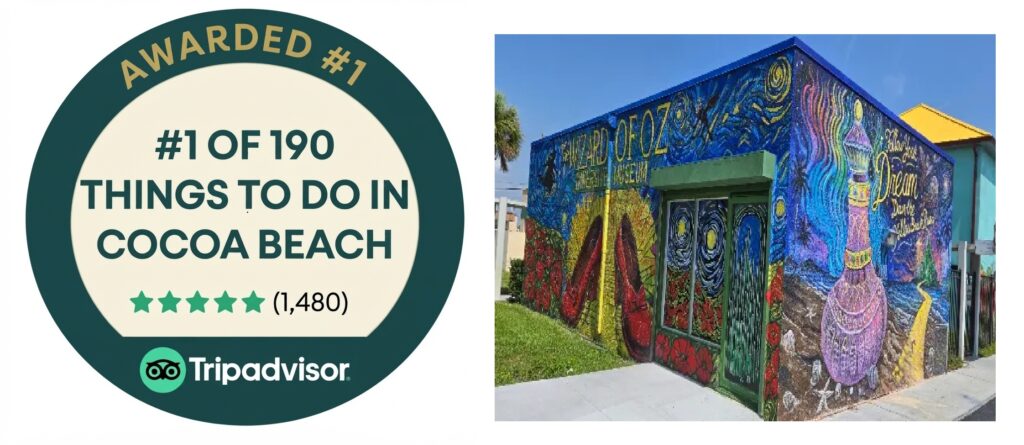
In 2026, we moved the museum to Cocoa Beach.
The location changed, but the importance of the historical collection remained the same.
Helping Visitors See Beyond the Film
Visitors arrive with different expectations and memories.
Some remember watching the film during childhood.
Others recognize Dorothy, the Scarecrow, the Tin Woodman, and the Cowardly Lion from popular culture.
Those familiar characters offer a starting point for exploring the original literature.
A visitor may discover that the books contain characters and adventures they have never encountered.
Another may become interested in the artwork of Denslow or Neill.
Someone else may begin to appreciate the historical importance of an early edition.
These discoveries help connect a familiar story with its literary origins.
The world of Oz becomes even more remarkable when we discover the books and artists that brought it into existence.
How Immersive Experiences Complement the Books
The museum also includes immersive digital experiences alongside its historical exhibits.
These environments introduce visitors to imaginative visual presentations inspired by Oz, Vincent van Gogh, and space.
An original book preserves the physical history of a story.
An immersive environment offers a different way to experience art and imagination.
I see these approaches as complementary.
Visitors attracted by immersive technology may discover an interest in the rare books.
Visitors interested in the historical collection may enjoy experiencing familiar themes through digital art.
Both can encourage curiosity and discovery.
Why the Original Books Still Matter
More than a century after Baum's first Oz book appeared, its characters remain widely recognized.
Yet the books deserve attention for reasons beyond their connection to a famous film.
They represent an important part of American children's literature.
Their illustrations preserve the work of influential artists.
Their editions reveal aspects of publishing history.
And their stories continue to invite readers into an imaginative world.
Those qualities are why I believe the original books should remain central to the museum.
What I Hope Visitors Discover
My own interest in Oz began with a childhood story and grew into years of research and collecting.
I did not know where that interest would eventually lead.
Today, the collection is part of a museum where people can explore Oz's literary history for themselves.
I hope visitors leave understanding that the world of Oz began with books and the imagination of their creators.
I hope they appreciate the original illustrations, the rare editions, and the historical objects preserved in the museum.
Most importantly, I hope the experience encourages them to keep exploring the stories behind the familiar characters.
That kind of curiosity is what first led me to the original Oz books.
Sharing it with visitors remains one of the most meaningful parts of the museum's history.
Discover the Original World of Oz
Explore rare Oz books, historical illustrations, memorabilia, and immersive experiences at the Wizard of Oz Museum in Cocoa Beach, Florida.
Explore the Museum