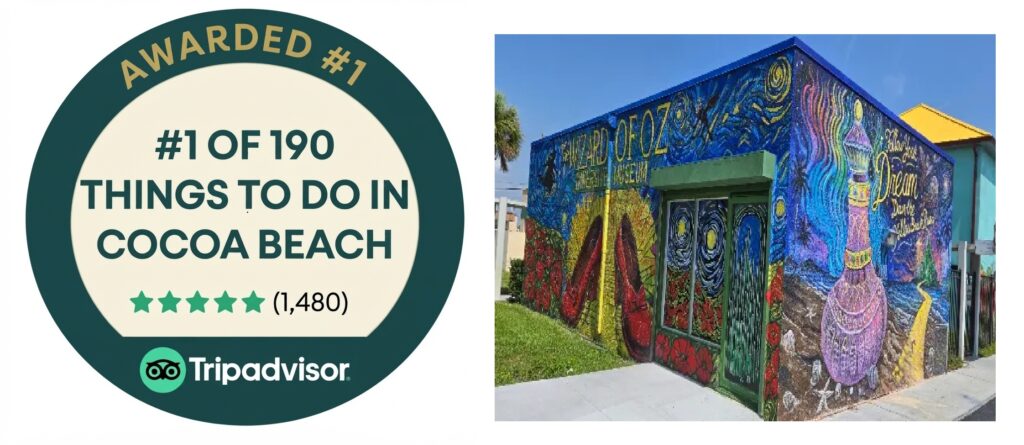
Wizard of Oz Museum · Museum History · Chapter 7 · Story 35
What Collecting Rare Oz Books Taught Me About Preserving History
When I look back on my journey with the Wizard of Oz, I realize that collecting rare books taught me lessons I never expected to learn. What began as an interest in a beloved story gradually became an education in publishing, art, historical evidence, and the responsibility of preserving objects that have survived for generations. The books changed the way I understood Oz, but they also changed the way I understood history itself.
At first, I wanted to discover the books behind the familiar characters. I was fascinated by the possibility of holding an early edition of a story that had influenced readers for more than a century. As I learned about the different printings, illustrations, and publishers, I began to understand that the physical books contained information that could not always be found in the text alone.
Over time, the questions became more important than the excitement of acquisition. What exactly was I looking at? Why had one copy survived in a particular form? Which details could be verified, and which remained uncertain? What responsibility did I have to the history preserved in those pages?
Those questions helped shape my collecting journey and, eventually, my vision for the Wizard of Oz Museum in Cocoa Beach, Florida.
My Journey Began With a Different Emerald City
My first encounter with the world of Oz was not through the American film or even through L. Frank Baum's original books. Growing up in the Soviet Union, I knew Alexander Volkov's The Wizard of the Emerald City.
That story introduced me to an imaginative world that remained part of my childhood memories. At the time, I did not understand the complicated literary relationship between Volkov's adaptation and Baum's original creation.
Later, after moving to the United States, I rediscovered Oz through my children. This time, I had the opportunity to explore Baum's books and learn about the American literary tradition from which the original Oz stories emerged.
Looking back, I think this experience gave me a special appreciation for the way stories travel. They can cross languages and borders, acquire new interpretations, and become meaningful to people who encounter them under very different circumstances.
It also made me curious about the original publications. I wanted to understand how Baum's world first appeared to readers and how it developed into the larger Oz tradition.
The First Lesson: A Book Is More Than Its Text
Before I became interested in collecting, I primarily thought of a book as a story. Its physical form seemed secondary. If the words were the same, I assumed the reading experience would be essentially the same.
Rare-book collecting challenged that assumption.
An early illustrated book is also a product of its time. Its paper, binding, typography, illustrations, and arrangement of pages reflect decisions made by artists, printers, and publishers. These details tell us something about the circumstances in which the work reached its original audience.
The Wonderful Wizard of Oz, published in 1900 with illustrations by W. W. Denslow, is a particularly interesting example. The story and its visual presentation were closely connected. Readers encountered Baum's imaginary world through both language and artwork.
As I learned more, I realized that a modern reproduction could communicate the story while still differing substantially from the experience offered by an early copy.
That did not make modern editions unimportant. It simply showed me that the original physical publication had a historical identity of its own.
The Second Lesson: Evidence Matters More Than Assumptions
One of the most important changes in my collecting habits came when I learned how easily an old book can be misidentified.
A copyright date may remain unchanged through multiple printings. Similar-looking bindings may belong to different issues. Illustrations may be reproduced in later editions. A seller's description may be confident without being fully supported.
I began to appreciate the discipline of bibliography: examining physical evidence and comparing it with reliable descriptions of known editions and printings.
This work requires patience. It is often necessary to study several features together rather than depend on one promising detail.
More importantly, it requires a willingness to say, "I do not know yet."
That may sound like a small lesson, but I believe it is fundamental to preserving history. When we confuse assumptions with evidence, we risk passing inaccurate information to the next person who studies an object.
A careful description, even when incomplete, is more valuable than an impressive claim that cannot be verified.
The Third Lesson: Artists Are Part of Literary History
My interest in rare Oz books also introduced me to the importance of illustration.
W. W. Denslow helped establish the original visual world of Oz in 1900. Beginning with The Marvelous Land of Oz in 1904, John R. Neill became the principal illustrator of the continuing series.
Studying their work taught me that the appearance of a fictional world is not created by an author alone. Illustrators interpret descriptions, establish visual relationships, and give readers images that can remain memorable long after a book is closed.
When people think of Oz today, many immediately picture the 1939 film. I appreciate the film's importance, but the early books reveal a visual history that existed long before Hollywood's interpretation.
Preserving these books also means preserving evidence of the artists who helped shape that history.
For me, this was an important expansion of the collecting experience. I was no longer studying only the stories of Oz. I was studying the people and creative decisions that brought those stories to readers.
The Fourth Lesson: Every Copy Has Its Own History
Two books from the same printing can appear nearly identical, yet their individual histories may be very different.
One copy might contain an ownership inscription. Another might have a bookplate or evidence of an old repair. A third might have survived with little visible indication of its previous owners.
These details remind me that books pass through real lives.
The Oz books were originally created for readers, including children who enjoyed adventures, characters, and illustrations. Many surviving copies were used and cherished long before anyone considered them collectible.
As I studied these objects, I became interested in the distinction between their publishing history and their personal history. The first tells us how the book was made. The second may reveal something about what happened after it entered the world.
Not every mark can be interpreted with confidence. An inscription may identify a name without establishing a complete ownership history. A worn cover may suggest use without telling us who used it.
Still, those traces deserve attention because they are part of the surviving evidence.
The Fifth Lesson: Rarity Does Not Tell the Whole Story
Collectors naturally pay attention to rarity. Certain editions and printings are more difficult to find than others, and that scarcity can influence their desirability.
But rarity is only one way to evaluate a book's significance.
A later edition may demonstrate how the appearance of Oz changed over time. A well-used copy may offer evidence of reading habits. An unusual binding may illustrate a publisher's changing approach to the market.
Even when a book is not exceptionally scarce, it may contribute to a better understanding of the series' history.
I learned that a collection becomes more informative when its objects are understood in relation to one another. The differences between editions can be as revealing as the characteristics of a single highly desirable copy.
This perspective helped me think about collecting as a process of building historical understanding rather than simply acquiring the rarest objects available.
Why I Began Thinking Beyond My Own Collection
As my knowledge grew, I found myself considering how the information I was learning could be shared.
A private collection can provide enormous satisfaction to its owner, but the books also have the potential to educate people who may never have encountered early Oz editions.
Someone familiar only with the movie might discover that Baum wrote an entire series of Oz adventures. A visitor might learn that the original illustrations differed from later adaptations. Another person might become curious about how to identify an early printing.
I began to see that the collection could serve as an introduction to a larger history of children's literature, publishing, and visual art.
When my wife, Palina, suggested turning the collection into a museum, the idea offered a way to make that history accessible to a wider audience.
It was a significant change in perspective. The question was no longer only what I wanted to collect. It became what visitors might learn from the collection.
How the Museum Changed My Sense of Responsibility
The Wizard of Oz Museum first opened in Cape Canaveral and later relocated to Cocoa Beach in 2026.
Creating a museum brought the collecting experience into a public setting. Objects that had once been part of a personal pursuit became part of an educational experience for visitors with different backgrounds and interests.
Some visitors come because they love the 1939 movie. Others are interested in the original books, the historical memorabilia, or the immersive digital experiences. Families may arrive with children who are discovering Oz for the first time.
I believe this variety of interests is one of the museum's strengths. It creates opportunities to connect familiar entertainment with less familiar literary history.
But public presentation also increases the importance of accuracy. When a museum describes an object, visitors reasonably expect that the information has been researched and presented responsibly.
That expectation reinforces the lessons I learned as a collector: examine the evidence, acknowledge uncertainty, and respect the difference between a documented fact and an attractive story.
Preserving Knowledge Alongside Physical Objects
A rare book can survive for generations while information about it disappears.
Ownership records may be lost. Details about an edition may become separated from the book. Research notes may remain in one person's memory rather than in a form that someone else can consult.
For this reason, I came to appreciate that documentation is part of preservation.
Photographs, bibliographic descriptions, condition records, and supporting references help explain what an object is and why it matters. They also make it easier for future researchers to review earlier conclusions.
I believe a useful record should distinguish what has been verified from what remains uncertain. It should preserve evidence rather than simply repeat conclusions.
The goal is to make knowledge transferable. If someone studies a book many years from now, they should have a better starting point because of the care taken to document it today.
What Modern Technology Can Contribute
One of the interesting aspects of the Wizard of Oz Museum is the relationship between historical objects and modern immersive experiences.
At first glance, a rare book and a digital environment may seem to belong to entirely different worlds. One preserves the materials and design of an earlier era. The other uses contemporary technology to create visual experiences.
Yet both can encourage curiosity.
A visitor may first be drawn to the museum by its immersive presentation of Oz, Van Gogh, or space-related imagery. That experience may create an opportunity to discover the historical books and the original artists whose work helped define Oz.
I do not see technology as a replacement for the physical collection. A digital reproduction cannot fully communicate the material characteristics of an early book.
But technology can make historical information more accessible, reveal visual details, and invite people to explore subjects they might not otherwise investigate.
When used thoughtfully, it can help connect the past with the present.
Why a Museum Should Encourage Questions
I do not expect every visitor to leave the museum knowing how to identify a first printing or explain the differences between Denslow and Neill.
Those are specialized subjects, and visitors arrive with many different interests.
What I hope the museum encourages is curiosity.
A person who sees an early Oz book might wonder how it differs from the copy they read as a child. Someone who notices an original illustration may become interested in the artist. A visitor who learns that Baum's stories preceded the movie may decide to read one of the books.
These questions are valuable because they can lead to further discovery.
My own journey began with curiosity about a familiar story. It eventually led me to collecting, research, and the creation of a museum. I know from experience that a single question can open the door to a much larger subject.
The Difference Between Collecting for Myself and Sharing With Others
Personal collecting and museum work overlap, but they are not identical.
As a collector, I could concentrate on the details that interested me most. As a museum founder, I also have to think about how those details can be explained to someone encountering them for the first time.
A technical description may be useful to a specialist but confusing to a casual visitor. A familiar character or illustration may provide a better introduction before the discussion moves into publishing history.
I have come to appreciate the importance of connecting specialized knowledge with understandable stories.
That does not mean simplifying history until its complexity disappears. It means finding ways to make accurate information inviting.
The most satisfying museum experience, in my view, allows a visitor to enjoy what is familiar while discovering something they did not know before.
What I Hope Future Generations Will Find
One of the questions that continues to matter to me is what will remain useful about the collection many years from now.
The books themselves are important. Their illustrations, bindings, and publishing details provide physical evidence of the history of Oz.
But I also hope the knowledge surrounding them will remain accessible. Future readers and researchers should be able to understand how particular editions were identified, why certain illustrations matter, and what is known about the surviving copies.
I cannot predict how future generations will experience books or museums. Technology and reading habits will continue to change.
What I can say is that careful preservation and honest research create possibilities for people we have not yet met.
That is a responsibility I did not fully understand when I first began collecting, but it has become one of the most meaningful parts of the journey.
Collecting taught me how to recognize rare Oz books. Preserving history taught me why those books matter beyond my own lifetime.
Looking Back on Chapter 7
The five stories in this chapter have explored different lessons from my years of collecting.
In Story 31, I explained how I learned to identify rare Oz editions and printings. Story 32 examined the importance of the original illustrations. Story 33 considered the personal histories of individual copies. Story 34 focused on the practical responsibilities of preservation.
This final story brings those subjects together.
Identifying a book helps us understand what it is. Studying its illustrations helps us understand its artistic history. Investigating its ownership reveals something about its journey through time. Preserving and documenting it helps protect that information for the future.
These activities are connected by a simple principle: historical objects deserve to be understood accurately and treated with care.
For me, that principle has become central to the Wizard of Oz Museum.
Why I Still Find the Journey Meaningful
I began with a childhood connection to the Emerald City. Years later, I rediscovered Oz through my family and became fascinated by the original books.
I could not have predicted how far that interest would take me or how many different subjects I would encounter along the way.
Collecting introduced me to the history of publishing, the work of remarkable illustrators, and the complexity of identifying early editions. It also taught me patience, respect for evidence, and the importance of preserving what has survived.
The Wizard of Oz Museum in Cocoa Beach allows me to share some of those discoveries with visitors. I hope the museum continues to offer both enjoyment and opportunities to learn about the literary and artistic origins of Oz.
Above all, I want the collection to remind people that history is preserved through real objects and the care given to them.
That is the lesson I carry forward from collecting rare Oz books: the value of a collection is not measured only by what it contains, but also by what it helps others understand.
Explore the History Behind the World of Oz
Discover rare Wizard of Oz books, historical memorabilia, and immersive experiences at the Wizard of Oz Museum in Cocoa Beach, Florida. Explore the literary and artistic history that inspired this remarkable world.
Explore the Museum