Wizard of Oz Museum · Museum History · Chapter 8 · Story 36
How I Learned to Turn a Private Oz Collection Into a Public Museum Experience
For many years, my interest in the Wizard of Oz was a personal journey. I collected books, studied publishing history, compared illustrations, and tried to understand how L. Frank Baum's stories had developed into an important part of American culture. I found satisfaction in the research itself. But when my wife, Palina, suggested turning the collection into a museum, I began thinking about something I had not previously needed to consider: how to make that knowledge meaningful to people who did not share my background as a collector.
A private collection and a public museum may contain similar objects, but they serve different purposes. A collector can spend hours studying a binding variation or a publishing detail. A visitor may have only a short time to understand why a particular book matters. Some visitors know Baum's original stories. Others know only the famous 1939 film. Many arrive with children who are experiencing Oz for the first time.
I came to understand that presenting a collection requires more than placing interesting objects on display. It requires finding a way to connect those objects with the curiosity, memories, and imagination of the people who come to see them.
My Collection Began With Curiosity, Not a Museum Plan
My connection to Oz began long before I thought about collecting rare books. Growing up in the Soviet Union, I encountered Alexander Volkov's The Wizard of the Emerald City. That version of the Emerald City became part of my childhood experience.
After moving to the United States, I rediscovered Oz through my children. I became interested in L. Frank Baum's original stories and gradually began exploring the books themselves.
What fascinated me was the history behind the familiar characters. I wanted to understand the early editions, the illustrators, the publishers, and the differences between the literary world of Oz and its later adaptations.
As my collection developed, I learned to appreciate details that a casual reader might never notice. A particular binding, an illustrated page, or a publisher's imprint could become the starting point for a long investigation.
At that stage, I was primarily collecting to satisfy my own curiosity. I did not need to explain every discovery to someone encountering Oz history for the first time.
The Question That Changed My Perspective
When Palina suggested creating a museum, the idea required me to reconsider what the collection could become.
Instead of asking only which books were historically important, I needed to think about how those books could help visitors discover something interesting. The collection had to become part of a larger experience.
I began considering the difference between information that fascinates a specialist and information that captures a visitor's attention.
For example, a collector may immediately understand why identifying an early printing matters. Someone unfamiliar with rare books may first need to learn that a copyright date does not necessarily reveal when a particular copy was printed.
The challenge is not to eliminate the complexity. It is to provide an understandable path into it.
I realized that a museum could help people begin with familiar characters and gradually discover the history behind them.
Learning to See the Collection Through a Visitor's Eyes
When I study an Oz book, I may notice its binding, printing details, illustrations, and condition. But a visitor might first notice Dorothy, the Scarecrow, or a colorful picture of the Emerald City.
Neither perspective is wrong. They simply begin in different places.
I came to appreciate that a good museum experience should recognize these different starting points. Someone who loves the film may be interested to discover how the original book differed from the screen adaptation. A parent may be curious about the stories their children could read. A collector may want more information about the publication history.
The same historical object can support several kinds of learning.
For me, that is one of the most rewarding possibilities of presenting a collection publicly. It allows a book that I value for its bibliographic importance to become meaningful to someone for an entirely different reason.
Why the Familiar Movie Provides a Starting Point
For many people, the Wizard of Oz means the 1939 film. Its characters, songs, and visual imagery have become deeply familiar through generations of popular culture.
But Baum's The Wonderful Wizard of Oz was published in 1900, decades before the film. The original book introduced readers to Dorothy and her companions through Baum's writing and W. W. Denslow's illustrations.
Later Oz books expanded that world with new characters, places, and adventures. Beginning with The Marvelous Land of Oz in 1904, John R. Neill became the principal illustrator of the continuing series.
I see the film's popularity as an opportunity rather than an obstacle. Familiarity can lead to questions. What did Dorothy look like in the first book? How many Oz stories did Baum write? What happened to Oz after the adventure most people know?
Those questions can open the door to literary history without requiring visitors to arrive as experts.
The Importance of Explaining Why an Object Matters
A rare book does not explain itself. A visitor may see an old volume and recognize that it is valuable or unusual, but that does not necessarily reveal its significance.
To understand an early Oz book, a person may need to know when it was published, who illustrated it, how it relates to other editions, and what makes its physical form historically interesting.
As a collector, I learned to examine these details closely. As a museum founder, I began thinking about how to communicate them without overwhelming the audience.
I believe the most useful explanation begins with a clear idea. Rather than presenting a long list of technical characteristics, it can first answer a simple question: why should someone care about this object?
From there, visitors who want to know more can explore the deeper history.
This approach respects both the historical material and the different levels of interest visitors bring to the museum.
Why Original Books Create a Different Experience
Today, readers can find information about Oz online, view reproductions of illustrations, and read many older texts digitally. These resources are valuable, and I use modern technology as part of my own interest in history.
But seeing an original historical book offers a different experience.
The physical object reminds us that the story existed in a particular time and place. Its paper, illustrations, binding, and design belong to the history of publishing. The book is evidence of how readers encountered Oz before television, streaming, and digital media.
I believe that physical presence can make history feel more immediate. A visitor does not need to handle a fragile volume to recognize that it has survived from another era.
That is one reason I wanted rare books to remain an important part of the museum experience, even as the museum incorporated other ways of presenting imaginative worlds.
Combining Historical Objects With Immersive Experiences
One distinctive feature of the Wizard of Oz Museum is the combination of historical memorabilia and rare books with immersive digital experiences.
These elements may appear very different, but I see them as complementary.
The books connect visitors with the history of Oz as literature. They show how the imaginary world was originally presented through words and printed illustrations.
Immersive experiences offer another way to engage with imagination and visual storytelling. The museum's presentations include Oz as well as experiences involving Van Gogh and space-related imagery.
I find the relationship between these forms of expression interesting. Early publishers used the artistic and printing technologies available to them. Modern digital environments use different tools to surround audiences with images and atmosphere.
The technology changes, but the human interest in entering imaginative worlds remains.
My goal is not to suggest that one experience replaces the other. I believe the historical collection and the immersive presentations can encourage visitors to appreciate different forms of creativity.
Making History Accessible to Families
One of the considerations involved in creating a public museum is recognizing that families often visit together.
Children and adults may respond to different aspects of the same exhibit. A child might be interested in a recognizable character, while an adult becomes curious about the history of the book in which that character first appeared.
I believe a museum should make room for both experiences.
Oz is particularly well suited to this because its stories have reached several generations of readers and viewers. Parents and grandparents may bring their own memories, while younger visitors encounter the characters with fresh curiosity.
The historical collection can become a bridge between those generations. It allows a family to see that the stories they know have a history extending far beyond any one adaptation.
That possibility makes the museum experience meaningful to me in a way that private collecting alone could not provide.
Why I Do Not Want the Museum to Be Only for Collectors
Rare-book collecting is a specialized field. It involves terminology, bibliographic references, and details that can take years to understand.
I value that knowledge, but I do not believe visitors should need it before they can enjoy the museum.
Someone who comes because they love Dorothy and Toto should feel welcome. Someone interested in illustration should be able to discover the work of Denslow and Neill. Someone fascinated by publishing history should find opportunities to explore that subject more deeply.
To me, the museum's purpose is not to test what visitors already know. It is to invite them to discover something new.
This principle also helps guide how I think about presenting historical information. Accuracy remains essential, but the explanation should be understandable to someone encountering the subject for the first time.
How the Museum's Location Became Part of Its Story
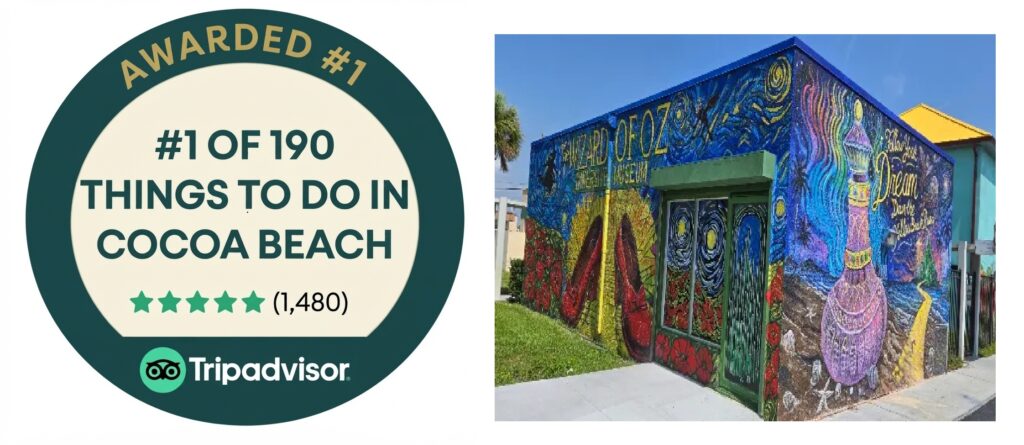
The Wizard of Oz Museum first opened in Cape Canaveral and later moved to Cocoa Beach in 2026.
Operating a museum in a destination visited by families and travelers creates opportunities to introduce Oz history to people who might not otherwise seek out a rare-book collection.
Some visitors may plan their trip around the museum. Others may discover it while exploring attractions in the area. Their reasons for visiting can vary widely.
I see this as an opportunity to reach beyond the community of dedicated Oz collectors and enthusiasts.
A visitor does not have to begin with a strong interest in literary history. The museum experience itself can become the beginning of that interest.
That possibility is one of the reasons I find the public side of the museum rewarding.
What I Learned About Balancing Entertainment and Education
People visit museums for different reasons. Some want to learn. Some want to enjoy themselves. Many want both.
At first, I thought primarily about the historical importance of the collection. Over time, I came to appreciate that an enjoyable experience can also create opportunities for education.
A person drawn in by familiar characters may become interested in the original books. An immersive presentation may inspire someone to ask how artists have imagined Oz across different periods.
Entertainment and historical learning do not have to compete. When presented thoughtfully, they can reinforce each other.
At the same time, I believe the historical facts must remain clear. The museum should distinguish Baum's original literary world from later adaptations and avoid presenting uncertain claims as established history.
For me, that balance is an important part of earning visitors' trust.
The Responsibility of Sharing a Personal Collection
When a collection becomes part of a museum, it takes on a public role.
The objects still require careful preservation, but they also become part of an educational responsibility. Visitors may rely on the museum's descriptions to understand the history of a book, illustration, or piece of memorabilia.
That responsibility connects directly to the lessons I discussed in Chapter 7. Identifying editions accurately, documenting provenance, and caring for fragile materials are not only collecting practices. They also support the credibility of a museum.
I have learned that presenting history publicly requires both enthusiasm and restraint. It is important to communicate why something is interesting without exaggerating what the evidence proves.
A museum should encourage wonder while remaining honest about the objects it presents.
Why I Want Visitors to Leave With Questions
I do not expect every visitor to remember the publication date of The Wonderful Wizard of Oz or the names of its early illustrators.
What I hope they remember is that there is more to Oz than they may have realized.
Perhaps someone will become curious about Baum's other books. Perhaps a family will decide to read the original story together. Perhaps a visitor will discover that the illustrations they associate with Oz were not the first images created for those characters.
Those questions can continue long after a museum visit ends.
My own interest in Oz developed through questions. Each discovery led me to another subject, from editions and illustrations to preservation and the history of children's literature.
I hope the museum can offer visitors a similar beginning, even if their interests eventually lead them in different directions.
A private collection preserves what one person has discovered. A museum creates opportunities for others to make discoveries of their own.
What This Change Has Meant to Me
Looking back, the transition from collector to museum founder changed my relationship with Oz.
I still value the research and the physical books. I remain interested in their publishing history, illustrations, and preservation. But I now think more often about the people who encounter the collection and what they may take away from the experience.
When Palina suggested creating the museum, she helped open the possibility of sharing something that had been important to me personally.
The museum's development, from its beginnings in Cape Canaveral to its location in Cocoa Beach, has given that idea a public form.
I believe the most meaningful result is not simply that the collection can be seen by more people. It is that the books and memorabilia can become starting points for conversations about literature, art, imagination, and history.
That is the transformation I value most: a personal interest becoming an opportunity for shared discovery.
The Beginning of a New Chapter
In the previous chapter of this museum history series, I explored the lessons that rare-book collecting taught me about research and preservation.
Those lessons remain important, but they are only part of the museum's story.
Chapter 8 turns toward the people who experience the museum. It explores the relationship between historical objects and modern presentation, the role of imagination in learning, and the challenge of creating a place that welcomes different generations.
For me, the central idea is simple. The Wizard of Oz Museum should not exist only to preserve what I have collected. It should also help visitors discover why the history of Oz remains interesting and meaningful.
That is how I began learning to turn a private collection into a public museum experience—and why the process continues to shape how I think about the museum's future.
Experience the World of Oz in Cocoa Beach
Explore rare Wizard of Oz books, historical memorabilia, and immersive digital experiences at the Wizard of Oz Museum in Cocoa Beach, Florida. Discover the history behind the familiar characters and the imagination that continues to inspire new generations.
Explore the Museum