Wizard of Oz Museum · Museum History · Story 29
The museum began with my search for rare Oz books. Today, as I think about its future in Cocoa Beach, I want to preserve the collection while continuing to introduce new generations to the literature, artwork, and imagination of Oz.
When I think about the future of the Wizard of Oz Museum, I often return to the beginning of my own journey. Growing up in the Soviet Union, I encountered Alexander Volkov's The Wizard of the Emerald City. At that time, I could not imagine that this childhood story would eventually lead me to American literary history and the creation of a museum in Florida.
Many years later, after rediscovering Oz through my children in the United States, I began investigating L. Frank Baum's original books.
That interest gradually became a collection of rare editions, historical illustrations, and memorabilia.
Palina suggested transforming the collection into a museum where other people could discover its history.
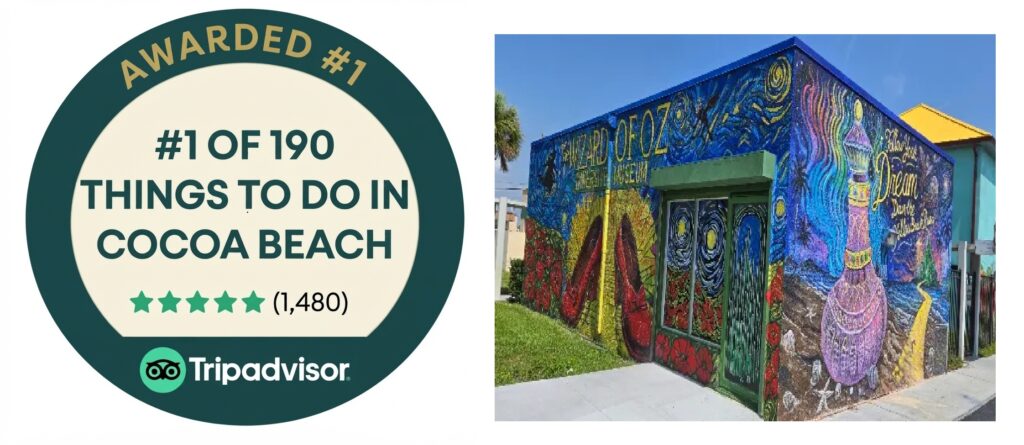
The Wizard of Oz Museum first opened in Cape Canaveral, Florida, and later moved to Cocoa Beach in 2026.
Now I think not only about how the museum developed, but also about what it can become in the future.
Preserving the Collection for Future Generations
The historical collection remains the foundation of the Wizard of Oz Museum.
Rare books and memorabilia connect visitors to the writers, illustrators, publishers, and readers who helped shape Oz.
L. Frank Baum published The Wonderful Wizard of Oz in 1900, with illustrations by W. W. Denslow.
John R. Neill later became closely associated with the continuing Oz series through his illustrations.
The original books preserve evidence of that literary and artistic history.
I believe preserving these objects must remain central to the museum's purpose.
Future visitors deserve the opportunity to encounter historical books and artwork, not only modern reproductions.
Why Original Books Cannot Be Replaced
Today, many books can be read electronically.
Historical illustrations can also be viewed through digital collections.
These resources make information more accessible.
But an original book is more than the text printed on its pages.
Its binding, paper, illustrations, and printing details reveal something about the period in which it was produced.
An early edition is a physical connection to the history of Oz.
That authenticity is one reason I spent so many years researching and collecting these books.
I want future visitors to understand why original historical objects deserve to be preserved.
Introducing New Visitors to Oz History
Many people know Oz primarily through the famous 1939 MGM film.
Dorothy, the Scarecrow, the Tin Woodman, and the Cowardly Lion have become familiar across generations.
Those characters provide a natural introduction to the museum.
But the original literary world is much broader than the familiar movie.
Baum continued writing Oz adventures after the first book.
The illustrations and stories developed through an extended literary series.
I hope the museum continues to help visitors discover this larger history.
Someone who arrives because of a childhood movie memory may leave with an interest in the original books.
That possibility is one of the museum's greatest opportunities.
The Role of Immersive Experiences
The Wizard of Oz Museum also includes immersive digital experiences alongside its historical collection.
These environments offer visual presentations inspired by Oz, Vincent van Gogh, and space.
They introduce art and imagination through contemporary technology.
I see these experiences as complementary to the historical exhibits.
A rare book preserves the physical history of a story.
An immersive environment offers another way to engage with imaginative subjects.
Both can encourage visitors to become curious about what they are seeing.
As technology develops, I hope the museum can continue finding thoughtful ways to combine historical substance with engaging presentation.
Creating Experiences for Different Generations
Oz has remained meaningful to people of different ages.
Some visitors remember reading the books during childhood.
Others remember watching the film with their families.
Younger visitors may be discovering Dorothy and her companions for the first time.
I hope the museum continues to provide opportunities for those generations to explore Oz together.
A grandparent may share a memory.
A parent may discover something unexpected about the original books.
A child may become interested in a character or illustration.
These different experiences can become part of a shared family memory.
Why Curiosity Matters More Than Memorizing Facts
I have spent many years studying Oz books and their history.
I know how much information can be found in early editions, printing differences, and illustrations.
But I do not expect every museum visitor to remember those details.
What matters more is whether a visit inspires curiosity.
Someone may want to read Baum's original books.
Another visitor may become interested in the artists who illustrated Oz.
Someone else may begin exploring the history of American children's literature.
Those interests can continue long after a museum visit ends.
Preserving the past matters most when it helps inspire curiosity in the generations that come after us.
The Museum's New Chapter in Cocoa Beach
Moving the museum to Cocoa Beach in 2026 marked another stage in its development.
Cocoa Beach attracts visitors interested in the Atlantic coast, surfing, and nearby Space Coast attractions.
The Wizard of Oz Museum offers a different kind of experience.
It introduces visitors to literary history, rare books, historical memorabilia, and immersive visual art.
I hope more people discover that an attraction devoted to Oz exists in Cocoa Beach.
But recognition alone is not the goal.
The museum must continue offering an experience that is worth visitors' time and attention.
Learning From the People Who Visit
Visitors bring different expectations to the museum.
Some are interested in rare books and historical objects.
Others come for immersive experiences or a family activity.
Their responses remind me that the museum can be meaningful in different ways.
Reviews and recommendations also help introduce the museum to new audiences.
Thoughtful feedback can help us understand what visitors appreciate and where the experience might be improved.
I believe listening to visitors should remain part of the museum's development.
Keeping the Original Mission
Museums can change over time.
New technologies and new approaches to presentation may create opportunities.
But the original purpose should remain clear.
The Wizard of Oz Museum began with a collection of rare books and memorabilia.
Its mission grew from my desire to preserve and share the history of Oz.
That history includes the original books, their illustrators, and the cultural influence of the stories.
Immersive experiences can help visitors connect with these subjects.
But the historical collection must remain the foundation of the museum.
What I Hope the Future Holds
I cannot predict every change the museum may experience in the years ahead.
But I know what I hope it will continue to represent.
I want rare Oz books and historical memorabilia to be preserved for future generations.
I want visitors to discover that Oz began as an imaginative work of American literature.
I want families to share experiences that encourage conversation and curiosity.
And I want the museum to remain a place where historical understanding and imagination can exist together.
My own journey began with a story that stayed in my memory from childhood.
That memory eventually led to research, collecting, and the creation of a museum.
If the Wizard of Oz Museum inspires visitors to begin their own journeys of discovery, I believe its future will remain connected to the purpose that created it.
Discover the Continuing Story of Oz
Explore rare Oz books, historical memorabilia, and immersive experiences at the Wizard of Oz Museum in Cocoa Beach, Florida.
Explore the Museum