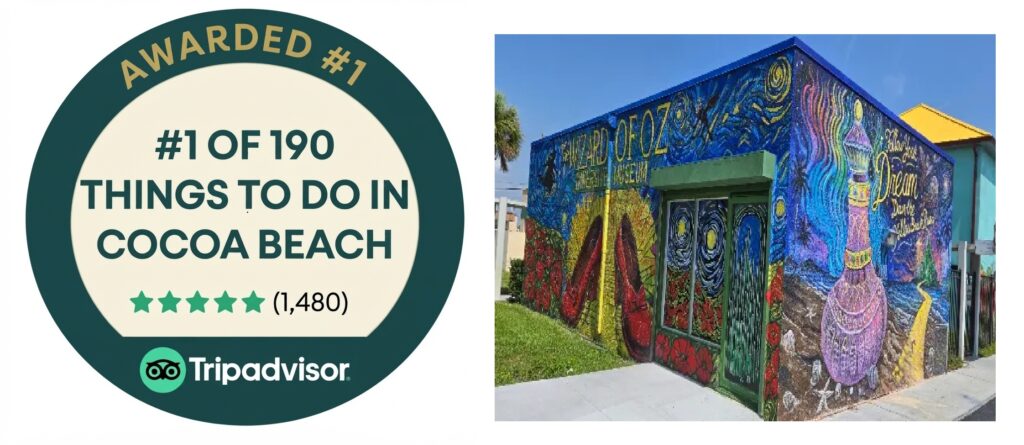
Wizard of Oz Museum · Museum History · Chapter 10 · Story 49
Why Sharing Oz History Has Become as Important to Me as Collecting It
For many years, my interest in the Wizard of Oz was primarily personal. I wanted to discover the original books, understand their publishing history, and learn how the illustrations and editions changed over time. Collecting gave me a reason to continue researching, and each book opened another path toward understanding the history of Oz. But as the collection developed, I began to realize that keeping this knowledge to myself would leave an important part of its value unexplored. The books were historically significant whether anyone else saw them or not. Yet sharing their stories could help other people discover a history they might never otherwise encounter.
That realization gradually changed the way I thought about collecting.
I still appreciate the excitement of finding an interesting edition or learning something new about an illustration. But I now consider how that information can become meaningful to visitors.
For me, the Wizard of Oz Museum represents the connection between those two activities: preserving historical objects and sharing the knowledge that makes them important.
When Collecting Was Something I Did for Myself
My interest in Oz began long before I imagined creating a museum.
As a child growing up in the Soviet Union, I encountered Alexander Volkov's The Wizard of the Emerald City.
Years later, after moving to the United States, I rediscovered the world of Oz through my children.
That experience led me toward L. Frank Baum's original books and eventually toward rare editions.
At first, I was simply following my curiosity.
I wanted to know more about the books, the illustrations, and the publishing history behind them.
I did not need a public audience to find the research rewarding.
The satisfaction came from understanding something that had previously been unfamiliar to me.
That personal curiosity remains an important part of my relationship with the collection today.
How the Collection Began to Feel Bigger Than My Own Interest
As I studied more Oz books, I began to recognize how many subjects were connected to them.
The original publications offered opportunities to explore American children's literature, book design, illustration, and the history of popular storytelling.
They also provided a way to understand Oz beyond the most familiar adaptation.
I realized that the collection could interest people who had never considered themselves rare-book collectors.
Someone interested in art might appreciate the original illustrations.
Someone who enjoyed the famous film might want to learn how the book differed from it.
A child might become curious about the additional Oz adventures.
These possibilities helped me see that the collection's educational value extended beyond the questions I personally wanted to answer.
Palina's Suggestion Changed the Direction of the Journey
My wife, Palina, suggested that the collection could become a museum.
Her idea encouraged me to think about what it would mean to share the books with the public.
Until then, collecting had been something I could approach according to my own interests.
A museum would require me to consider the interests and knowledge of visitors.
It would also require the collection to be presented in ways that explained its significance.
I began to see the possibility of turning personal research into a public educational experience.
That did not make collecting less important.
Instead, it gave the collection an additional purpose.
The books could remain objects of study while becoming the foundation for introducing others to Oz history.
Why Displaying a Rare Book Is Only the Beginning
A rare book can be visually impressive.
Its cover, illustrations, binding, and age may attract attention even before a visitor knows anything about its history.
But I believe displaying an object is not the same as explaining it.
A visitor may see an early Oz book and recognize that it is old without understanding what makes it historically important.
Was it published during Baum's lifetime? Who illustrated it? How does it relate to other books in the series? What distinguishes its printing from later versions?
These questions give the object context.
I have learned that the educational value of a display depends partly on helping visitors understand why they are looking at it.
That is why sharing knowledge has become as important to me as preserving the object itself.
What the Original 1900 Book Can Teach Visitors
The Wonderful Wizard of Oz was published in 1900 with illustrations by W. W. Denslow.
For many visitors, that information may be the beginning of a new understanding of Oz.
They may know Dorothy, the Scarecrow, the Tin Woodman, and the Cowardly Lion through the 1939 film.
But the original publication belongs to an earlier period of literary and artistic history.
Its illustrations and book design show how readers first encountered Baum's story.
I believe that context can change the way visitors think about a familiar subject.
Instead of seeing Oz only as a film or an entertainment property, they may begin to recognize it as a literary world with its own publishing history.
That shift in understanding is one of the things I hope the museum can encourage.
Why the Illustrators Deserve to Be Remembered
When people talk about Oz, they often begin with Baum's stories and characters.
But the artists who illustrated the books also played important roles in shaping how readers imagined the fictional world.
W. W. Denslow illustrated the original 1900 book.
John R. Neill became the principal illustrator of the continuing series beginning with The Marvelous Land of Oz in 1904.
Their artwork provides an opportunity to study the visual development of Oz.
I find this subject especially meaningful because illustrations are often among the first things people notice when examining a historical book.
By explaining the artists' contributions, the museum can help visitors appreciate work that may otherwise remain overshadowed by the familiarity of the characters.
How I Learned to Explain Specialized Knowledge
Rare-book research can involve details that are unfamiliar to many visitors.
Terms such as edition, printing, state, and provenance have specific meanings in historical and bibliographic discussions.
They can be useful, but only when people understand what they describe.
I have learned that explaining a subject clearly does not require removing all of its complexity.
It requires introducing the information in a way that gives visitors a reason to care about it.
For example, a printing variation becomes more interesting when someone understands that it can help identify when a particular version of a book was produced.
A provenance record becomes more meaningful when it is understood as evidence of an object's history.
I believe museums can make specialized subjects accessible without sacrificing accuracy.
Why I Want the Museum to Encourage Questions
When someone encounters a historical object, the first question may be simple.
How old is this book?
But that question can lead to others.
How do researchers determine its age? Why do some copies look different? What can the illustrations tell us about the original publication?
I believe these questions are valuable because they encourage visitors to think about evidence.
They introduce the idea that history is something people investigate rather than simply memorize.
My own interest in Oz developed through questions that gradually became more specific.
I hope the museum can provide a similar starting point for visitors who want to learn more.
Why Sharing Does Not Mean Simplifying Everything
It can be tempting to present historical subjects through only a few familiar facts.
Those facts may be useful as an introduction, but they do not always communicate the richness of the material.
Oz history includes the original books, their illustrations, subsequent publications, and many different interpretations.
There are also questions about editions, publishing practices, and the survival of individual copies.
I believe a museum should make room for both introductory explanations and deeper learning.
A visitor who wants a general overview should be able to understand the collection's significance.
Someone who becomes more curious should find reasons to continue exploring.
For me, sharing knowledge means opening a subject rather than reducing it to a few simple statements.
What Different Generations Can Discover Together
One of the qualities I appreciate about Oz is that people encounter it at different ages and through different experiences.
Children may recognize the characters without knowing the books.
Adults may remember a film or a story they encountered years earlier.
Some visitors may have read several Oz novels, while others are discovering the literary series for the first time.
I believe these differences create opportunities for conversation.
A family can explore how the original books compare with the versions they already know.
An older visitor may discover something new about a familiar story.
A younger visitor may become interested in reading the books.
Sharing Oz history can connect generations through curiosity without requiring everyone to begin with the same knowledge.
How the Museum's Locations Became Part of Its Story
The Wizard of Oz Museum first opened in Cape Canaveral, Florida.
In 2026, it relocated to Cocoa Beach.
These developments are part of the institution's history, but they also remind me how the collection changed when it became accessible to the public.
Before the museum, the books were primarily connected to my own collecting and research.
After the museum opened, I had to consider how their significance could be communicated to visitors.
The location changed, but the reason for sharing the collection remained important.
I continue to see the museum as an opportunity to make the history of Oz available to people who might not otherwise encounter rare editions or original illustrations.
Why Modern Experiences Can Introduce Historical Subjects
The Wizard of Oz Museum includes immersive digital experiences alongside its rare books and historical memorabilia.
These elements provide different ways for visitors to engage with visual storytelling and imaginative subjects.
I believe an engaging experience can encourage someone to become curious about the history behind it.
At the same time, I want the distinction between modern interpretation and historical artifact to remain clear.
An immersive presentation can create a memorable visual experience.
An original Oz book preserves evidence of a historical publication.
Both can have value, but they communicate different things.
For me, the museum works best when the experiences support curiosity and the historical collection provides opportunities for deeper understanding.
Why Sharing Knowledge Also Requires Honesty
When presenting historical information to the public, I believe accuracy is essential.
It is not enough to tell an interesting story about a rare book.
The story should be supported by evidence.
A claim about an edition should reflect careful identification.
A statement about ownership history should distinguish documented provenance from speculation.
If a question remains unresolved, that uncertainty should not be hidden.
I have learned that visitors deserve clear explanations of what is known and what is still being researched.
For me, responsible sharing means respecting both the historical objects and the people who come to learn about them.
The Value of Knowledge That Can Be Passed Forward
A rare book may survive for generations if it is properly cared for.
But the knowledge associated with it also deserves preservation.
Descriptions, research notes, photographs, and documented provenance can help future caretakers understand the collection.
They can also support later research.
I believe that making historical knowledge accessible is one way to extend the value of collecting beyond the lifetime of an individual collector.
The objects remain important, but the information explaining them can help future generations recognize their significance.
That is one reason I have come to see sharing and documentation as closely related responsibilities.
Why I Do Not Want the Collection to Speak Only to Collectors
Rare-book collecting is a specialized interest.
Not everyone who visits the museum will want to study printing variations or compare bindings.
I understand that.
But I do not believe specialized knowledge should be inaccessible to people who are new to a subject.
A visitor may become interested in a historical book because of its illustrations, its characters, or its connection to a familiar story.
That interest can provide an introduction to the deeper history.
I want the museum to welcome those different starting points.
The collection should remain useful to serious enthusiasts while also offering meaningful discoveries to people who have never thought about rare books before.
What Sharing Has Changed About My Own Collecting
Thinking about visitors has influenced the questions I ask when studying the collection.
I still want to understand the details that make a book historically significant.
But I also ask how those details can be explained.
Why would someone unfamiliar with the subject find this interesting?
What larger part of Oz history does the object help illustrate?
What information would make its importance easier to understand?
These questions have added another dimension to my collecting interest.
I now think about the educational possibilities of an object as well as its bibliographic characteristics.
For me, that has made the work more meaningful rather than less personal.
Collecting allows me to discover and preserve Oz history. Sharing allows that history to become meaningful to people beyond my own collection.
The Fourth Lesson of Chapter 10
Story 46 explored why I see the Wizard of Oz Museum as a continuing journey.
Story 47 considered the lessons I continue learning while building it.
Story 48 examined how new questions and evidence can deepen our understanding of Oz history.
Story 49 focuses on why that knowledge should be shared.
I began collecting because I wanted to understand the original books.
As the collection developed, I recognized that the history behind those books could interest many people.
Palina's suggestion to create a museum helped turn that recognition into a public experience.
Today, I believe collecting and sharing are equally important parts of the museum's purpose.
Preservation protects historical objects. Research helps explain them. Sharing gives others an opportunity to understand why they matter.
That is the responsibility I hope the Wizard of Oz Museum continues to fulfill.
Discover the Stories Behind the Collection
Visit the Wizard of Oz Museum in Cocoa Beach, Florida, to explore rare Oz books, historical memorabilia, and immersive digital experiences. Learn about the original publications, illustrations, and literary history that inspired the museum.
Explore the Museum