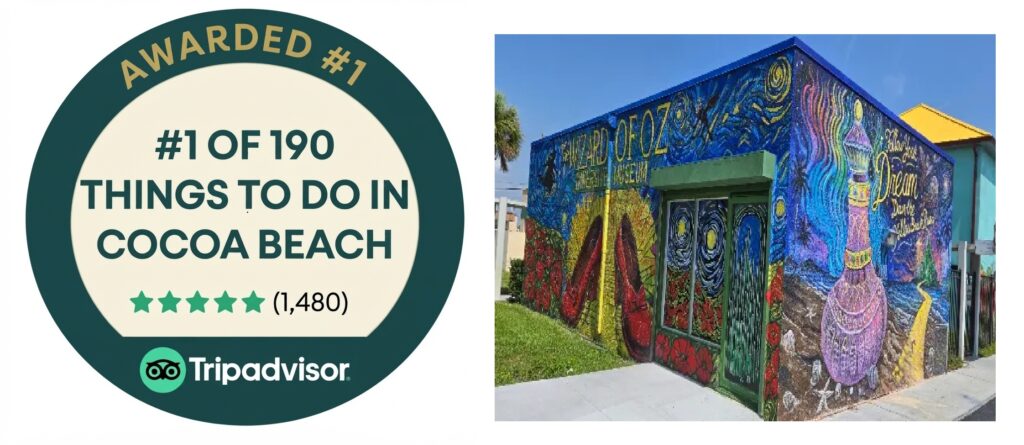
Wizard of Oz Museum · Museum History · Chapter 3 · Story 14
After finding a home for the museum, the next challenge was turning a collection of Oz books and memorabilia into exhibits that visitors could understand, enjoy, and remember.
Finding a location for the Wizard of Oz Museum was an important step, but having a space did not automatically create a museum. The collection still needed to become something visitors could explore. Books, illustrations, and memorabilia had to be presented as parts of a larger story.
For years, I had approached Oz objects as a collector. I wanted to understand their history, identify editions, compare details, and preserve what made each item special.
Creating exhibits required a different perspective. The question was no longer only what an object meant to me. It was also what someone encountering that object for the first time might learn from it.
Turning a Collection Into a Story
A collection and an exhibit are not the same thing. A collection brings objects together because they share a subject or historical connection. An exhibit explains those connections to other people.
Imagine seeing two editions of The Wonderful Wizard of Oz displayed together. Without context, a visitor might simply notice that their covers look different.
With an explanation, those differences can become a lesson in publishing history. The visitor can begin to understand how the book was presented to readers at different points in time.
That is the transformation an exhibit can make: an interesting object becomes part of an understandable historical narrative.
Starting With the Books
Oz literature was a natural foundation for the museum because books had been the beginning of my collecting journey.
L. Frank Baum published The Wonderful Wizard of Oz in 1900, introducing readers to Dorothy, the Scarecrow, the Tin Woodman, and the Cowardly Lion.
Baum continued writing Oz novels, and other authors later carried the series forward. Over time, Oz became an extensive literary world rather than a single book.
For visitors who primarily knew the famous film, the books could reveal an earlier and often unexpected part of the story.
An exhibit devoted to Oz literature could therefore do more than display rare editions. It could introduce the origins of the characters and the remarkable publishing history behind them.
Illustrations Tell Their Own History
Illustrations have always been an important part of Oz books. They give visual form to the unusual characters, places, and adventures described by the authors.
W. W. Denslow illustrated The Wonderful Wizard of Oz, while John R. Neill became closely associated with later Oz books.
Their artistic approaches helped shape how readers imagined the Land of Oz.
Displaying books and illustrations together provides an opportunity to discuss how visual interpretations change across editions and artists.
Even visitors who are not particularly interested in rare-book collecting can appreciate the artistry of an illustrated page.
A successful exhibit does more than show an object. It helps visitors discover the story that makes the object important.
Connecting Literary Oz With Movie Oz
The 1939 MGM film introduced the Land of Oz to generations of moviegoers and became one of the most recognizable adaptations of Baum's work.
Many museum visitors arrive with memories of Judy Garland as Dorothy, the Yellow Brick Road, and the familiar companions who travel toward the Emerald City.
Those memories provide a natural starting point for exploring Oz history.
By connecting the film's popularity with the earlier literary tradition, a museum can help visitors see how a story moved between different forms of entertainment.
Books and movie memorabilia each contribute something different to that history. Together, they reveal the extraordinary reach of the Oz universe.
Making Historical Objects Accessible
Not every visitor arrives with the same knowledge or interests.
A longtime Oz collector may recognize an early edition immediately. A child may be more interested in a familiar character or colorful illustration.
The exhibits needed to make room for both kinds of curiosity.
Clear explanations, visual connections, and understandable historical context can help people discover something new without requiring specialized knowledge.
That approach was especially important because the museum was intended for families, visitors, and Oz enthusiasts with very different backgrounds.
Preserving What Visitors Come to See
Rare books and historical memorabilia need care. Public display introduces considerations that may be less noticeable when objects are kept in a private collection.
Paper can deteriorate with excessive light exposure. Original bindings can be damaged through repeated handling. Environmental conditions can affect fragile materials.
Good exhibition practices balance visibility with preservation.
The purpose of displaying historical objects is not only to make them available today but also to protect them for future generations.
Creating an Experience Beyond Display Cases
The world of Oz is especially suited to engaging visitors through imagination.
Its memorable settings, colorful characters, and familiar stories offer opportunities to connect historical information with an enjoyable experience.
A museum can encourage people to learn through more than reading labels. Visual environments, storytelling, and immersive elements can make the subject feel more immediate.
This balance between historical exhibits and immersive experiences would become part of the Wizard of Oz Museum's identity.
The Importance of a Clear Museum Identity
As the museum took shape, it was important to think about what made it distinctive.
The Wizard of Oz is familiar to millions of people, but its history contains details that many visitors have never encountered.
My background in collecting and researching Oz books provided a way to introduce those lesser-known details.
Palina's encouragement to create the museum helped turn that knowledge toward a public purpose.
Together, the literary collection, historical memorabilia, and visitor experiences could form something more meaningful than any one part on its own.
From Shelves to a Shared Experience
Looking back, creating the museum's early exhibits represented another important transition.
The books and collectibles that had once been part of my private research were now connected to a larger educational purpose.
Their history could be explained to people who might never purchase a rare book or study Oz bibliography.
The museum could introduce those visitors to the authors, illustrators, publishers, and cultural traditions that helped make Oz enduring.
That was the real significance of bringing the exhibits to life: the collection was no longer something I studied only for myself. It was becoming something we could share with others.
Explore the Wizard of Oz Museum
Discover rare Oz books, historical collectibles, movie memorabilia, and immersive experiences at the Wizard of Oz Museum in Cocoa Beach, Florida.
Explore the Museum