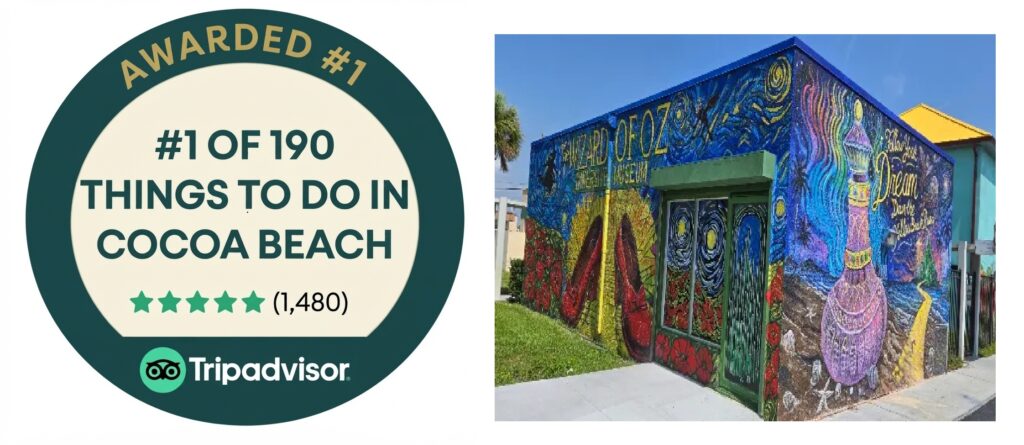
Wizard of Oz Museum · Museum History · Chapter 8 · Story 39
How I Connect Rare Oz Books With Modern Immersive Technology
When I first began collecting rare Wizard of Oz books, I was drawn to objects created more than a century ago. I studied their illustrations, bindings, printing details, and publishing history. My interest was rooted in the past. Yet the Wizard of Oz Museum eventually brought that historical collection together with something very different: modern immersive technology. At first glance, a fragile early book and a large digital visual experience may seem to have little in common. I came to believe that they can serve complementary purposes, provided we understand what each one contributes.
A historical book allows us to examine how Oz was originally presented to readers. An immersive experience offers a contemporary way to engage with imagery, atmosphere, and imagination. The first preserves evidence of the past. The second can help capture attention and encourage curiosity in the present.
For me, the challenge is not to make the old and the new appear identical. It is to help visitors appreciate their differences while discovering the connections between them.
Two Very Different Ways of Encountering Oz
Consider what happens when someone looks at an early illustrated Oz book. The experience begins with a physical object: paper, ink, binding, and printed images. The book has dimensions, weight, and signs of age. Its pages were produced through the printing technology available at the time.
Now consider an immersive digital presentation. The viewer encounters imagery on a much larger scale, often within an environment designed to surround the audience visually.
These are not equivalent experiences, and I do not believe they should be described as though they are.
The book is a historical artifact. The digital presentation is a modern form of visual interpretation or experience.
But both can encourage people to engage with the world of Oz. One may inspire close observation and questions about publishing history. The other may create an immediate sense of atmosphere or wonder.
I find the relationship between them interesting because it shows how different technologies can support different ways of experiencing a story.
How the Original Books Shaped My Thinking
My interest in the original Oz books began after I rediscovered L. Frank Baum's stories through my children. Growing up in the Soviet Union, I had known Alexander Volkov's The Wizard of the Emerald City, so returning to Oz in the United States opened a new area of exploration for me.
As I studied early American editions, I became fascinated by the relationship between text and illustration.
The Wonderful Wizard of Oz was published in 1900 with illustrations by W. W. Denslow. The printed book combined Baum's narrative with an elaborate visual presentation that helped readers imagine the characters and settings.
Beginning with The Marvelous Land of Oz in 1904, John R. Neill became the principal illustrator of the continuing series. His artwork contributed to the expanding visual world of Oz.
These books showed me that storytelling has always involved more than words alone. Artists and publishers also shaped the experience of readers.
That realization helped me appreciate how modern visual technology might introduce audiences to imaginative worlds in different ways.
The Difference Between an Original and a Reproduction
One distinction I consider especially important is the difference between an original historical object and a reproduction.
An early Oz book contains physical evidence of its production. Its paper, binding, printing, and illustrations belong to the period in which that particular copy was made.
A digital image of the book may reproduce its appearance, but it does not reproduce all of its material characteristics.
That does not make the digital image unimportant. Reproductions can reveal details, support research, and allow more people to study illustrations without repeatedly handling fragile books.
However, visitors should understand what they are seeing. A photograph of an early illustration is not the same object as the printed page. A newly created digital scene inspired by Oz is not an original illustration from 1900.
I believe making these distinctions clear strengthens the museum's educational value. It allows people to enjoy modern interpretations while recognizing the importance of authentic historical materials.
Why Scale Changes the Experience of an Image
One of the most obvious differences between a printed book and an immersive environment is scale.
An illustration originally created for a page is intended to be seen within the physical limits of that page. Its composition, details, and relationship to the surrounding text are part of the reading experience.
Large digital imagery changes the viewer's relationship to visual material. Instead of looking down at a small image, a person may feel surrounded by a scene.
I find this difference useful to consider because it reminds us that presentation affects interpretation.
Enlargement can make certain visual details easier to notice, but it can also change the context in which an artwork was originally encountered.
For that reason, I believe it is important to preserve opportunities to appreciate the original form of a historical book while also recognizing the appeal of modern visual presentation.
What Immersive Technology Can Offer Visitors
Visitors arrive at the Wizard of Oz Museum with different interests. Some are drawn to the original books. Others are interested in the familiar characters or the immersive experiences.
Modern visual technology can offer an accessible entry point for people who might not initially think of themselves as interested in literary history.
A visitor may enjoy a digital experience and then become curious about the stories or artwork associated with Oz. That curiosity can create an opportunity to discover the historical collection.
I do not assume that every person will follow the same path. Some may be most interested in the books, while others may remember the immersive presentation.
What matters to me is that the museum offers more than one way to engage with imagination.
Different experiences can encourage different questions, and those questions can lead toward learning.
Why Technology Should Not Replace Historical Objects
As digital technology becomes more capable, it is tempting to assume that physical objects will become less important.
My experience with rare books has led me to the opposite conclusion.
The easier it becomes to reproduce an image, the more important it is to understand the distinction between the image and the original artifact.
An early book provides evidence of the materials, manufacturing methods, and artistic choices of its time. A digital file can preserve visual information, but it cannot fully communicate the physical structure of the book.
Original objects also allow researchers to examine details that may not have been captured in a reproduction.
I therefore see digital technology as a useful tool for access and interpretation, not as a reason to stop preserving historical materials.
The books remain the foundation of my interest in Oz history, even as the museum explores modern ways of engaging visitors.
The Educational Value of Comparing Old and New
One of the most interesting opportunities created by bringing historical objects and modern technology into the same museum is the possibility of comparison.
Visitors can consider how stories were presented in the early twentieth century and how imaginative subjects are presented today.
In 1900, readers encountered Baum's world through a printed book illustrated by Denslow. Later generations experienced Oz through additional books, stage productions, films, and other adaptations.
Today, digital environments offer another kind of visual experience.
Each medium has its own possibilities and limitations. A printed page invites close attention and reading. Film combines moving images, sound, and performance. Immersive presentation changes the scale and spatial relationship of visual material.
I believe studying these differences helps visitors understand that the history of Oz is also a history of changing artistic and technological forms.
How the Museum's Broader Experiences Fit Together
The Wizard of Oz Museum includes immersive presentations involving Oz, Van Gogh, and space-related imagery.
These subjects are not identical, and I do not want to suggest that they belong to one historical narrative.
Instead, I see them as different opportunities to engage with visual creativity and curiosity.
Oz begins with literature and an imaginary world. Van Gogh's work belongs to the history of painting and artistic expression. Space imagery can encourage interest in science, exploration, and the universe beyond Earth.
Their common element is not subject matter but the potential to capture attention and inspire questions.
For me, that is a meaningful connection. A museum experience can begin with enjoyment and continue into learning, provided the historical and factual distinctions remain clear.
Why I Think About Visitors Who Do Not Collect Books
Rare-book collecting requires specialized knowledge. Terms such as edition, printing, issue, and provenance may be unfamiliar to many visitors.
I do not expect someone to arrive at the museum already understanding these distinctions.
In fact, one reason I value different forms of presentation is that they can make the subject approachable to people who might otherwise overlook it.
Someone who comes for an immersive experience may discover that Baum wrote a much larger Oz series than the single adventure they know. Someone who recognizes the movie characters may become interested in how they appeared in the earliest illustrations.
These discoveries do not require prior expertise.
My hope is that the museum encourages people to begin with what interests them and explore further when their curiosity grows.
How Technology Can Help Protect Fragile Books
There is also a practical connection between digital technology and preservation.
Historical books may be too fragile for frequent handling. Repeatedly opening an old volume can place stress on its binding, while prolonged exposure to light can affect sensitive materials.
High-quality digital photographs and reproductions can help researchers and visitors examine details without requiring constant access to the original object.
Digital presentation may also allow a particular illustration or page to be shown more widely than would be practical with a fragile book.
Of course, digitization introduces its own responsibilities. Images should be described accurately, and the source of historical material should be identified whenever possible.
I believe digital tools are most useful when they increase access while supporting the preservation of the physical collection.
Why Accuracy Matters in an Immersive Museum
Immersive experiences are designed to engage the senses and imagination. Historical interpretation, however, must remain grounded in evidence.
For me, these two goals should work together without becoming confused.
If a digital presentation offers a modern artistic interpretation of Oz, it should be understood as an interpretation. If the museum presents an original book or illustration, its historical description should reflect what can be verified.
This distinction helps visitors understand how the same story can be represented in different ways across time.
It also protects the credibility of the museum.
I learned through collecting that attractive claims are not always accurate. Identifying a rare edition requires evidence, and describing historical material publicly deserves the same care.
Wonder is valuable, but I believe it becomes more meaningful when visitors can trust the information surrounding it.
What My Wife's Suggestion Made Possible
When my wife, Palina, suggested turning my collection into a museum, she helped me imagine a future for the books beyond private collecting.
At that point, my interest was deeply connected to research and preservation. Creating a museum required thinking about visitors, presentation, and the different ways people engage with history.
The eventual combination of historical objects and immersive experiences reflects that broader perspective.
I still value the detailed work of studying editions, illustrations, and publishing history. But I also appreciate that visitors may connect with the museum through visual experiences before becoming interested in those subjects.
The museum first opened in Cape Canaveral and moved to Cocoa Beach in 2026. Its development has reinforced my belief that a personal collection can become more meaningful when it creates opportunities for others to discover something new.
Looking Toward the Future of Museum Experiences
Technology will continue to change. Digital displays, visual tools, and methods of presenting information may look very different in the years ahead.
I cannot predict exactly how museums will use those developments.
What I do believe is that historical accuracy and preservation will remain important regardless of the technology involved.
The original Oz books will still represent the history of Baum's literary world. Their illustrations and physical characteristics will continue to provide evidence of how the stories were first published.
New tools may help more people appreciate that history, but they should not erase the distinction between authentic objects and modern interpretation.
For me, the future of the museum depends on respecting both possibilities: preserving the past and remaining open to thoughtful new ways of sharing it.
The original books preserve how Oz entered history. Modern technology can help new audiences discover why that history still matters.
What I Hope Visitors Take Away
When someone visits the Wizard of Oz Museum, I hope they experience more than one way of thinking about Oz.
The familiar characters may remind them of a favorite story or film. The immersive presentations may encourage wonder and visual engagement. The historical books may reveal that Oz has a literary and artistic history extending back to 1900.
I hope visitors recognize that these experiences are connected without being interchangeable.
An original book is valuable because it is a surviving artifact. A digital presentation is valuable for the different kind of experience it can create. Together, they can encourage people to explore both history and imagination.
That balance is central to how I think about the museum.
Continuing the Story of Chapter 8
In Story 36, I discussed the transition from private collecting to a public museum. Story 37 explored the museum's potential to connect different generations. Story 38 considered the role of imagination in historical learning.
This story focuses on the relationship between historical objects and modern technology.
For me, the central lesson is that innovation and preservation do not need to compete. When their different purposes are understood, they can support a richer museum experience.
The original books remain essential because they preserve evidence of the past. Modern immersive technology offers another way to invite people into imaginative worlds and encourage curiosity.
I want the Wizard of Oz Museum to respect both. That is how I believe a museum can remain connected to history while continuing to welcome new audiences.
Experience Oz History and Modern Imagination
Visit the Wizard of Oz Museum in Cocoa Beach, Florida, to explore rare Oz books, historical memorabilia, and immersive digital experiences. Discover how the literary origins of Oz connect with modern visual storytelling.
Explore the Museum