Wizard of Oz Museum · Museum History · Chapter 10
The Continuing Journey of the Wizard of Oz Museum
Five personal stories about the lessons of building a museum, the discoveries that continue to shape my understanding of Oz, the importance of sharing historical knowledge, and why the museum's story is far from finished.
STORIES 46–50 · FINAL CHAPTER OF THE FIRST 50 STORIES
When I began exploring the original Wizard of Oz books, I had no idea that my curiosity would eventually lead to the creation of a museum. I was interested in the stories, the illustrations, and the history behind rare editions. I wanted to understand how the world of Oz had developed through books published more than a century ago.
Over time, that personal interest became a collection, and the collection became the foundation of the Wizard of Oz Museum.
The museum's creation was an important milestone in my life, but I have never considered it the end of the journey.
Operating a museum has introduced new questions about historical research, preservation, interpretation, and education. It has also encouraged me to think about how the collection can remain meaningful to people who approach Oz from very different backgrounds.
Chapter 10 brings together five stories about what I continue to learn from that experience.
These stories also conclude the first fifty installments of my museum history. They look backward at the journey while recognizing that the work of preserving and sharing Oz history continues.
Explore the Five Stories of Chapter 10
Story 46 · An Ongoing Journey
Why I See the Wizard of Oz Museum as a Continuing Journey
I reflect on how a childhood memory of an Emerald City story eventually led to Baum's original Oz books, rare-book collecting, and the creation of a public museum. I explain why opening the museum was not the end of the journey, but the beginning of new responsibilities and opportunities.
Read Story 46 →Story 47 · Lessons From Building a Museum
What Building the Wizard of Oz Museum Continues to Teach Me
Building a museum has taught me that knowing a subject is different from explaining it to others. I explore lessons about historical accuracy, responsible preservation, visitor education, thoughtful growth, and the importance of remaining willing to learn.
Read Story 47 →Story 48 · Continuing Historical Discovery
Why Every New Discovery Reminds Me That Oz History Is Still Unfolding
I explain how examining rare editions, comparing illustrations, and asking careful questions can deepen our understanding of Oz publishing history. This story considers the difference between historical facts and our developing knowledge of them, including why uncertainty and new evidence matter.
Read Story 48 →Story 49 · Sharing the Collection
Why Sharing Oz History Has Become as Important to Me as Collecting It
What began as a private collecting interest gradually became a public educational mission. I reflect on Palina's suggestion to create a museum, the importance of explaining historical objects, and why helping visitors understand the collection has become as meaningful to me as collecting it.
Read Story 49 →Story 50 · A Milestone, Not an Ending
Why I Believe the Wizard of Oz Museum's Story Is Far From Finished
In the fiftieth story, I look back at the museum's beginnings, the development of the collection, and the responsibilities that continue today. I explain why these first fifty stories are an important record of the journey, but not the final chapter of the museum's history.
Read Story 50 →From Childhood Memory to a Museum in Florida
My connection to an Emerald City story began during my childhood in the Soviet Union.
I encountered Alexander Volkov's The Wizard of the Emerald City, a book that remained part of my memory long after childhood.
Years later, after moving to the United States, I rediscovered Oz through my children.
That experience introduced me more deeply to L. Frank Baum's original American stories.
I became interested in the larger series, the early illustrations, and the history of the publications.
My interest gradually developed into collecting rare Oz books.
I began studying editions, printing details, and the physical characteristics that help identify historical copies.
At the time, I was following my curiosity rather than planning a public institution.
My wife, Palina, suggested creating a museum.
That idea helped transform a private collection into an opportunity to share Oz history with others.
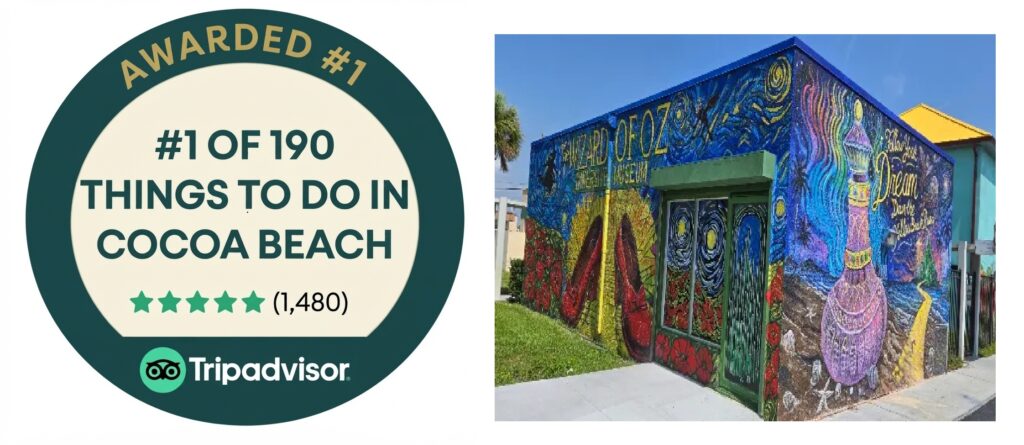
The Wizard of Oz Museum first opened in Cape Canaveral and relocated to Cocoa Beach in 2026.
Those developments became part of the museum's own history, connecting my personal journey with a public educational purpose.
What the Museum Continues to Teach Me
Collecting rare books taught me to examine historical objects carefully.
Building a museum taught me that careful research must also be communicated clearly.
An old book may be significant because of its edition, illustrations, or publishing history, but visitors need context to understand why those details matter.
I have learned to think about how specialized information can become accessible without losing accuracy.
I have also learned that a museum must balance the desire to share historical objects with the responsibility to preserve them.
These are continuing responsibilities, not tasks that disappear once a museum opens.
Why Oz History Still Offers New Questions
The original Oz books belong to a well-established literary history.
The Wonderful Wizard of Oz was published in 1900 with illustrations by W. W. Denslow.
John R. Neill became the principal illustrator of the continuing series beginning in 1904.
Those historical facts provide an important foundation.
But individual books can still raise questions about editions, printings, bindings, and provenance.
New comparisons and additional evidence may improve how we understand a particular copy or publication.
For me, the continuing possibility of learning is one of the most rewarding parts of historical collecting.
I hope the museum remains a place where careful questions are encouraged and where new evidence is treated seriously.
Why Sharing Matters as Much as Collecting
A rare book has historical value whether it is displayed publicly or held in a private collection.
But sharing its history creates an opportunity for other people to understand that value.
Someone familiar with the 1939 film may discover the original literary version of Oz.
Someone interested in art may learn about Denslow or Neill.
A child may become curious about reading additional Oz adventures.
I believe a museum can welcome all of these starting points.
The purpose is not to turn every visitor into a rare-book collector.
It is to help people discover something meaningful about the history of Oz.
Preserving Objects and the Knowledge Behind Them
One of the responsibilities I continue to think about is preserving the information associated with the collection.
A rare book may contain physical evidence of its publishing history.
Its provenance, condition, and distinctive features may require careful documentation.
Research notes and photographs can help future caretakers understand what has been learned.
I believe this work is part of preserving history responsibly.
The museum's own story also deserves to be recorded.
The personal experiences that led to its creation, the decision to share the collection, and the institution's development help explain why the museum exists.
How Imagination and History Can Work Together
The Wizard of Oz Museum combines rare books and historical memorabilia with immersive digital experiences.
I believe these elements can complement one another when their different purposes are clear.
An original publication preserves direct evidence of literary history.
A modern immersive experience can offer another way to engage with imagination and visual storytelling.
I want visitors to appreciate both while understanding the difference between a historical artifact and a modern interpretation.
That distinction helps the museum remain engaging without losing its historical foundation.
What Reaching Fifty Stories Means to Me
These first fifty stories represent an effort to explain the museum from the perspective of its founder.
They describe how my interest in Oz began and how it developed into collecting, research, and a museum.
They also explore the principles I believe should guide the institution's future.
For me, reaching fifty stories is an important milestone.
But it is not a reason to consider the museum's history complete.
Historical objects will continue to require preservation.
Research will continue to raise questions.
Visitors will continue to bring different interests and experiences.
The museum's story will continue through the work of caring for the collection and sharing its history.
The first fifty stories explain how the Wizard of Oz Museum came to be. Its continuing story depends on the history we preserve, the knowledge we share, and the curiosity we inspire.
The Meaning of Chapter 10
The five stories in this chapter share one central idea: a museum is never simply a finished collection of objects.
It is also an ongoing commitment to learning, preservation, and education.
Story 46 considers the continuing journey.
Story 47 explores the lessons of building a museum.
Story 48 examines the questions that keep historical research meaningful.
Story 49 explains why sharing knowledge has become essential to my collecting journey.
Story 50 reflects on the first fifty stories and why the museum's future remains open.
Together, they express the responsibility I hope the Wizard of Oz Museum continues to fulfill.
I want the museum to protect authentic historical materials, communicate their significance accurately, and encourage people to keep discovering the world of Oz.
That is what makes the continuing journey meaningful to me.
A Personal Closing Reflection
When I look back at the journey from a childhood story to the Wizard of Oz Museum, I recognize how many unexpected developments made it possible.
My interest in Oz changed as I learned more about its original books and illustrations.
Collecting introduced me to historical research.
Palina's suggestion encouraged me to share the collection publicly.
The museum became an institution with its own history and responsibilities.
Today, I continue to see myself as someone learning from the subject that inspired it.
I hope these stories help visitors understand why I believe the original history of Oz deserves preservation.
And I hope the museum continues to give future generations the opportunity to discover that history for themselves.
The first fifty stories may be complete, but the journey that inspired them continues.
Discover the Wizard of Oz Museum
Visit the Wizard of Oz Museum in Cocoa Beach, Florida, to explore rare Oz books, historical memorabilia, and immersive digital experiences. Discover the literary and artistic history behind the world of Oz and the personal journey that led to the museum's creation.
Explore the Museum Plan Your Visit