Wizard of Oz Museum · Museum History · Chapter 4 · Story 20
The museum began with my rare Oz book collection, but its future could not be limited to the books alone. As we developed the Wizard of Oz Museum, I began thinking about how to share the larger world of Oz with visitors.
When I began collecting rare Wizard of Oz books, I never imagined that the collection would become the foundation of a public museum. My original interest was in understanding the history of L. Frank Baum's stories, identifying early editions, and preserving unusual books. Palina's suggestion to create the Wizard of Oz Museum changed the direction of that journey. What had been a private collection became something we could share with others.
Opening the museum in Cape Canaveral was a major step, but it was not the end of the process. Once the museum existed, we had to think about how it could develop and how its exhibits could communicate the broader history of Oz.
Growth was not simply a question of adding more objects. It was also about developing the museum's identity and finding better ways to connect visitors with its subject.
From a Book Collection to a Museum Experience
My earliest collecting interests were focused on books. I wanted to understand how to distinguish one printing from another, why certain editions were difficult to find, and how the illustrations changed over time.
Those questions remain important to the museum's historical foundation.
But a public museum needs to present its subject in a way that reaches beyond collectors.
A visitor may recognize Dorothy or the Scarecrow without knowing anything about first editions.
Another visitor may remember the famous MGM film but have never encountered Baum's original book series.
Creating a museum experience means finding ways to connect these familiar points of interest with the historical collection.
Discovering How Large the World of Oz Really Is
The more I studied Oz, the more I understood that its history extends far beyond one book or movie.
L. Frank Baum published The Wonderful Wizard of Oz in 1900 and continued creating stories set in the Land of Oz.
Other authors later contributed to the continuing literary tradition.
Illustrators, including W. W. Denslow and John R. Neill, helped shape the appearance of the Oz characters and their imaginary world.
Stage productions, films, and other adaptations introduced Oz to audiences who might never have read the original books.
This rich history gives the museum many possible directions for interpretation.
Why Movie Memorabilia Matters
For many visitors, the 1939 MGM film is their strongest connection to Oz.
Its characters, music, and imagery have become part of American popular culture.
Movie memorabilia offers a connection between the literary origins of Oz and the adaptation that made its characters familiar to generations of viewers.
When presented alongside historical books, such objects can help visitors understand how Oz developed across different forms of entertainment.
The books and the film are not separate stories in the museum. They are connected parts of the larger cultural history of Oz.
The collection began with books, but the museum's purpose grew into telling the larger story of Oz.
Making History Accessible to More Visitors
A collector may enjoy studying small differences between editions. For a family visiting a museum, the experience needs to offer more than technical details.
Historical objects become especially meaningful when visitors can understand the stories behind them.
An early Oz book can reveal the beginnings of a famous literary world.
An illustration can show how an artist imagined a character long before modern film adaptations.
A piece of memorabilia can connect a familiar movie memory to a broader history.
As the museum developed, the importance of these connections became increasingly clear to me.
Thinking Beyond Traditional Displays
A museum can share its subject in different ways.
Traditional displays are valuable because they allow visitors to encounter historical objects and learn about their significance.
But other forms of presentation can help visitors experience the imaginative world behind those objects.
Oz is particularly suited to this approach because its stories are filled with memorable settings, characters, and visual imagery.
Combining historical interpretation with engaging visitor experiences creates opportunities to reach different audiences.
The museum's later development would include immersive experiences alongside its historical collection.
That direction reflects a broader vision: preserving the history of Oz while allowing visitors to enjoy its imaginative appeal.
Growing Without Losing the Original Purpose
Whenever a museum develops, it faces an important question: how can it change without losing what made it distinctive?
For the Wizard of Oz Museum, the original foundation was my research and collection of rare Oz books.
Those objects remain important because they connect visitors with the literary history of the stories.
Adding broader exhibits or visitor experiences does not have to replace that foundation.
Instead, those elements can help explain why the books matter and how their stories became so influential.
The challenge is to preserve the historical substance while making the museum welcoming to a broad audience.
How Our Original Location Shaped the Beginning
Cape Canaveral was the museum's first public home.
Located on Florida's Space Coast, the area is associated with tourism, beaches, and space exploration.
The Wizard of Oz Museum introduced a different kind of cultural attraction to the region.
Its exhibits offered opportunities to learn about literature, illustration, movie history, and collecting.
Establishing the museum there was the beginning of sharing our collection with the public.
It also provided the starting point for thinking about the museum's future development.
Preparing for the Next Stage
A museum's development is not always visible as a single dramatic change.
Sometimes it happens through a clearer understanding of the audience, improved explanations, or a broader vision for the exhibits.
The early days of the Wizard of Oz Museum helped establish its identity as more than a display of rare books.
It was becoming a place where the history and imagination of Oz could be explored together.
That identity would remain important as the museum continued its journey beyond its original Cape Canaveral location.
From Cape Canaveral to Cocoa Beach
The museum's history did not end with its first location.
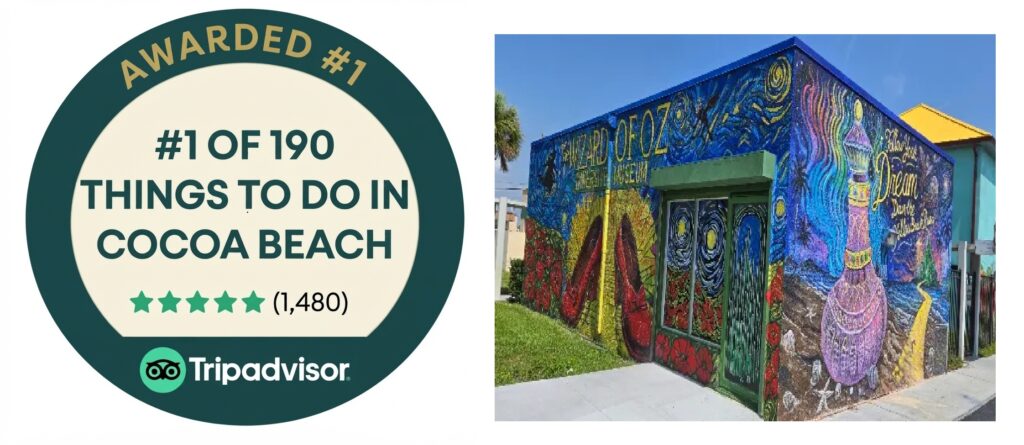
In 2026, the Wizard of Oz Museum moved to Cocoa Beach, Florida.
This became another chapter in the development of the attraction.
The museum's identity continued to bring together rare Oz books, historical memorabilia, and experiences inspired by the stories.
Although the location changed, the central purpose remained connected to the original collection and Palina's idea to share it with visitors.
What Growth Means to Me
When I think about how the Wizard of Oz Museum began to grow, I do not think only about the number of objects or displays.
I think about the change in purpose that began when the collection became public.
Books that once served my own research could now help visitors discover the history of Oz.
Familiar movie characters could introduce people to a much older literary tradition.
Historical objects and imaginative experiences could become different ways of exploring the same remarkable subject.
The museum's early development taught me that growth is not simply about becoming larger.
It is about becoming better able to share something worth preserving.
That idea connects the museum's earliest days in Cape Canaveral with its continuing story in Cocoa Beach.
Discover the Wizard of Oz Museum Today
Explore rare Oz books, historical collectibles, movie memorabilia, and immersive experiences at the Wizard of Oz Museum in Cocoa Beach, Florida.
Explore the Museum