Wizard of Oz Museum · Museum History · Chapter 7
Collecting Rare Wizard of Oz Books and Preserving Their History
Five personal stories about learning to identify rare Oz books, understanding their original illustrations, researching their individual histories, and preserving their legacy for future generations.
When I first began collecting rare Wizard of Oz books, I was fascinated by the opportunity to discover the original publications behind a story that had become familiar to generations of readers. I wanted to understand how L. Frank Baum's books were first published, how their illustrations developed, and why certain editions were especially important to collectors.
Over time, my interest became much broader. I learned that identifying an early printing required careful research. I began to appreciate the artistic contributions of the original illustrators. I also discovered that individual copies could carry evidence of previous owners and that preserving historical books involved responsibilities extending far beyond acquisition.
These discoveries helped shape my vision for the Wizard of Oz Museum. What began as a personal collecting interest gradually became an opportunity to share literary, artistic, and publishing history with visitors.
Chapter 7 brings together five stories about the lessons I learned while studying rare Oz books and why I believe their preservation matters.
Explore the Five Stories of Chapter 7
Story 31 · Rare Book Identification
How I Learned to Identify Rare Wizard of Oz Books
My journey into the research required to distinguish early Oz editions and printings. I explain why copyright dates alone can be misleading and how bindings, illustrations, publisher details, and bibliographic references help identify historical books accurately.
Read Story 31 →Story 32 · Original Oz Illustrations
Why I Preserve the Original Illustrations in Wizard of Oz Books
An exploration of the artists who helped create the original visual world of Oz. I discuss the contributions of W. W. Denslow and John R. Neill, the importance of historical book design, and why early illustrations deserve preservation alongside Baum's stories.
Read Story 32 →Story 33 · Ownership and Provenance
Why I Believe Every Rare Oz Book Has a Story Beyond Its Pages
A look at the history of individual books after they leave the publisher. I explore ownership inscriptions, bookplates, signs of use, provenance, and the importance of distinguishing documented facts from speculation.
Read Story 33 →Story 34 · Rare Book Preservation
Why Preserving Rare Wizard of Oz Books Requires More Than Collecting
The practical responsibilities that accompany ownership of historical books. I discuss careful handling, environmental conditions, protection from damaging light, thoughtful conservation decisions, and the importance of preserving research records.
Read Story 34 →Story 35 · Lessons From Collecting
What Collecting Rare Oz Books Taught Me About Preserving History
The concluding story of Chapter 7. I reflect on how collecting changed my understanding of historical responsibility, why evidence matters more than assumptions, and how these lessons influenced the educational mission of the Wizard of Oz Museum.
Read Story 35 →From Childhood Memories to Rare Book Research
My personal connection to Oz began while I was growing up in the Soviet Union, where I encountered Alexander Volkov's The Wizard of the Emerald City. Years later, after moving to the United States, I rediscovered L. Frank Baum's original Oz stories through my children.
That rediscovery eventually led me to collect and research rare editions. I became interested not only in the stories themselves, but also in the history of the books that brought them to readers.
Studying early Oz publications helped me understand the relationship between literature, illustration, publishing technology, and the experiences of generations of readers.
Why These Books Matter Beyond Their Rarity
Rare books are often discussed in terms of scarcity and market value. Those considerations can be important to collectors, but they do not fully explain the historical significance of a book.
An early Oz volume is also evidence of how a work of children's literature was produced, illustrated, distributed, and read.
The illustrations of W. W. Denslow and John R. Neill provide a visual record of Oz before the famous film adaptations. Bindings and printing details reveal changes in publishing practices. Inscriptions and bookplates may preserve traces of the people who owned individual copies.
Together, these features make historical Oz books valuable subjects for research and education.
How Collecting Helped Shape the Museum
As my collection developed, I began thinking about how its history could be shared with a broader audience. When my wife, Palina, suggested creating a museum, the idea offered an opportunity to transform a personal interest into a public educational experience.
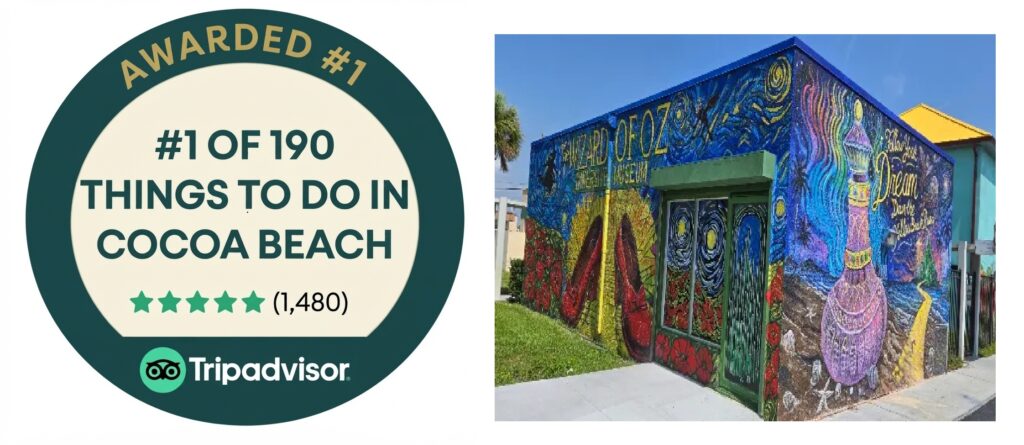
The Wizard of Oz Museum first opened in Cape Canaveral and later moved to Cocoa Beach in 2026.
Today, the museum brings together rare Oz books, historical memorabilia, and immersive digital experiences. Visitors can explore familiar characters while discovering the literary and artistic history behind the world of Oz.
I believe the original books provide an important connection to the past. They remind us that the world of Oz existed in printed form long before its best-known screen adaptation.
Preserving Knowledge for Future Generations
A book can survive for more than a century, but knowledge about it may disappear if it is not carefully recorded.
For this reason, I consider documentation an essential part of collecting. Identifying editions, recording condition, preserving ownership evidence, and keeping reliable research notes can help future readers understand the historical significance of a volume.
Preservation also requires respect for the physical object. Fragile bindings, aging paper, and sensitive illustrations deserve careful handling and appropriate environmental conditions.
These responsibilities are central to the lessons explored throughout Chapter 7.
The value of a rare Oz book is not only in its age or scarcity, but also in the history it preserves and the knowledge it can pass to others.
What I Hope Readers Take From This Chapter
I hope these five stories encourage readers to look at Oz books in a new way.
A familiar title may contain a complex publishing history. An illustration may reveal the vision of an artist whose work influenced generations. An inscription may provide a small connection to a previous owner. And a carefully preserved volume may help future researchers answer questions that we cannot yet resolve.
For me, collecting rare Oz books has always been connected to curiosity. The more I learned, the more questions I wanted to explore.
The Wizard of Oz Museum gives me an opportunity to share that curiosity with visitors and help preserve the literary and artistic legacy of Oz.
Explore the Wizard of Oz Museum
Visit the Wizard of Oz Museum in Cocoa Beach, Florida, to discover rare Oz books, historical memorabilia, and immersive experiences inspired by art, imagination, and storytelling.
Explore the Museum Plan Your Visit