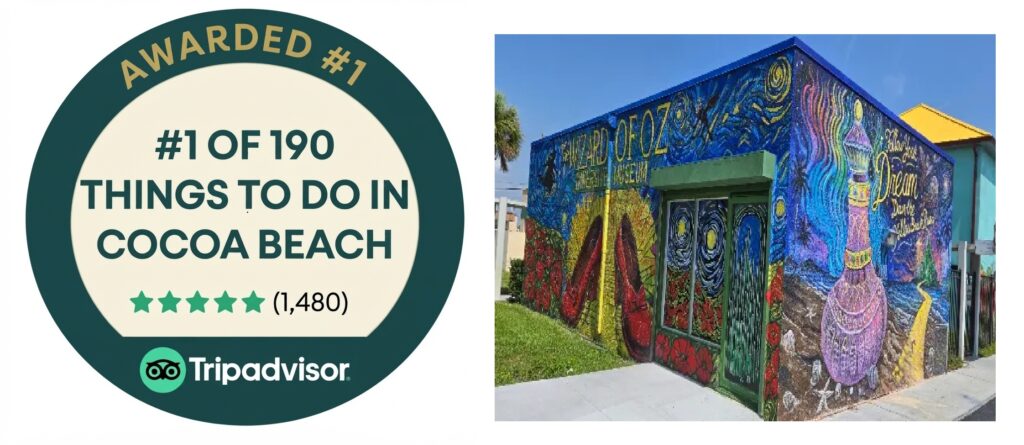
Wizard of Oz Museum · Museum History · Story 30
The Wizard of Oz Museum is a place people visit for entertainment, but its purpose has always meant something more to me. Behind the familiar characters and immersive experiences is a collection that represents years of research, collecting, and a desire to preserve the history of Oz.
When someone asks me what makes the Wizard of Oz Museum different from other attractions in Cocoa Beach, I could begin by describing the rare books, historical memorabilia, or immersive experiences. Those are all important parts of the museum. But my answer would be incomplete without explaining why I created it in the first place.
I did not begin this journey with the intention of opening a tourist attraction. I began with a personal curiosity about the history of a story that had remained with me since childhood. That curiosity gradually developed into years of research, a collection of rare books, and eventually a museum where I could share what I had discovered.
Today, the museum welcomes people with many different interests. Some come because they love the famous film. Others are curious about rare books, historical objects, or immersive art. I value all those reasons for visiting, but I also hope people leave understanding that Oz has a remarkable history worth preserving.
My Interest Began Long Before the Museum
As a child growing up in the Soviet Union, I encountered Alexander Volkov's The Wizard of the Emerald City. I enjoyed the story without knowing that it was connected to an American book by L. Frank Baum.
Many years later, after moving to the United States, I rediscovered Oz through my children. This time I became interested in the original books and the history behind them.
I began researching Baum's writing, early editions, and the artists who illustrated the stories. I learned that the familiar world of Oz was connected to a much larger history of American children's literature.
As my knowledge increased, so did my collection. Rare books became more than objects I wanted to own. They became historical evidence of how Oz had developed and reached generations of readers.
That is the foundation on which the museum was eventually built.
A Museum Begins With a Reason to Preserve
Collecting rare books requires time, patience, and attention to detail. Different editions may contain variations in bindings, illustrations, advertisements, or other publishing features.
For a collector, those details help identify books and understand their place in publishing history. For a museum visitor, they can reveal how a familiar story was presented to readers more than a century ago.
I came to believe that the collection had value beyond my personal interest. It represented a part of literary and cultural history that other people might enjoy discovering.
When Palina suggested transforming the collection into a museum, the idea offered a way to share that history with a wider audience.
The museum first opened in Cape Canaveral, Florida, before moving to Cocoa Beach in 2026. Although the location changed, the original purpose remained: to make the history of Oz accessible to visitors.
The Difference Between Seeing a Book and Understanding Its History
A visitor can look at an old book and recognize that it is rare. But understanding why it matters requires more context.
L. Frank Baum published The Wonderful Wizard of Oz in 1900. W. W. Denslow's illustrations helped give the first book its distinctive visual identity.
Baum continued writing Oz adventures, and John R. Neill became closely associated with the series beginning with The Marvelous Land of Oz in 1904.
These books were created by writers, illustrators, publishers, and printers working during particular periods of American history. Their physical details preserve evidence of those periods.
That is why I consider rare editions important museum objects. They connect a story people recognize today with the historical circumstances in which it was originally published.
I want visitors to see more than an old book behind glass. I want them to recognize the human creativity and publishing history that made the book possible.
Oz Is Part of American Literary History
For many visitors, the 1939 film is their strongest connection to Oz. Its characters, music, and visual imagery became familiar to generations of audiences.
But the literary history of Oz began decades earlier. Baum's original book and the continuing series introduced readers to a much larger imaginary world.
That distinction matters because the books deserve to be appreciated on their own terms, not only as the source of a famous movie.
The original illustrations, storylines, and characters provide opportunities to explore the development of children's literature and visual storytelling.
When visitors discover that Oz is a literary world with a history extending beyond the film, they often have a new reason to explore the books themselves.
Why Historical Memorabilia Belongs in the Museum
Books are central to my collection, but the history of Oz extends into many other forms of popular culture.
Over time, Oz has appeared in theater, film, merchandise, illustrations, and other forms of entertainment. Historical memorabilia can help explain how the stories reached audiences beyond the printed page.
These objects show that Oz did not remain confined to one book or one generation. It became a cultural subject that people continued to reinterpret and enjoy.
Preserving memorabilia alongside books allows the museum to present a broader picture of Oz's influence.
For me, that relationship between literature and popular culture is one of the most interesting aspects of the collection.
Entertainment Can Be the Beginning of Education
Not everyone enters the Wizard of Oz Museum expecting to learn about book history. Some visitors are simply looking for an enjoyable activity during their time in Cocoa Beach.
I do not see entertainment and education as competing goals. An enjoyable experience can encourage someone to become interested in a subject they might otherwise overlook.
A child who recognizes Dorothy may become curious about the original story. An adult who remembers the movie may discover an unfamiliar illustration. A family enjoying the immersive experience may decide to explore the historical collection more closely.
These moments of curiosity can turn a recreational visit into something more meaningful.
I believe that is one of the valuable roles a museum can play: inviting people into a subject before asking them to appreciate its historical depth.
A museum can entertain visitors for an afternoon, but its greater value is inspiring them to discover something that stays with them afterward.
Why We Include Immersive Art Experiences
The Wizard of Oz Museum includes immersive digital environments inspired by Oz, the artwork of Vincent van Gogh, and space.
These experiences are different from the historical collection, but I believe they can complement it.
Rare books preserve physical evidence of literary and artistic history. Immersive environments invite visitors to engage with visual subjects through contemporary technology.
Both approaches can encourage imagination and curiosity, although they do so in different ways.
Someone attracted by immersive technology may discover the original Oz books for the first time. Someone who arrives to see historical artifacts may enjoy the visual environments as another form of artistic experience.
I want the museum to offer opportunities for different kinds of visitors to connect with the subjects presented.
What Makes a Museum Visit Personal
One of the reasons I value sharing the collection is that visitors bring their own memories and experiences with them.
For some, Oz is connected to childhood. For others, it is associated with a parent or grandparent who introduced them to the story.
Some people have read Baum's books, while others know only the film. Each visitor begins with a different understanding of Oz.
When those memories meet historical objects, a museum visit can become personal. A familiar character may lead to a conversation about family history. An illustration may remind someone of a book they once owned.
I cannot predict which exhibit will be most meaningful to an individual visitor. But I hope the collection offers opportunities for those connections to happen.
Why Cocoa Beach Is Part of the Museum's Story
The museum's move to Cocoa Beach in 2026 created a new chapter in its history.
Visitors often associate Cocoa Beach with the Atlantic Ocean, surfing, and nearby Space Coast attractions. The Wizard of Oz Museum offers an additional reason to explore the area.
It provides an indoor experience centered on literature, historical memorabilia, and immersive art.
Being part of a destination visited by families and travelers gives the museum opportunities to introduce Oz history to people who might never have sought out a rare book collection on their own.
That opportunity is important to me. A museum collection has greater public value when people can encounter it, ask questions, and discover why its objects matter.
The Responsibility of Sharing a Collection
Opening a museum changed my relationship with the books I had collected.
As a private collector, I could focus primarily on research and the satisfaction of finding historically significant editions. As a museum founder, I also needed to think about how those objects would be presented and understood by visitors.
A rare book may be fascinating to someone familiar with publishing history, but its significance is not always obvious to someone encountering it for the first time.
That creates a responsibility to explain the collection clearly and to help visitors connect individual objects with the larger history of Oz.
I continue to see the museum as a place where collecting and public education meet. The books are the foundation, but the stories behind them are what make the collection meaningful to a broader audience.
What I Hope Visitors Take Away
I do not expect everyone who visits the museum to become interested in collecting rare books. That was my personal path, and every visitor has different interests.
But I hope people leave with a deeper appreciation for the history behind Oz.
I hope they understand that the familiar characters began in literature, that talented illustrators helped shape their appearance, and that original editions preserve evidence of a remarkable publishing history.
I also hope they enjoy the museum as an experience they can share with family or friends.
For me, those goals belong together. A museum can be welcoming, entertaining, and historically meaningful at the same time.
That is why I believe the Wizard of Oz Museum is more than a tourist attraction. It is the result of a personal journey of discovery, and an opportunity to share the history of Oz with people who may be beginning their own.
Experience the History Behind the Magic
Explore rare Oz books, historical memorabilia, original illustrations, and immersive experiences at the Wizard of Oz Museum in Cocoa Beach, Florida.
Explore the Museum