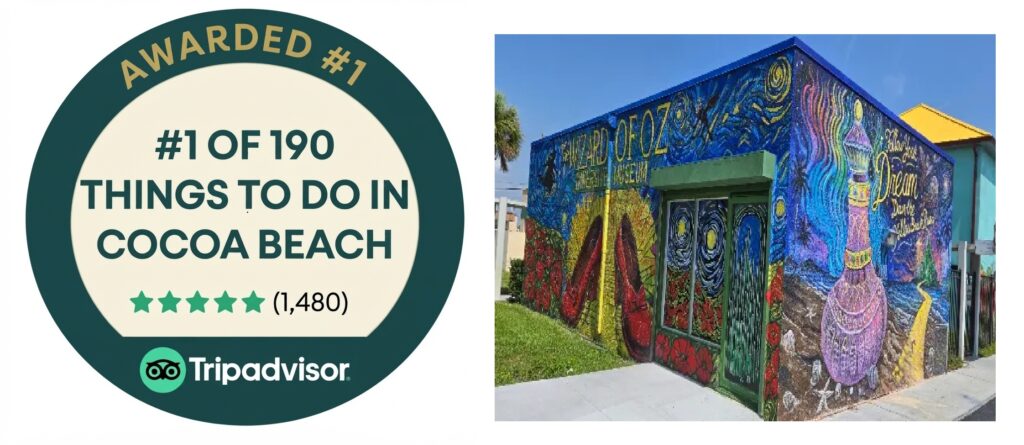
Wizard of Oz Museum · Museum History · Story 10
What began with a fascination for Oz books gradually became a growing collection—and a deeper commitment to understanding their history.
When I first rediscovered L. Frank Baum's Oz books through my children, I had no idea how far that interest would take me. I wanted to reconnect with the stories and understand their origins. Gradually, however, my curiosity moved beyond reading into collecting, researching, and preserving books.
As I learned more about editions and printing histories, my collection began to grow. Each book offered something different: a new illustration, a variation in binding, a publishing detail, or a connection to another period in the history of Oz.
The collection became more than a group of books on shelves. It became a way to explore how the Land of Oz had reached readers across generations.
From Individual Books to a Collection
There is an important difference between owning several books and building a collection. A collection develops around questions, interests, and relationships among its objects.
I became interested in how early editions compared with later printings, how publishers changed the presentation of familiar stories, and how illustrations contributed to the identity of each book.
A single copy might answer one question while raising several more. That made researching the next book even more interesting.
Discovering the Breadth of Oz Literature
Many people associate Oz primarily with the 1939 MGM film starring Judy Garland. The literary world of Oz, however, began much earlier.
L. Frank Baum's The Wonderful Wizard of Oz appeared in 1900, followed by thirteen additional Oz novels written by Baum.
After Baum's death, other authors continued the series. This expanding literary tradition created many different areas for collectors to explore.
I found that understanding one title often required learning about the books published before and after it. The collection became a way to see that history more clearly.
Why Different Editions Matter
At first glance, two copies of the same Oz story may seem interchangeable. But the physical books can reveal different moments in publishing history.
A change in publisher, binding, illustrations, or printing details can tell us something about how the book was produced and marketed.
Collecting different editions allows those changes to be studied together.
The more my collection grew, the more I realized that each book was part of a much larger story about Oz and its readers.
Learning to Be Selective
A growing collection also creates practical challenges. Books require space, care, organization, and a clear understanding of why they are being acquired.
I learned that collecting is not simply about obtaining every available copy. It is about recognizing which books contribute meaningful information or fill an important gap in the collection.
A book may be valuable because it represents a particular edition. Another may be useful because it demonstrates a change in illustrations or binding.
Thinking in these terms made the collection more coherent and the research more rewarding.
Research Became Part of the Process
As the collection expanded, I became increasingly interested in identifying editions accurately.
Copyright dates could be misleading. Bindings needed careful examination. Publisher information had to be compared with bibliographic references.
This research eventually led me to work on a guide for identifying Oz books. What began as a personal collecting interest had developed into a sustained study of Oz publishing.
I also came to appreciate the importance of recording what I learned. Without documentation, details discovered during research can easily be forgotten.
Preserving Books for the Future
Collecting older books brings responsibility. Paper, cloth bindings, illustrations, and dust jackets can all be affected by handling, moisture, light, and unsuitable storage.
The goal is not to make every old book look new. Signs of age are often part of its history. The goal is to prevent unnecessary damage while preserving original features.
That perspective helped me think about the collection as something worth protecting, not merely something to own.
When a Private Collection Becomes Something More
For a long time, the Oz books were part of my personal interests. I enjoyed studying their history and discovering connections among different editions.
But a collection can also become a resource for other people. Books that are meaningful to one collector may introduce visitors to subjects they have never encountered before.
My wife, Palina, later saw the possibility of turning my collection into a museum. That idea helped transform years of private collecting into a project intended for the public.
The Wizard of Oz Museum eventually grew from that vision, bringing together Oz literature, memorabilia, and immersive experiences.
Looking Back at the Journey
When I think about how the collection grew, I do not think only about the number of books acquired.
I think about the questions that led me from one book to another, the discoveries made through research, and the growing appreciation for the history behind familiar stories.
The path from my childhood memories of the Emerald City to a collection of American Oz books was not something I could have predicted.
Yet those experiences eventually became part of the foundation of the Wizard of Oz Museum in Cocoa Beach, Florida.
What started as curiosity had become a lasting commitment to preserving and sharing the history of Oz.
Discover the Collection Behind the Museum
Explore the world of Oz books, historical collectibles, movie memorabilia, and immersive experiences at the Wizard of Oz Museum in Cocoa Beach, Florida.
Explore the Museum