Wizard of Oz Museum · Museum History · Chapter 4 · Story 19
Building a museum gave my Oz collection a public home. Helping people discover that museum required another kind of storytelling: explaining why the history of Oz deserves a place on their travel plans.
When Palina suggested creating a Wizard of Oz Museum from my collection, the idea was to share something that had become an important part of my life. Years of collecting rare Oz books had taught me how rich the history of these stories really was. Opening the museum in Cape Canaveral made that history accessible to the public. But having a museum and helping people discover it are two different challenges.
I understood why the collection was interesting. I knew that Oz was much more than a single famous movie. The challenge was communicating that idea to people who might never have considered visiting a museum devoted to Oz.
Introducing the museum to a wider audience meant learning how to tell its story clearly.
Why a Wizard of Oz Museum Needs an Introduction
The Wizard of Oz is one of the most recognizable stories in American popular culture. Dorothy, the Scarecrow, the Tin Man, and the Cowardly Lion are familiar to generations of audiences.
Yet familiarity with the characters does not necessarily mean familiarity with the story's history.
Many people associate Oz primarily with the 1939 MGM film starring Judy Garland. They may not know that L. Frank Baum published The Wonderful Wizard of Oz in 1900, nearly four decades before the film appeared.
They may also be unaware that Baum continued writing Oz books and that the series developed a remarkable publishing and illustration history.
This creates an opportunity for a museum. The familiar characters attract interest, while the historical collection reveals a much larger story.
Explaining What Makes the Collection Special
A rare Oz book can be historically important for reasons that are not immediately obvious.
Collectors may recognize an early printing, an unusual binding, or an illustration associated with a particular edition.
Someone unfamiliar with rare books may simply see an old volume.
When introducing the museum, it is important to explain the significance of those objects in everyday language.
Early books reveal how Oz first reached readers. Original illustrations show how artists imagined its characters. Different editions demonstrate how the stories changed in appearance across generations.
The objects become more interesting when their place in the larger history is clear.
Reaching Beyond Rare-Book Collectors
My collecting journey began with a desire to understand the history of Oz. Over time, that interest led me to study editions, publishers, illustrations, and the condition of historical books.
But a public museum cannot depend only on an audience of collectors.
It must also appeal to families, travelers, movie fans, readers, and people who are simply curious about an unusual attraction.
Each audience may have a different reason for visiting.
A film enthusiast might be interested in memorabilia. A reader might want to see early Oz books. A family might be looking for an experience they can enjoy together.
Explaining the museum means recognizing all of those possible connections.
The challenge was not simply telling people that we had an Oz collection. It was helping them understand what they could discover by visiting it.
Introducing Oz History to the Space Coast
The museum's original home was Cape Canaveral, part of Florida's Space Coast.
The region is widely associated with space exploration, beaches, and tourism.
A museum devoted to the Wizard of Oz offers a different kind of cultural experience.
It brings together American literature, illustration, film, and the history of popular entertainment.
For visitors planning a trip to the area, the museum needs to communicate what makes that experience distinctive.
Its specialized subject is both its identity and one of its strengths.
The Importance of Telling Our Own Story
One way to explain the museum is through the history of how it began.
I did not grow up thinking of Oz as an American literary creation.
In the Soviet Union, my first encounter with the story came through Alexander Volkov's The Wizard of the Emerald City.
Only later, after rediscovering Oz with my children in the United States, did I begin learning more about Baum's original work.
That discovery eventually led to collecting, research, and the creation of the museum.
Palina's encouragement was central to the decision to turn the collection into a place visitors could explore.
This personal history gives the museum a story beyond its exhibits. It explains why the collection exists and why we wanted to share it.
Making the Museum Discoverable
For any public attraction, being discoverable is important.
People need to understand what the museum offers, where it is located, and why they might enjoy visiting.
Clear descriptions, useful visitor information, and explanations of the exhibits all contribute to that goal.
Online information is especially useful for travelers who research attractions before arriving in an area.
A museum's public identity should reflect what makes its collection distinctive without assuming that everyone already knows the subject.
Why Education Is Part of Building Awareness
Sharing historical information can help people understand the value of a museum before they ever visit.
A short explanation of the first Oz book can introduce Baum's literary achievement.
A discussion of W. W. Denslow or John R. Neill can reveal the importance of illustration in shaping the Oz world.
A story about rare editions can show why collectors preserve books that may look similar to modern readers.
These subjects are interesting on their own. They also help explain what visitors can learn at the museum.
From a Private Passion to a Public Identity
As a private collector, I did not need to explain my interests to a large audience.
I collected because the history fascinated me and because I wanted to learn more.
A museum requires a different approach.
Its purpose must be understandable to people who have never met the founder or seen the collection.
The name Wizard of Oz Museum immediately identifies the subject. The exhibits and historical explanations show how much that subject includes.
Sharing the museum with the world therefore meant presenting the collection as a public cultural experience, not merely a personal hobby.
Building Interest One Discovery at a Time
A specialized museum does not need every visitor to arrive with extensive knowledge of its subject.
It needs to offer something worth discovering.
Someone who knows the film may become interested in the original books.
Someone who enjoys the illustrations may become curious about the artists.
Someone who sees a rare edition may begin asking how books were published and preserved a century ago.
These small connections are part of the museum's larger educational purpose.
Continuing the Journey Beyond Cape Canaveral
The early effort to introduce the Wizard of Oz Museum to the public was part of establishing its identity on the Space Coast.
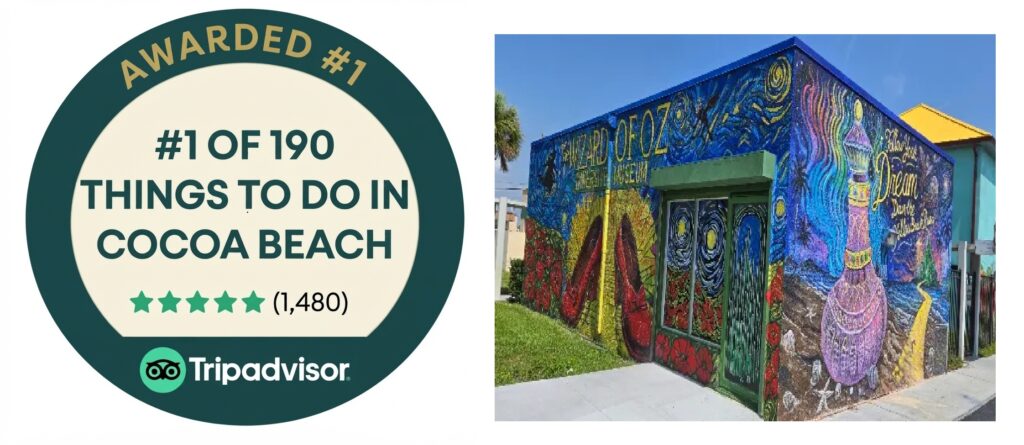
The museum later continued its development with a move to Cocoa Beach, Florida.
Locations and exhibits may evolve, but the central purpose remains: sharing the history of Oz with people who might otherwise never encounter these remarkable objects.
What began as my personal search for rare Oz books became a museum that could introduce the story to a much wider audience.
Palina's original idea was to make that sharing possible.
Learning how to introduce the museum to the public was another important step in making that idea a reality.
Discover the Wizard of Oz Museum Today
Explore rare Oz books, historical collectibles, movie memorabilia, and immersive experiences at the Wizard of Oz Museum in Cocoa Beach, Florida.
Explore the Museum