Wizard of Oz Museum · Museum History · Chapter 5 · Story 22
The Wizard of Oz Museum began with historical books and collectibles. Immersive technology offered another way to introduce visitors to the imaginative world behind them.
When I first became interested in collecting Oz books, technology was not part of my thinking. I wanted to understand the differences between editions, identify early printings, and learn how L. Frank Baum's stories developed over time. My attention was on physical objects: books, illustrations, bindings, and publishing history.
Years later, when Palina encouraged me to share the collection through a museum, the challenge changed. We were no longer thinking only about preserving historical material. We also needed to consider how visitors would experience it.
That question eventually led to an important part of the museum's identity: the relationship between original Oz artifacts and immersive technology.
These two approaches may appear very different, but they can support the same purpose. Both help communicate the extraordinary history and imagination of Oz.
What Immersive Technology Adds to a Museum
Traditional museum exhibits invite visitors to observe. A person may examine a book behind glass, read an explanation, and study an illustration from another century.
This remains an important way to learn. Historical objects provide evidence that cannot be recreated by technology.
Immersive technology offers a different kind of engagement. It uses visual environments and presentation techniques to create a stronger sense of being surrounded by a story or setting.
Instead of encountering Oz only through individual images, visitors can experience a broader visual interpretation of its imaginary world.
The distinction is important. An immersive experience is not an original historical artifact. It is a modern interpretation that can help audiences connect with the material.
Oz Has Always Inspired Visual Innovation
The connection between Oz and visual storytelling began long before digital technology existed.
When The Wonderful Wizard of Oz appeared in 1900, W. W. Denslow's illustrations helped establish the appearance of Baum's imaginary world.
The book's illustrations were an essential part of how readers experienced the story. They helped transform words into memorable characters and places.
Later, John R. Neill brought his own artistic interpretation to the Oz series. His work influenced how generations of readers imagined its characters and settings.
Oz also moved beyond books into theatrical productions and motion pictures.
The famous 1939 MGM film became one of the most recognizable interpretations of Baum's creation.
Each new medium offered audiences another way to encounter Oz.
From that perspective, immersive technology is part of a much longer history of visual interpretation.
Connecting Original Art With Digital Environments
One of the most interesting aspects of an Oz museum is the relationship between illustrations and imagination.
A historical illustration captures an artist's interpretation of a fictional scene.
A modern immersive environment approaches the same challenge using different tools.
Both begin with a story. Both translate written descriptions into visual experiences.
The difference lies in how audiences encounter the finished work.
A printed illustration remains on the page. A digital environment can occupy a much larger visual space.
For visitors unfamiliar with Oz's literary origins, that experience can provide a starting point for curiosity.
It may encourage them to look more closely at the original books and the artists who illustrated them.
Why Technology Should Support the Collection
As a collector, I believe the museum's historical objects must remain central to its identity.
A rare Oz book has characteristics that cannot be reproduced on a screen.
Its paper, typography, binding, and printing details provide information about the period in which it was made.
Even small variations between editions can reveal something about the book's history.
These are the details that originally drew me into collecting.
Immersive technology cannot replace that kind of evidence.
What it can do is make the subject more approachable for visitors who might not otherwise be interested in publishing history.
Technology can open the door to Oz, but the original books explain where that remarkable world began.
Reaching Visitors With Different Interests
Not every visitor arrives at a museum with the same expectations.
Some are interested in rare books. Others know Oz mainly through the familiar film.
Families may include children, parents, and grandparents who have very different memories of the story.
A museum that offers several ways to engage with Oz can connect with a broader audience.
Historical exhibits serve visitors who want to understand the past.
Immersive experiences can appeal to people who enjoy visual storytelling and imaginative environments.
When these elements work together, the museum can encourage visitors to explore subjects they might not have considered before.
Technology as an Educational Tool
A museum experience becomes especially valuable when it inspires questions.
Who created the original Oz story? When was the first book published? How did the characters change across different adaptations?
Those questions lead visitors from entertainment toward history.
Immersive presentations can help introduce the setting and atmosphere of Oz.
The historical collection can then provide the background: Baum's books, early illustrations, later editions, and the development of Oz in popular culture.
The educational value comes from the relationship between the experience and the information surrounding it.
Technology becomes most useful when it encourages deeper understanding rather than simply attracting attention.
Preserving Physical History in a Digital Age
Modern audiences are accustomed to encountering information through screens and digital media.
Historical museums face an interesting challenge: how to use these tools without diminishing the importance of original objects.
For the Wizard of Oz Museum, I see preservation and presentation as two related responsibilities.
Preservation protects the physical evidence of Oz's history.
Presentation helps visitors understand why that history is worth preserving.
Digital experiences can support the second responsibility while the collection remains essential to the first.
This balance allows a museum to respect historical authenticity while remaining accessible to contemporary audiences.
From a Private Collection to a Broader Experience
My journey with Oz began in childhood, when I encountered Alexander Volkov's The Wizard of the Emerald City in the Soviet Union.
I did not know at the time that the story was connected to an American book by L. Frank Baum.
Rediscovering Oz later in life through my children eventually led me to study rare editions and build a collection.
Palina's suggestion to establish a museum transformed that private interest into a public project.
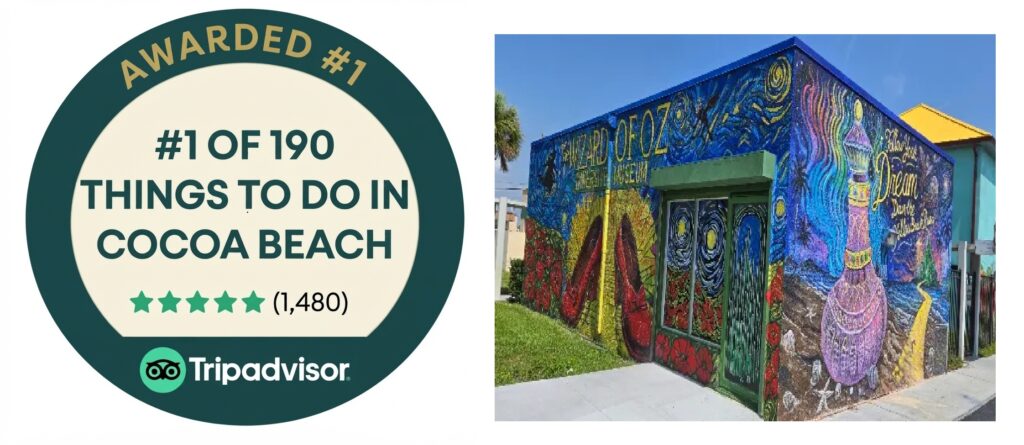
The museum first opened in Cape Canaveral, Florida, and later moved to Cocoa Beach in 2026.
As the museum developed, immersive technology became another part of the experience offered to visitors.
It broadened the ways people could encounter the world of Oz while keeping the historical collection at the heart of the museum.
Looking Toward the Future of Museum Storytelling
Technology continues to change how museums present their collections and communicate with audiences.
New visual tools create opportunities to interpret historical subjects in ways that were not possible in earlier generations.
But the purpose of a museum should remain clear.
Visitors should leave with a stronger understanding of the subject, not merely a memory of the technology.
For the Wizard of Oz Museum, that subject is the remarkable literary and cultural history of Oz.
The books, illustrations, memorabilia, and immersive experiences contribute different parts of that story.
What began for me as an interest in rare editions has become a way to share Oz with visitors who approach it from many different perspectives.
Immersive technology is one more tool that helps make that possible.
Discover Oz History and Immersive Experiences
Explore rare Oz books, historical memorabilia, and imaginative immersive experiences at the Wizard of Oz Museum in Cocoa Beach, Florida.
Explore the Museum