Behind the Museum · Chapter 9 of 10 · Stories 118–136 of 145
Moving the museum to Cocoa Beach opened an unexpected new chapter. A television series connected with the town inspired a new exhibit, while the move itself demanded difficult decisions, creative solutions, and an entirely new approach to how our buildings looked from the street.
My name is Fred, and this chapter is about the move that changed both the location and the identity of our museum.
We had spent years developing the Wizard of Oz Museum. But when we began preparing our permanent Cocoa Beach home, visitors helped us recognize another opportunity: I Dream of Jeannie.
At the same time, we were dealing with construction, staffing, exterior artwork, and the challenge of moving an operating museum on a tight schedule.
These nineteen stories explain how the new location came together, why some plans changed, and how the museum continued evolving even after reopening.
Visitors Asked Us for Jeannie Souvenirs
When we first opened the Wizard of Oz Museum, I had no intention of creating an exhibit about a completely different television show.
But visitors sometimes asked us for souvenirs connected with I Dream of Jeannie.
The television series had a well-known connection with Cocoa Beach, and people visiting the Space Coast remembered that connection.
At first, we experimented with Jeannie-related merchandise.
The response showed me that there was genuine visitor interest.
What began as a souvenir request eventually encouraged us to think about a much larger Jeannie experience.
Why Cocoa Beach Made a Jeannie Exhibit Logical
The idea of a Jeannie exhibit became much more interesting when we decided to move the museum to Cocoa Beach.
The town is closely associated with the fictional setting of I Dream of Jeannie.
That gave the exhibit a local connection that made sense for visitors.
I began looking for original material connected with the television series.
Rather than treating Jeannie as a small souvenir display, we could create a dedicated room with historical objects and information.
The move gave an idea that began with visitor questions a natural place within the museum.
We Built a Giant Jeannie Bottle
I learned that visitors do not always want only to look at historical objects.
They also enjoy participating in an experience and taking home a memorable photograph.
That influenced our plans for the Jeannie exhibit.
We created a giant Jeannie bottle as part of the visitor experience.
The bottle provided a recognizable visual connection with the television show.
It also gave families and visitors an opportunity to take photographs.
For me, it was another example of combining historical displays with something visitors could enjoy more actively.
Major Nelson's Costume Came to Cocoa Beach
I wanted the Jeannie exhibit to include more than reproductions and familiar imagery.
Original material connected with the television production could give the exhibit historical significance.
One important addition was a costume associated with Major Nelson.
As with any entertainment artifact, I understood that documentation and provenance were important.
Visitors should know what an object is, how it relates to a production, and why it matters.
Bringing Major Nelson's costume to Cocoa Beach helped connect the town's television association with a physical exhibit.
The Cocoa Beach Police Uniform
Another object associated with the Jeannie collection was a Cocoa Beach police uniform.
It interested me because the television series created a fictional connection with a real Florida community.
Objects connected with that setting can help visitors explore how a television story used a recognizable location.
As the collection developed, I wanted each object to have an explanation that connected it to the broader history of the show.
The uniform became another part of that story.
Three Cabinets of Jeannie History
What began with visitors asking for souvenirs eventually developed into a collection large enough for a dedicated display.
We gathered vintage material connected with I Dream of Jeannie and its popularity during the 1960s and 1970s.
The collection grew to fill three display cabinets.
Those cabinets helped us present the history in an organized way.
Visitors could see how the series became part of popular culture and why it continued to interest people decades later.
It was remarkable to see how a small merchandise experiment had become a substantial exhibit.
I Own 65%—And Still Couldn't Build What I Wanted
Buying property gave us much greater control over the museum's future.
But I discovered that ownership did not mean I could make every change I wanted.
Our property was part of a condominium structure.
Although I owned approximately 65 percent, certain structural decisions still required approval.
One proposed change was rejected by another owner whose approval was needed.
That meant I could not proceed with the design I had imagined.
It was frustrating, but it taught me another lesson about real estate: owning most of a property does not always mean controlling every decision.
The Jeannie Bottle Building That Never Happened
One of my ideas for the Cocoa Beach property was especially ambitious.
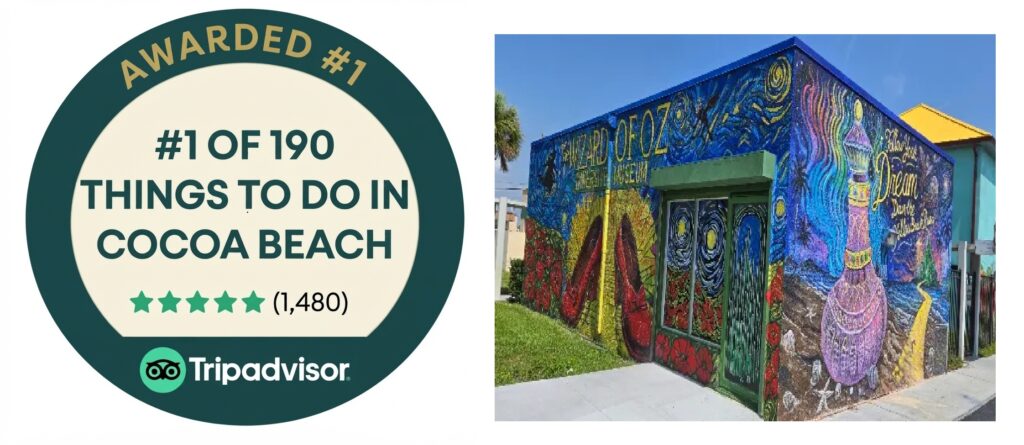
I wanted the first thing drivers noticed to be a giant Jeannie bottle.
I imagined converting a building or creating a bottle-shaped exterior feature that would be visible from the road.
It could have connected the property with the Jeannie exhibit before visitors even entered.
But the structural approval issues prevented that plan from moving forward.
We changed direction and developed the Jeannie bottle experience indoors.
The building I had imagined as an exterior attraction was instead used for storage.
It was one of several ideas that had to change when imagination met practical limitations.
Why a Museum Needs Two People Just for Breaks
When people think about museum staffing, they often imagine guides, ticket sellers, and people helping with exhibits.
But operating a small museum also involves ordinary practical problems.
Employees need restroom breaks. They need time to eat and rest.
Someone still needs to help visitors while another employee steps away.
As the museum grew, I realized that having two people available could be important even when visitor traffic was manageable.
We used part-time staffing to provide coverage and keep the museum operating smoothly.
Growth sometimes creates staffing needs for reasons that have nothing to do with the exhibits themselves.
The Artist Who Helped Fix Our Old Exterior Problem
At our first museum location, the building's ordinary appearance sometimes discouraged people from visiting.
I did not want to repeat that problem in Cocoa Beach.
One of our employees, who was also an artist, helped us think about transforming the exterior of the new buildings.
We wanted the museum to look interesting before visitors walked inside.
Murals offered a way to connect the outside of the property with the imaginative world inside.
It was an opportunity to make the buildings more recognizable and welcoming.
Three Buildings, One Story
The Cocoa Beach property included three buildings.
I did not want them to look like three unrelated commercial structures.
I wanted the artwork to tell a connected story.
We imagined visitors discovering the Ruby Slippers, following the Yellow Brick Road, and approaching the Emerald City near the entrance.
Jeannie-related imagery could become part of the property's visual identity as well.
Instead of treating murals as separate decorations, I thought about how they could guide visitors through a narrative.
It was another way to bring the museum experience beyond the walls of the exhibits.
The 75-Foot Mural We Couldn't Finish First
We began working on a large mural on one of the buildings.
The wall was approximately 75 feet long and 20 feet high.
It offered an impressive space for artwork.
But after beginning, we realized we had a more immediate problem.
The building facing the road needed attention because it was the first thing passing drivers would see.
With limited time and resources, we could not complete everything at once.
After painting only about five feet of the large mural, we shifted our attention to the roadside building.
It was another example of changing priorities to meet the most urgent need.
I Gave Myself 10 Days to Move a Museum
On May 20, 2026, we closed the original museum to prepare for the move.
I hoped we might complete the transition in approximately ten days.
That was an optimistic estimate.
We needed to pack exhibits, move historical objects, prepare the new spaces, and continue construction work.
I also stopped advance ticket sales because I could not confidently promise when we would reopen.
The move involved much more than transporting furniture from one building to another.
We were relocating an entire museum while its new home was still being completed.
We Were Closed for 24 Days
My ten-day estimate did not survive the realities of construction and moving.
The process took longer than I had hoped.
We were closed for 24 days.
During that time, we were working to move exhibits, prepare rooms, and make the new location ready for visitors.
Finally, on June 13, 2026, we reopened the Wizard of Oz Museum in Cocoa Beach.
It was an important milestone for us.
We had moved from a leased Cape Canaveral location into property we owned.
But reopening did not mean that every part of the project was finished.
The New Museum Is Better—But It Wasn't Finished
I believe the new Cocoa Beach museum offers a better experience than our original location.
We improved the immersive environment and gave more attention to the appearance of the interior.
The new property also offered opportunities we never had in our rented building.
But I did not want to pretend that reopening meant the entire project was complete.
Construction and exterior artwork were still ongoing.
We had accomplished the essential move, but there was more work ahead.
That was familiar from our first opening.
The museum had never been something we finished once and stopped improving.
The City Told Us to Stop Painting
After years of renting, I finally owned the museum's buildings.
I thought that would give us more freedom to improve their appearance.
But while we were working on the exterior murals, the city told us to stop painting.
I learned that our artwork raised permitting and ordinance questions I had not anticipated.
I had been thinking of the murals as art that would make the property more attractive.
The city had rules that could affect how the imagery was classified.
It was another unexpected lesson in the difference between owning a property and having unrestricted control over its exterior.
When Is a Mural Actually a Sign?
I had imagined colorful artwork showing elements of the Oz story: Ruby Slippers, witches, and the Emerald City.
To me, those were artistic images connected with the museum's subject.
But I came to understand that local rules might treat some branded or attraction-related imagery as signage rather than ordinary decoration.
That distinction mattered because signs could be subject to size limits and other requirements.
I found myself asking a question I had never expected to face:
When does artwork on a museum building become an advertising sign?
It was not simply a question about painting.
It involved how a city interprets the purpose of visual imagery on a commercial property.
I Took the Museum's Mural Question to City Hall
I did not want to ignore the city's rules.
I wanted to understand whether those rules properly addressed the needs of a museum.
A museum is different from an ordinary retail business.
Artwork on a cultural institution can be part of its educational and artistic identity.
I raised that question through the city's civic process.
My manuscript notes describe a presentation on September 3, when I asked for consideration of how the ordinance applied to museums and cultural institutions.
I was not asking for permission to disregard every rule.
I was asking whether the rules should recognize a meaningful difference between museum artwork and conventional commercial advertising.
The Mural Story Doesn't Have an Ending Yet
Not every museum story has a completed ending.
When I prepared these recollections, the mural question was still unresolved.
The mayor had indicated that he would speak with the city manager.
We were waiting to see what would happen next.
I did not know whether the city would change its interpretation, reconsider the ordinance, or require us to follow the existing limitations.
I could only explain our position and continue working through the process.
The uncertainty reminded me of something I had learned many times while building the museum.
Even after a major milestone, another challenge can appear.
Our Cocoa Beach museum was open, but the story of how its buildings would ultimately look was still being written.
A New Home, New Possibilities, and New Challenges
The move to Cocoa Beach gave us something we had wanted for years: a permanent home for the museum.
It also opened the door to a new I Dream of Jeannie exhibit, complete with historical displays and a giant bottle experience.
We worked to make the buildings more recognizable through artwork that connected the property with the stories inside.
But the process involved unexpected limitations, staffing needs, construction delays, and questions about local rules.
On June 13, 2026, we reopened the museum in Cocoa Beach.
That was a major achievement, but it was not the end of our journey.
The next challenge was making sure new visitors could discover the museum we had worked so hard to improve.
Next: Chapter 10 — The Next Chapter Is Still Unwritten.