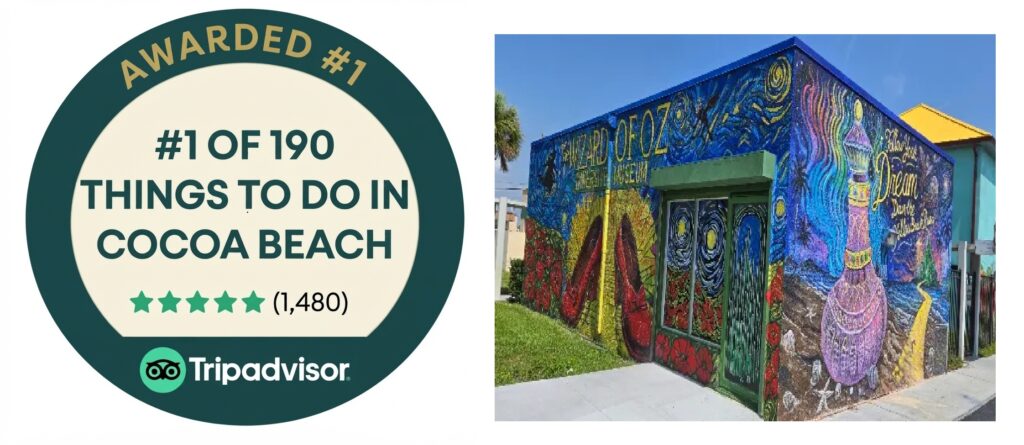
Behind the Museum · Chapter 10 of 10 · Stories 137–145 of 145
We finally had a permanent home and a better museum. But improving the experience did not automatically bring more visitors. Our next challenge was helping people discover what we had created. The final nine stories are about visibility, perseverance, and a museum whose future is still unfolding.
My name is Fred, and this is the final chapter of our 145 stories about building the Wizard of Oz Museum.
When I began collecting rare Oz books, I never imagined that the collection would become a public museum.
I certainly never expected that Palina and I would spend years searching for a permanent building, creating immersive exhibits, moving an entire museum, and solving the many problems that came with operating it.
But even after we reopened in Cocoa Beach, the story did not end.
These final nine stories explain the challenges we were facing when I prepared these recollections, and why I believe the museum will continue to change.
I Built a Better Museum—and Lost About 40% of My Visitors
When we reopened the Wizard of Oz Museum in Cocoa Beach, I believed we had created a better visitor experience.
We had improved the immersive environment, paid more attention to the interior, and gained a permanent home.
I expected those improvements to help the museum grow.
Instead, I saw something unexpected in our attendance.
At the time I was recording these stories, visitor numbers were approximately 60 percent of the comparable previous-year level.
In other words, we had lost about 40 percent of our visitors.
That was difficult to understand because I believed the museum itself was better.
Eventually, I began to suspect that the problem was not simply the quality of the attraction.
The challenge might be whether people could find the new location in the first place.
Building a better museum does not help enough if potential visitors never discover it.
Our Existing Customers Can Find Us. New Customers Don't Know We Exist.
I began noticing an important difference between two kinds of visitors.
People who already knew about the Wizard of Oz Museum could search for our name and find us.
They knew what they were looking for.
But many tourists do not begin their day by searching for a particular museum.
They may ask what there is to do nearby, which attractions are worth visiting, or how to spend an afternoon.
Those people might never discover us unless the museum appears in their search results, maps, or recommendations.
That distinction helped me see the problem more clearly.
We did not necessarily have a loyalty problem.
We had a discovery problem.
How Much Did Google Maps Matter?
Before the move, Google Maps had been an important way for people to discover our museum.
A visitor looking at local attractions could encounter the museum even without knowing its name.
After we moved, I began questioning whether changes in our map visibility were affecting visitor traffic.
I paid attention to how the museum appeared on maps, including the visibility of its symbol or icon.
I wondered whether the change of city and address had affected how easily new visitors discovered us.
I could not prove that Google Maps explained the entire attendance decline.
But the experience made me realize how dependent we might have become on a single discovery channel.
That was a risk I wanted to address.
Google Helped Build the Business. Now I Want More Discovery Channels.
For years, Google helped people discover the Wizard of Oz Museum.
Search results, maps, and visitor reviews played an important role in bringing attention to the attraction.
But the move made me think more seriously about relying too heavily on one source of visitors.
I wanted to build awareness across additional platforms.
That included Facebook, Instagram, TikTok, YouTube, and other search channels such as Bing.
Different people discover attractions in different ways.
Some search for a museum. Others see a video, a photograph, or a recommendation while planning a trip.
My goal was to make the museum easier to discover even for people who had never heard of us.
FOX 35 Came to the New Museum
Reopening in Cocoa Beach was an important achievement.
But we still needed to tell people that the museum had moved.
In early August 2026, FOX 35 covered the new museum.
That gave us an opportunity to introduce the new location to viewers across Central Florida.
Television coverage can reach people who are not actively searching for a museum.
They might see a segment while watching local news and discover an attraction they did not know existed.
For us, that was exactly the kind of awareness we needed after the move.
One Orlando Sentinel Story Traveled Nationwide
Another important publicity opportunity came from the Orlando Sentinel.
My notes describe an article dated August 23 that received attention beyond the Orlando area.
The story was picked up and distributed more broadly, giving the museum exposure in other markets.
I found that especially encouraging.
Our museum began with a specialized collection of Oz books.
Now the story of our new Cocoa Beach home could reach readers far beyond our local community.
Of course, publicity alone does not guarantee that someone will visit.
But it helps introduce the museum to people who might otherwise never know about it.
Why Local Brevard Coverage Still Matters
National publicity is exciting.
But I also understand the importance of reaching people who live nearby.
A family in Brevard County might decide to visit the museum this weekend.
A tourist staying in Cocoa Beach might come the same day they discover us.
That makes local coverage especially valuable.
My notes describe a September 11 publication distributed within the county.
It was another opportunity to explain that the museum had moved and was welcoming visitors in its new home.
I wanted both residents and tourists to understand what we offered.
The museum needed visibility not only across the country, but also in the community surrounding it.
The Museum's Problem Today Is Awareness
After everything we had built, I began thinking about the museum's most important immediate challenge.
It was not necessarily to create another exhibit.
It was not to buy another rare artifact.
Those things could still be important in the future.
But at the time of these recollections, I believed our most urgent need was awareness.
More people needed to know that the Wizard of Oz Museum existed in Cocoa Beach.
They needed to understand that we had a historical collection, immersive experiences, and exhibits designed for families.
I wanted to turn greater awareness into discovery, and discovery into actual museum visits.
Right now, my job isn't to invent another museum. It's to make sure people know this one exists.
The Museum Is Still Being Built
When I began collecting Oz books, I never imagined how far the journey would take us.
I thought that one day, if we could open a museum, the story might finally feel complete.
But opening the museum turned out to be the beginning of a much larger journey.
We learned from visitors, changed exhibits, expanded the collection, and created immersive experiences.
We moved from rented space to a permanent home in Cocoa Beach.
We added new kinds of exhibits and began imagining possibilities that might one day extend beyond the buildings themselves.
Some questions remained unresolved, including the exterior mural issue and how best to improve visitor discovery.
We also continued thinking about future ideas, including the possibility of an experience connected with the water.
I do not know exactly what the museum will look like years from now.
But I know it will continue to evolve.
The most important lesson I learned is that the museum was never built from one perfect plan.
It developed one problem, one visitor reaction, and one decision at a time.
I thought opening a museum would be the end of the story. It turned out to be the beginning.
These are our 145 stories so far.
The next chapter has not been written yet.
145 Stories. One Continuing Journey.
When we began this collection of stories, we wanted to explain how the Wizard of Oz Museum came into existence.
The journey began with Fred's fascination with Oz books and grew through years of collecting, planning, and difficult decisions.
Palina became an essential part of that journey, helping turn a private collection into a public museum experience.
Along the way, we encountered unexpected challenges, met visitors who influenced our decisions, and discovered new possibilities for the collection.
The move to Cocoa Beach gave the museum a permanent home, but it also introduced new responsibilities and opportunities.
Our goal remains the same: to preserve the history of Oz, share it with visitors, and keep improving the museum for future generations.
Thank you for reading Behind the Museum: 145 Stories from Fred & Palina.
The collection may end here, but the museum's story continues.