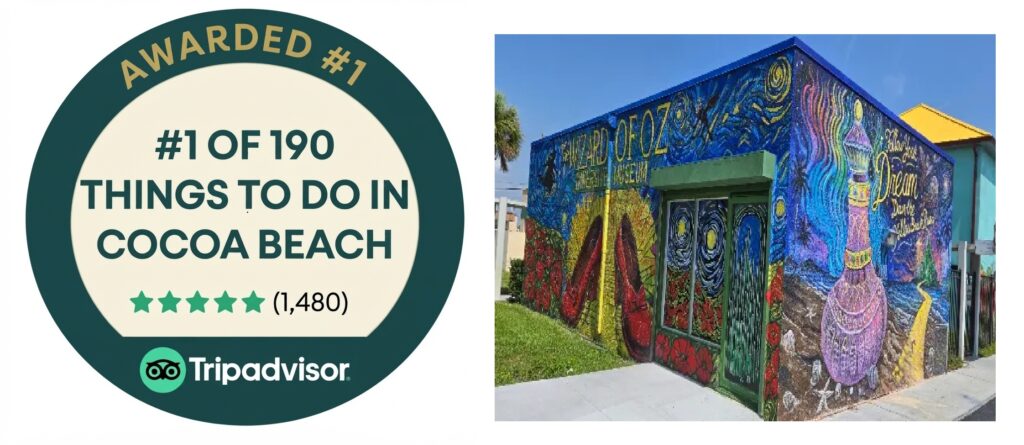
Wizard of Oz Museum · Museum History · Chapter 8 · Story 40
What I Hope the Wizard of Oz Museum Will Mean to Future Generations
When I think about the future of the Wizard of Oz Museum, I do not begin with the question of how many people might visit or how large the collection might become. I think instead about what the museum could mean to someone who discovers it many years from now. Perhaps that person will be a child encountering Dorothy for the first time. Perhaps it will be a parent sharing a favorite story with a son or daughter. Or perhaps it will be someone who has never considered the history of children's literature but becomes curious after seeing an original Oz book.
My hope is that the museum will continue to offer those moments of discovery. I want it to be a place where the imagination of L. Frank Baum remains connected to the historical books, illustrations, and cultural traditions that helped bring Oz into the lives of generations of readers.
That hope has grown out of my own experiences. What began as a childhood connection to an Emerald City story eventually became an interest in rare books, years of research, and the creation of a museum. Looking toward the future, I find myself thinking less about the objects I have collected and more about the knowledge and curiosity they may help preserve.
How My Understanding of Oz Changed Over Time
Growing up in the Soviet Union, I encountered Alexander Volkov's The Wizard of the Emerald City. It was an imaginative story that became part of my childhood experience.
Years later, after moving to the United States, I rediscovered Oz through my children. This experience introduced me more deeply to L. Frank Baum's original literary world.
At first, I was interested in the stories themselves. Then I began exploring the books as historical objects.
I learned about early editions, publishing differences, original illustrations, and the challenges of identifying rare printings. I became interested in the people who created and published the books, as well as the generations who had read and preserved them.
Over time, I realized that Oz represented more than a familiar adventure. It was also a subject through which I could explore literary history, art, publishing, and cultural memory.
That expanding understanding became an important foundation for the museum.
Why I Want the Original Books to Remain Central
The Wizard of Oz is widely known through adaptations, especially the famous 1939 film. Those adaptations have helped keep the characters familiar to audiences around the world.
But I believe the original books deserve a special place in understanding Oz history.
The Wonderful Wizard of Oz was published in 1900. It introduced Baum's world through his writing and W. W. Denslow's illustrations.
Later books expanded the world of Oz, with John R. Neill becoming its principal illustrator beginning with The Marvelous Land of Oz in 1904.
These publications are important because they show how Oz existed before its best-known screen adaptation.
The books also preserve evidence of the publishing practices and artistic choices of their time. Their bindings, illustrations, and printing details provide information that cannot be understood fully through later adaptations alone.
I hope future visitors will continue to encounter these original literary foundations as an essential part of the museum experience.
Preserving More Than Physical Objects
When people think about preserving rare books, they may imagine keeping them safe from physical damage. That is certainly important.
Historical books require careful handling and appropriate conditions. Aging paper, fragile bindings, and sensitive illustrations can be affected by light, humidity, and repeated use.
But I have learned that preservation also involves protecting information.
A book's edition, printing history, provenance, and condition may help explain its historical significance. If those details are not recorded, valuable knowledge can be lost even while the physical object survives.
For this reason, I believe research and documentation are part of preservation.
Future generations should have access not only to the books themselves, but also to reliable information that helps them understand what those books represent.
Why I Believe Museums Must Encourage Curiosity
A museum can present historical facts, but I believe its influence can extend beyond the information displayed.
Sometimes the most important result of a visit is a question.
Someone may wonder why the original illustrations look different from the film. Another visitor may become curious about the number of books Baum wrote. A child may want to read the original story after recognizing a familiar character.
These questions can lead to further discoveries.
My own interest in Oz developed through a similar process. One question about a book led to another question about its illustrations or publishing history.
I hope the museum encourages visitors to explore the subjects that interest them rather than simply memorize information.
Curiosity can continue long after someone leaves the museum.
The Importance of Reaching New Generations
Every generation encounters stories through the media and cultural experiences available to it.
Readers in 1900 experienced Baum's world through printed books. Later audiences encountered Oz through stage productions, films, television, and other adaptations. Today, digital media offer additional ways to engage with familiar characters and imaginative settings.
I cannot predict how future generations will encounter Oz.
What I do believe is that the original literary history should remain accessible, even as the ways people experience stories continue to change.
The museum can help maintain that connection by presenting historical books alongside forms of visual engagement that are familiar to contemporary audiences.
For me, the purpose is not to favor one generation's experience over another. It is to help people understand how those experiences relate to the same continuing cultural history.
What I Hope Families Discover Together
Families bring different memories and interests to a museum.
A grandparent may remember Oz from childhood. A parent may know the story through books or the film. A child may be discovering the characters for the first time.
I believe the museum can offer an opportunity for those experiences to meet.
Historical objects can encourage conversations about how stories change over time. Original illustrations may surprise someone who knows only later versions. A rare book can show that the story has been part of readers' lives for more than a century.
My own renewed interest in Oz began through my children, so the relationship between family experiences and literary discovery is especially meaningful to me.
I hope future families will find opportunities to make discoveries together, even if each person remembers a different part of the visit.
Why Technology Has a Place in the Museum's Future
The Wizard of Oz Museum combines historical books and memorabilia with immersive digital experiences.
As I discussed earlier in Chapter 8, I see these as different but potentially complementary forms of presentation.
The original books preserve physical evidence of the past. Immersive experiences offer modern ways to engage with visual imagination.
Technology may continue to develop, and museums may discover new methods of presenting historical information and artistic subjects.
I believe these developments can be useful when they encourage learning and broaden access.
However, I also believe that modern presentation should never erase the distinction between historical artifacts and contemporary interpretations.
Future visitors deserve to know whether they are seeing an original object, a reproduction, or a newly created artistic experience.
Maintaining that distinction is part of preserving the museum's credibility.
Why Historical Accuracy Will Always Matter
As a collector, I learned that identifying rare books requires patience and evidence.
A copyright date does not necessarily establish when a particular copy was printed. A familiar binding may have appeared in more than one printing. An ownership inscription may offer clues about a book's history without proving every detail of its past.
These lessons taught me to distinguish what can be documented from what remains uncertain.
I believe the same principle should guide a museum.
Visitors may trust the museum to explain the history of Oz accurately. That trust should be respected.
Historical interpretation can be engaging without exaggeration. It can acknowledge uncertainty while still communicating why an object or event matters.
I hope this commitment to evidence remains part of the museum's identity in the years ahead.
What the Museum's Beginning Means to Me
When my wife, Palina, suggested creating a museum, she helped transform my personal collecting interest into a possibility I had not originally planned.
The Wizard of Oz Museum first opened in Cape Canaveral and later moved to Cocoa Beach in 2026.
Those developments are part of the museum's history, but I think their larger significance lies in the change from private research to public education.
Before the museum, I could spend time studying rare books primarily for my own interest. Creating a public institution required thinking about how visitors would encounter the collection and what they might learn from it.
That shift changed my perspective.
I began to see the collection not only as something worth preserving, but also as a resource that could help other people discover the history of Oz.
The Legacy I Hope to Build
When I use the word legacy, I do not mean simply the survival of a museum building or a collection of objects.
I think about the preservation of knowledge and the continuation of curiosity.
A historical book can survive for generations, but its significance becomes more meaningful when people understand and study it.
An illustration can remain beautiful, but its place in artistic history deserves explanation. A familiar story can remain popular, but its literary origins should not be forgotten.
I hope the Wizard of Oz Museum contributes to these forms of preservation.
I also hope it encourages people to recognize that children's literature is an important part of cultural history. Books written for young readers can influence art, entertainment, and family memories for many decades.
Oz provides a particularly interesting example because its characters have remained recognizable while the ways people experience them have changed.
Why I Do Not Measure Success Only by Popularity
Popularity can help a museum reach more people, but I do not believe it is the only measure of educational value.
A meaningful visit may begin with a small discovery.
Someone might learn that Baum wrote additional Oz books beyond the best-known adventure. Another person may recognize the artistic contributions of Denslow or Neill for the first time.
A visitor interested in rare books may gain a new appreciation for preservation. A child may become curious about reading a historical story.
These experiences may not be easy to measure, but I believe they matter.
The museum's purpose, as I understand it, is to make opportunities for discovery available to the public.
If visitors leave with a stronger interest in literature, art, history, or imagination, that is a meaningful result.
Keeping the Museum Open to Different Interests
Not everyone comes to the Wizard of Oz Museum for the same reason.
Some visitors are longtime Oz enthusiasts. Others enjoy the film or want a family activity. Some are interested in the immersive experiences, while others are drawn to the rare books and memorabilia.
I believe a museum can welcome these different interests without losing its historical foundation.
The key is to provide accessible starting points while making deeper information available to those who want it.
Someone who knows little about Oz should not feel excluded. Someone who has spent years studying the books should still find the historical material worth exploring.
For me, that balance reflects the purpose of sharing a personal collection with the public.
What I Would Like Future Visitors to Understand
If someone visits the Wizard of Oz Museum many years from now, I hope they recognize that Oz is more than a familiar film or a collection of fictional characters.
I hope they understand that it began as a literary creation with its own publishing history and artistic traditions.
I hope they appreciate that the surviving books are historical objects deserving care and research.
I also hope they recognize that imagination has value across generations. A story written more than a century ago can continue to inspire readers, artists, and audiences who encounter it in new ways.
Above all, I hope the museum encourages them to remain curious.
That is the quality that carried me from childhood memories to rare-book collecting and eventually to museum work.
The most important legacy I can imagine is not simply preserving Oz history, but helping future generations become curious enough to explore it.
Looking Back at the Lessons of Chapter 8
Chapter 8 has explored how I think about sharing the Wizard of Oz Museum with visitors.
In Story 36, I considered the transition from a private collection to a public museum experience. Story 37 explored the connections between generations. Story 38 examined the role of imagination in historical learning. Story 39 considered how rare books and immersive technology can complement one another.
This final story brings those ideas together.
I believe the museum's future depends on maintaining a balance between preservation and accessibility, historical accuracy and imagination, original objects and modern presentation.
These are not competing goals when approached thoughtfully. They are different parts of a larger educational purpose.
My Hope for the Road Ahead
I cannot know what the Wizard of Oz Museum will look like decades from now or how future generations will experience Baum's stories.
But I know what I hope will remain important.
I hope the original books will continue to be studied and preserved. I hope visitors will understand the contributions of the authors, illustrators, and publishers who helped shape Oz history.
I hope families will continue to discover the stories together. I hope modern technology will create new opportunities for learning without replacing the authenticity of historical objects.
And I hope the museum will remain a place where curiosity is welcome.
My journey began with an imaginary Emerald City and developed into a real effort to preserve and share literary history. If the museum helps future visitors begin journeys of discovery of their own, I will consider that a meaningful continuation of the story.
Be Part of the Continuing Story of Oz
Visit the Wizard of Oz Museum in Cocoa Beach, Florida, to discover rare Oz books, historical memorabilia, and immersive digital experiences. Explore the literary history behind a story that has inspired generations.
Explore the Museum