Wizard of Oz Museum · Museum History · Chapter 9 · Story 42
How I Want the Wizard of Oz Museum to Keep Growing Without Losing Its Purpose
When I first became interested in collecting Wizard of Oz books, growth seemed like a simple idea. Finding another interesting edition meant adding something to my collection. Discovering an unfamiliar illustration meant learning something new. But as my private collection developed into the Wizard of Oz Museum, I began to think about growth differently. A museum can acquire more objects, introduce new experiences, and attract wider attention without necessarily becoming better at explaining its subject. I came to believe that the important question is not simply how much a museum grows, but whether that growth strengthens its purpose.
For me, the purpose of the Wizard of Oz Museum begins with preserving and sharing the literary and artistic history of Oz. The rare books, original illustrations, and historical memorabilia provide a foundation. The immersive experiences offer additional ways for visitors to engage with imagination.
As I think about the museum's future, I want each of these elements to contribute to something meaningful. I do not want growth to become an objective separated from education, preservation, and historical accuracy.
How Collecting Taught Me to Be Selective
In the early stages of collecting, it is easy to become excited about almost any unfamiliar object related to a favorite subject.
I understand that feeling because my interest in Oz began with curiosity. After rediscovering Baum's books through my children, I wanted to learn more about their publication history and the different editions that had appeared over time.
But studying rare books gradually taught me that not every acquisition contributes equally to understanding a collection.
Two books may look similar while representing different printings. Another copy may add little new information, even if it is attractive. A less visually impressive volume may contain an important detail about the development of an edition.
I began to appreciate the value of asking what an object could teach me before deciding how important it was to the collection.
I believe the same question is useful when thinking about a museum's future.
Why More Objects Do Not Automatically Mean More History
A larger collection can create opportunities for research and comparison. But the number of objects alone does not explain their significance.
Consider a group of early Oz books. Without information about their editions, illustrations, publishing dates, and physical characteristics, visitors may see only a collection of old volumes.
When those details are researched and explained, the books begin to reveal a history.
One edition may demonstrate how a publisher changed a book's appearance. Another may show the development of an illustrator's work. A particular printing may help explain how a story remained available to readers over time.
For me, these connections are more important than simply increasing the number of items.
If the museum continues to develop its historical collection, I want that development to be guided by the knowledge the objects can preserve and communicate.
Learning to Ask Whether Something Belongs
A museum devoted to Oz has many possible subjects it could explore.
There are the original books, the illustrators, later literary continuations, stage and film adaptations, and the many ways Oz entered popular culture.
Each subject has its own history. Not every object or presentation associated with Oz will contribute equally to the museum's central story.
I believe that deciding what belongs requires more than asking whether something is recognizable or entertaining.
It also requires asking how the subject connects to the museum's educational purpose.
Does it help visitors understand the origins of Oz? Does it illustrate the development of the books or their artistic interpretation? Does it provide a useful connection between a familiar adaptation and the original literature?
These questions can help maintain a coherent museum experience even when the subjects being presented are varied.
The Difference Between Popularity and Educational Value
Some aspects of Oz are immediately familiar to visitors. The 1939 film, for example, has played a major role in keeping Dorothy and her companions recognizable across generations.
Other aspects of Oz history may be less familiar, including the original book illustrations and the larger series written by Baum.
I do not believe that the most familiar material is necessarily the most historically important.
Popularity can provide a useful starting point. Someone who recognizes a character from the film may become interested in how that character appeared in the original book.
But I want the museum to offer opportunities to go beyond recognition.
A visitor should be able to discover something unexpected, such as the fact that The Wonderful Wizard of Oz was published in 1900 with illustrations by W. W. Denslow.
For me, that movement from familiarity toward discovery is one of the museum's most valuable educational possibilities.
Why I Want the Collection to Remain Understandable
As a historical collection grows, it can become more complicated to explain.
Rare-book terminology is not always familiar to the public. The distinction between an edition and a printing may matter greatly to a collector, but it may not be immediately meaningful to someone visiting a museum for the first time.
I believe the solution is not to remove important details. It is to present them in a way that helps visitors understand why they matter.
For example, explaining that a book was printed at a different time becomes more interesting when visitors understand what changed between the copies.
An illustration may become more meaningful when it is connected to the artist who created it and the period in which it appeared.
I hope the museum's future development continues to make room for both accessible explanations and deeper historical information.
Why Preservation Must Influence Decisions About Growth
Historical books require care, and that responsibility does not disappear when they become part of a public museum.
Older paper and bindings may be vulnerable to handling, light, and environmental changes. Some objects may be better suited to limited display or carefully controlled access.
For that reason, I believe collection growth must be considered alongside the ability to preserve what is already held.
Acquiring an important book creates an ongoing responsibility. It may require documentation, appropriate storage, and decisions about how its historical features can be shared without unnecessary risk.
The same principle applies to existing objects.
I do not want the desire to present more material to undermine the preservation of the collection that gives the museum its historical significance.
How I Think About New Visitor Experiences
The Wizard of Oz Museum includes immersive digital experiences in addition to rare books and historical memorabilia.
These presentations offer a different way for visitors to engage with visual subjects.
When I think about possible future experiences, I believe their value should be considered in relation to the museum's broader purpose.
An experience may be engaging, but what does it encourage visitors to notice or ask? Does it create an opportunity to explore a subject more deeply? Does it complement the historical collection without confusing modern interpretation with authentic artifacts?
These are the kinds of questions I believe matter.
Technology can change quickly, and new forms of presentation may become available. But the underlying educational questions should remain useful even when the technology itself changes.
Why Every Addition Needs a Clear Context
An object displayed without context may be attractive, but its historical significance can remain unclear.
I have encountered this challenge through rare-book research. A binding or illustration may appear unusual, but understanding it requires comparison and documentation.
In a museum, context helps visitors connect individual objects to larger ideas.
A book can illustrate the development of publishing. An early drawing can show how artists interpreted Baum's characters. Memorabilia can help explain the continuing cultural influence of Oz.
When these connections are clear, the museum becomes more than a collection of unrelated items.
It becomes a place where objects help tell a coherent historical story.
As the museum develops, I hope that clarity remains a priority.
The Challenge of Balancing Entertainment and Education
People visit museums for different reasons. Some are looking for historical information. Others want an enjoyable family experience or an opportunity to encounter something unusual.
I believe a museum can welcome these different interests without treating entertainment and education as opposites.
An engaging experience may encourage someone to ask a question they would not otherwise have considered.
At the same time, historical accuracy should not be sacrificed simply to make a presentation more dramatic.
For me, the balance comes from being clear about what the museum is presenting.
An original Oz book is a historical artifact. A modern visual presentation may be an artistic interpretation. Both can be appreciated, but visitors should understand the difference.
I want the museum to continue offering enjoyable experiences while remaining a trustworthy source of information about Oz history.
What I Learned From Sharing a Private Interest
When my wife, Palina, suggested creating a museum, she helped me think about my collection in a new way.
Before that, much of my interest was directed toward my own research. I wanted to identify editions, understand illustrations, and learn more about the history of the books.
A public museum required a different perspective.
I had to think about people who might arrive knowing only the film, families with young children, and visitors who had never considered the publishing history of Oz.
That shift helped me understand that the value of a collection is not only in the knowledge it contains. It is also in the opportunities it creates for others to learn.
As the museum continues to develop, I want to keep that lesson in mind.
How the Museum's Locations Became Part of Its Story
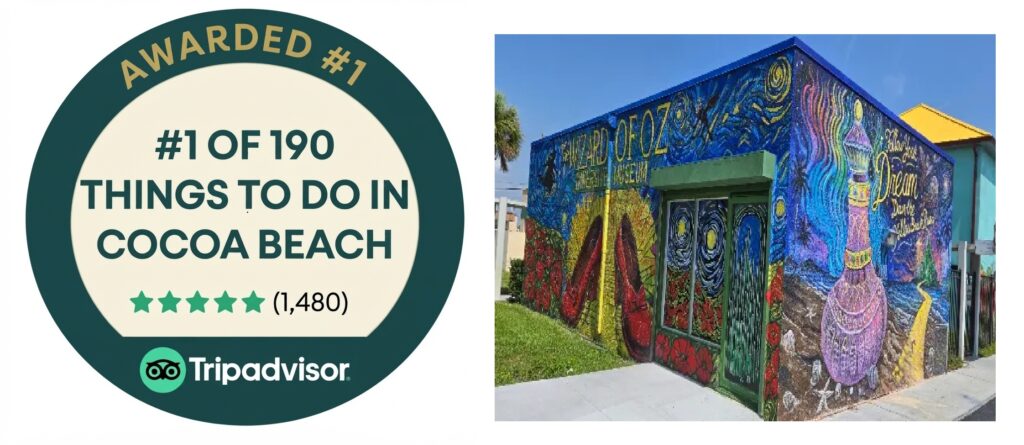
The Wizard of Oz Museum began in Cape Canaveral and relocated to Cocoa Beach in 2026.
Those places are now part of the museum's own history.
They remind me that a museum is not a finished object. It develops through decisions about how to present its collection, reach visitors, and carry out its purpose.
But changes in location or presentation do not need to change the underlying reason the museum exists.
For me, that reason remains connected to preserving and sharing the history of Oz.
I hope the museum's future development will continue to reflect that purpose, whatever practical changes may be necessary over time.
Why I Want Growth to Encourage Deeper Questions
One way I think about meaningful growth is through the questions a museum can help visitors explore.
A visitor may begin by asking when the original Oz book was published. That question can lead to the history of Baum's writing and Denslow's illustrations.
Another person may wonder why Dorothy looks different in an early illustration. That question can lead to the history of artistic interpretation and adaptation.
Someone interested in collecting may ask how a first edition is identified. That question can introduce the importance of printing evidence, condition, and provenance.
These are different subjects, but they connect through the historical collection.
I believe the museum becomes stronger when it helps visitors move from simple recognition toward more thoughtful questions.
How I Would Judge a Future Opportunity
If I were considering a new direction for the museum, I would want to understand how it relates to the museum's existing strengths.
Would it preserve or communicate meaningful history? Would it make the original books more understandable? Would it encourage curiosity among visitors who might otherwise overlook the subject?
I would also consider whether the museum could present the material accurately and responsibly.
An idea that sounds exciting may still require careful research. An object that appears important may need further identification. A new presentation may need a clearer connection to the museum's educational mission.
I do not believe every opportunity needs to be accepted.
Sometimes maintaining a clear direction is more valuable than adding something simply because it is available.
For me, meaningful museum growth is not about adding more of everything. It is about making the history we preserve more valuable to the people who discover it.
Why a Museum's Identity Should Be Recognizable
When visitors think about the Wizard of Oz Museum, I hope they associate it with the history and imagination of Oz.
I want the original books and their artistic heritage to remain important parts of that identity.
Modern experiences may help introduce visitors to the subject, and familiar characters may make the museum approachable. But the historical collection provides a distinctive foundation.
I believe a museum's identity becomes stronger when visitors can understand why its different elements belong together.
The connection does not need to be complicated. It can begin with the idea that Oz is both an imaginative world and a subject with a real literary history.
That relationship is what I want the museum to continue exploring.
The Second Lesson of Chapter 9
Story 41 introduced my belief that the museum's future should begin with respect for its history.
Story 42 adds a practical consideration: future development requires choices.
New objects, presentations, and opportunities should be evaluated according to how they support preservation, historical understanding, and the visitor experience.
Growth can be meaningful when it helps the museum communicate its purpose more clearly.
It becomes less meaningful when the desire to add something new overshadows the history that made the museum worth creating.
My hope is that the Wizard of Oz Museum continues developing thoughtfully, with the original Oz books and their history remaining at the center of its identity.
Discover the History at the Heart of the Museum
Visit the Wizard of Oz Museum in Cocoa Beach, Florida, to explore rare Oz books, historical memorabilia, and immersive digital experiences. Discover how the original stories and illustrations continue to shape the museum's mission.
Explore the Museum