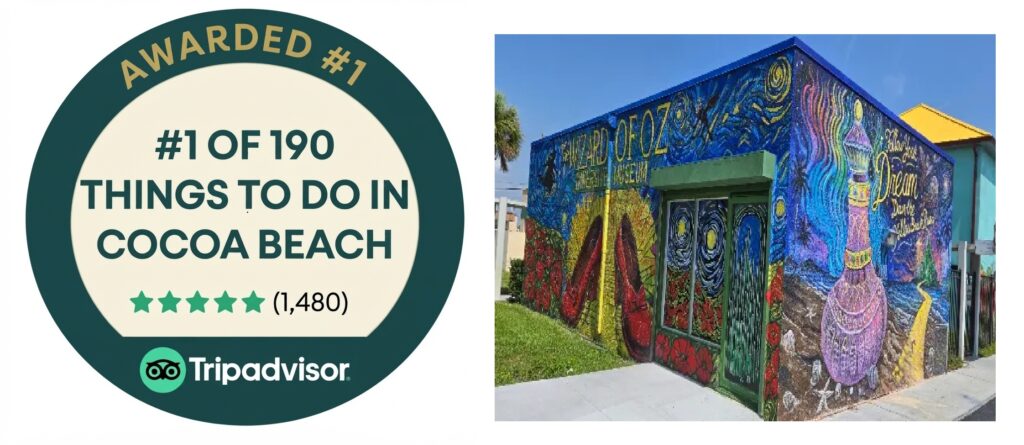
Wizard of Oz Museum · Museum History · Chapter 10 · Story 46
Why I See the Wizard of Oz Museum as a Continuing Journey
When I look back at the path that led to the Wizard of Oz Museum, I am struck by how little of it I could have predicted. A story I encountered during childhood in the Soviet Union eventually led me to study American children's literature, collect rare books, and share that collection with the public in Florida. At each stage, I thought I was following an interest that had become meaningful to me. Only later could I see how those separate experiences connected. Today, I understand that creating the museum was not the conclusion of that journey. It was the beginning of another stage.
Before the museum existed, my questions were primarily those of a reader and collector. I wanted to understand the original Oz books, their illustrations, and the differences between editions.
Once the collection became a public museum, those questions were joined by new ones. How could I explain the books to people who had never studied them? How could the museum preserve historical objects while allowing visitors to appreciate their significance? How could an interest that began in my own life become meaningful to others?
I continue to think about those questions because I do not believe a museum is ever truly finished.
The Childhood Memory That Remained With Me
My first encounter with an Emerald City story came through Alexander Volkov's The Wizard of the Emerald City.
Growing up in the Soviet Union, I knew that story as part of the imaginative literature available to me. I did not yet understand its relationship to L. Frank Baum's American books.
At that age, the adventure itself mattered more than the history of its publication.
The characters, the journey, and the idea of an extraordinary place beyond everyday experience were enough to make the story memorable.
Looking back, I find it interesting that an early literary experience could remain in my memory for so many years without my knowing where it would eventually lead.
That childhood connection became important again much later, when I encountered Baum's original Oz stories.
Rediscovering Oz Through My Children
After moving to the United States, I eventually returned to the world of Oz through my children.
What began as an opportunity to explore a familiar kind of story together developed into a personal interest in the original books.
I discovered that Baum's Oz was part of a much larger literary world than the single story most people recognize.
There were additional adventures, characters, illustrations, and a publishing history that I had never previously explored.
I became curious about the relationship between the stories I remembered and the original American publications.
That curiosity led me toward collecting.
At the time, I was not thinking about building a museum. I was interested in learning more about books that had unexpectedly connected different periods of my life.
How Collecting Became an Education
When I began collecting Oz books, I gradually learned that owning an old volume and understanding it are not the same thing.
A book may look unusual because of its cover or illustrations, but determining its historical significance requires more careful study.
I began paying attention to printing details, bindings, title pages, and differences between editions.
Some questions could be answered through comparison. Others required additional research or remained uncertain.
That process changed my understanding of collecting.
I came to see a rare book not simply as an object to acquire, but as evidence of a particular moment in publishing history.
Each new discovery encouraged me to examine the collection more carefully.
Collecting became an ongoing education rather than a task that could be completed by reaching a certain number of books.
The Importance of the Original Illustrations
One of the subjects that drew me deeper into Oz history was illustration.
The Wonderful Wizard of Oz, published in 1900, was illustrated by W. W. Denslow.
His artwork helped establish the appearance of Baum's original story.
When the Oz series continued, John R. Neill became its principal illustrator beginning with The Marvelous Land of Oz in 1904.
Studying their work helped me understand that Oz was not only a literary creation. It also had an evolving visual history.
Different artists contributed to how readers imagined the characters and places.
I found that comparing illustrations could reveal changes in style, interpretation, and the presentation of the books.
This was another example of how a single interest could lead toward an entirely new subject.
When Palina Suggested a Museum
My wife, Palina, played an important role in the next stage of the journey.
She suggested that my collection could become a museum.
That idea required me to think differently about what I had been doing.
As a private collector, I could pursue questions that interested me without needing to explain them to a broader audience.
A museum would create an opportunity to share the books and their history with people who had different levels of familiarity with Oz.
Some visitors might be interested in rare editions. Others might know only the 1939 film. Children might recognize the characters without knowing that the story began as a book.
I began to appreciate that the collection could have educational value beyond my own research.
Palina's suggestion helped transform the direction of my collecting journey.
From Private Collection to Public Responsibility
Creating a museum introduced responsibilities that were different from those of private collecting.
Historical objects needed to be presented in ways that were understandable and responsible.
Visitors needed context to appreciate why a particular book or illustration was significant.
I also had to think about the relationship between preserving an object and making its history accessible.
A rare book cannot simply be treated as an ordinary reading copy. Its condition and historical features require care.
At the same time, a museum should help visitors understand what makes the object worth preserving.
I came to see the museum as a way to connect these responsibilities.
It could protect historical materials while offering the public opportunities to learn from them.
The First Museum in Cape Canaveral
The Wizard of Oz Museum began in Cape Canaveral, Florida.
Opening a public museum marked an important change in my relationship with the collection.
The books and memorabilia were no longer part of an interest that I explored primarily for myself.
They became the foundation of an experience intended for visitors.
That change required a broader perspective.
I had to consider how someone unfamiliar with Oz publishing history might understand the material.
I also had to think about how the museum's different elements could contribute to a coherent experience.
For me, the Cape Canaveral location represents the stage when the collecting journey became a public institution.
The Move to Cocoa Beach in 2026
In 2026, the Wizard of Oz Museum relocated to Cocoa Beach.
That move became another chapter in the museum's own history.
It reminded me that an institution can change physically while remaining connected to the purpose that inspired it.
The original Oz books, their publishing history, and the desire to share them with visitors remained central to my thinking.
At the same time, the relocation reinforced the idea that building a museum involves continuing decisions rather than a single completed project.
A museum has a history of its own, shaped by its locations, its collection, and the ways it presents material to the public.
I believe those developments deserve to be remembered as part of the larger journey.
How Visitors Changed My Perspective
One important difference between collecting privately and operating a museum is the need to think about many different visitors.
I may be interested in a small detail that distinguishes one printing from another.
A visitor encountering the subject for the first time may need a much simpler introduction.
Neither perspective is wrong.
They represent different stages of familiarity with the same historical material.
I believe the museum should create opportunities for both kinds of interest.
Someone who wants a general introduction to Oz should be able to understand the importance of the original books.
Someone interested in deeper research should recognize that the collection contains subjects worth investigating further.
Thinking about these different needs has become part of my continuing education as a museum founder.
Why New Questions Keep Appearing
The more I learn about Oz history, the more I recognize that there are subjects I have not fully explored.
An unfamiliar edition may raise questions about its printing.
A variation in an illustration may encourage comparison with other copies.
A historical reference may suggest a connection that requires further investigation.
Not every question produces a clear answer.
Sometimes research confirms an earlier understanding. Sometimes it reveals that a detail is more complicated than I expected.
I have learned to appreciate that uncertainty is part of historical work.
The continuing appearance of questions is one reason I do not see my collecting journey as finished.
Why the Museum's Work Is Never Completely Finished
A museum may have established exhibits and a recognizable identity, but that does not mean its work has reached a final stage.
Historical objects continue to require care.
Descriptions may need clarification as new information becomes available.
Visitors may benefit from different explanations or new ways of engaging with a subject.
The museum's own history also continues to develop.
For me, these responsibilities are not signs that the museum is incomplete.
They are part of what it means to maintain a living institution devoted to preserving the past.
I believe a museum should remain willing to learn, improve, and reconsider its methods while protecting its historical foundation.
The Place of Immersive Experiences in the Journey
The Wizard of Oz Museum includes immersive digital experiences in addition to rare books and historical memorabilia.
These experiences reflect another aspect of the museum's development.
They offer ways to engage with visual subjects that differ from examining a historical book.
I believe modern presentations can complement a historical collection when their purpose is clear.
An immersive experience may attract attention or encourage imagination.
An original book provides direct evidence of a historical publication.
Both can contribute to a visitor's experience, but they should not be confused with one another.
As I think about the museum's continuing journey, I want its different elements to support curiosity while maintaining respect for authentic historical objects.
What I Have Learned About Patience
Rare-book collecting requires patience.
Finding an interesting volume is only one part of the process. Understanding its significance may take much longer.
Sometimes a detail that appears important turns out to be common. Another detail that initially seems ordinary may prove useful when compared with other editions.
I have learned that research benefits from taking time to examine evidence carefully.
I believe the same lesson applies to developing a museum.
Not every idea needs to be implemented immediately. Not every opportunity needs to become part of the collection.
Thoughtful decisions can help preserve the museum's identity and educational purpose.
Patience has been valuable in collecting, and I hope it continues guiding the museum's development.
Why I Still Think Like a Collector
Although the Wizard of Oz Museum has become a public institution, I still approach much of its historical material with the curiosity of a collector.
I want to understand what makes an edition distinctive.
I want to know how an illustration fits into the development of the series.
I want to distinguish reliable historical evidence from assumptions.
These questions remain meaningful because they are connected to the reasons I became interested in Oz books.
At the same time, I now consider how that information can be shared with visitors.
For me, the collector's curiosity and the museum founder's responsibilities are connected.
One encourages research. The other encourages me to make the results of that research understandable to others.
How the Past Continues to Shape My Decisions
My childhood memories, my rediscovery of Baum's books, and my experience as a collector all influence how I think about the museum today.
They remind me that a personal interest can develop in unexpected directions.
They also remind me why the original books deserve careful attention.
The museum's future may involve decisions about exhibits, interpretation, and visitor experiences.
But I believe those decisions should remain connected to the history that inspired the institution.
For me, the past is not simply a collection of completed events.
It provides the context for understanding what the museum is and what it should continue trying to accomplish.
A museum is not the end of a collector's journey. It is the point where that journey becomes an opportunity for others to discover something meaningful.
Why I Cannot Predict the Entire Road Ahead
When I first encountered an Emerald City story as a child, I could not have predicted that it would eventually lead to the creation of a museum in Florida.
When I began collecting rare Oz books, I did not know how my interest would develop.
Those experiences have taught me to be cautious about making detailed predictions.
I cannot know every opportunity or challenge that the museum may encounter in the future.
What I can identify are the principles that I believe should guide its decisions.
Historical accuracy, responsible preservation, thoughtful presentation, and public education remain important to me.
I hope these principles will help the museum continue developing without losing the purpose that made it worth creating.
The First Lesson of Chapter 10
Chapter 9 focused on the museum's future and the legacy I hope it will build.
Chapter 10 begins with a different perspective.
Instead of treating the museum as a finished achievement, I want to consider it as part of an ongoing journey.
That journey began long before the museum opened, with a childhood story that remained in my memory.
It continued through rediscovery, collecting, research, and the decision to share the collection with the public.
It developed further through the museum's opening in Cape Canaveral and its relocation to Cocoa Beach in 2026.
Today, the journey continues through the responsibilities of preservation, interpretation, and learning.
I do not know exactly what every future chapter will contain.
But I believe the Wizard of Oz Museum can continue to have meaning as long as it remains a place where history is protected and curiosity is encouraged.
Become Part of the Museum's Continuing Journey
Visit the Wizard of Oz Museum in Cocoa Beach, Florida, to explore rare Oz books, historical memorabilia, and immersive digital experiences. Discover how a personal collecting journey became a museum devoted to the history and imagination of Oz.
Explore the Museum